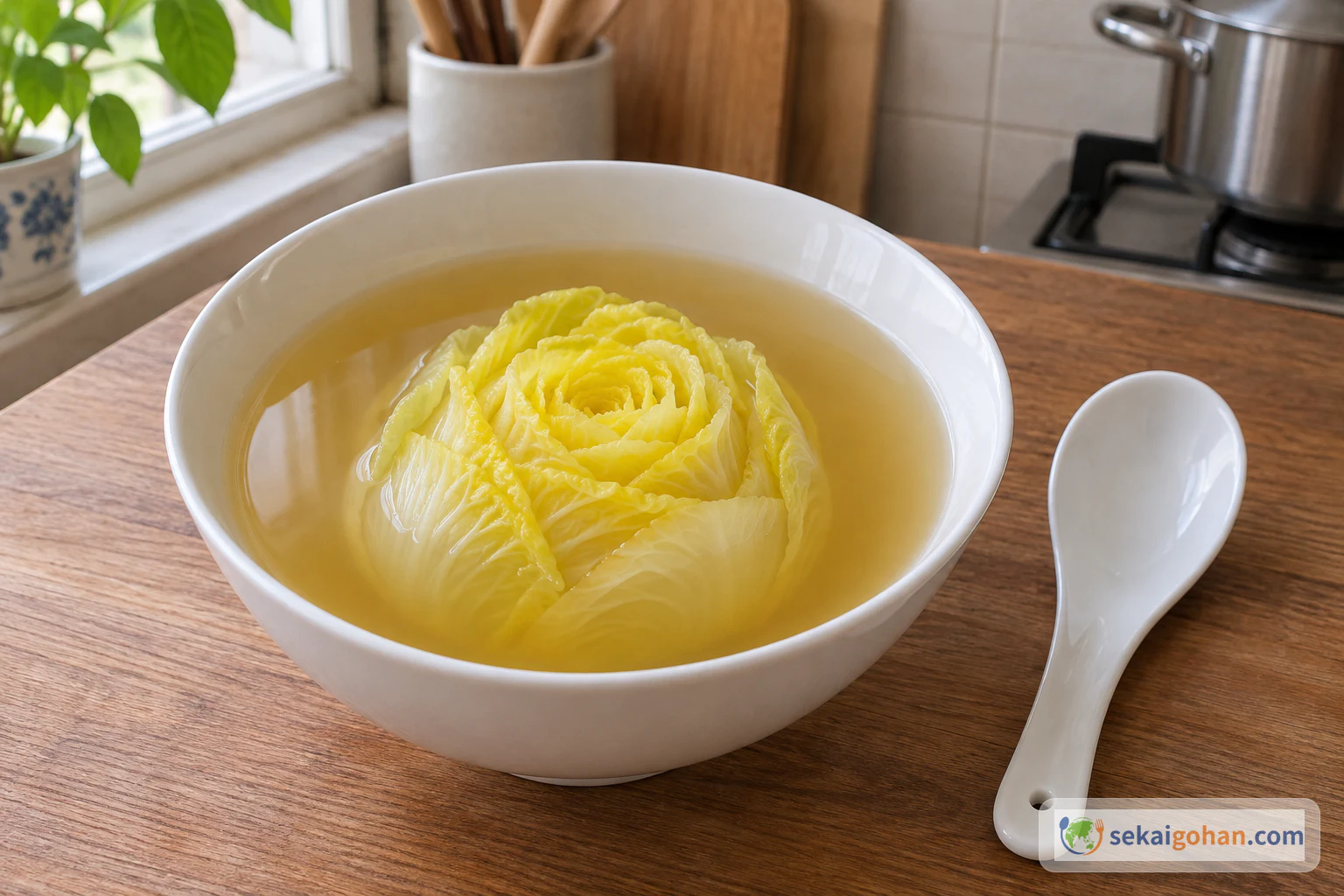
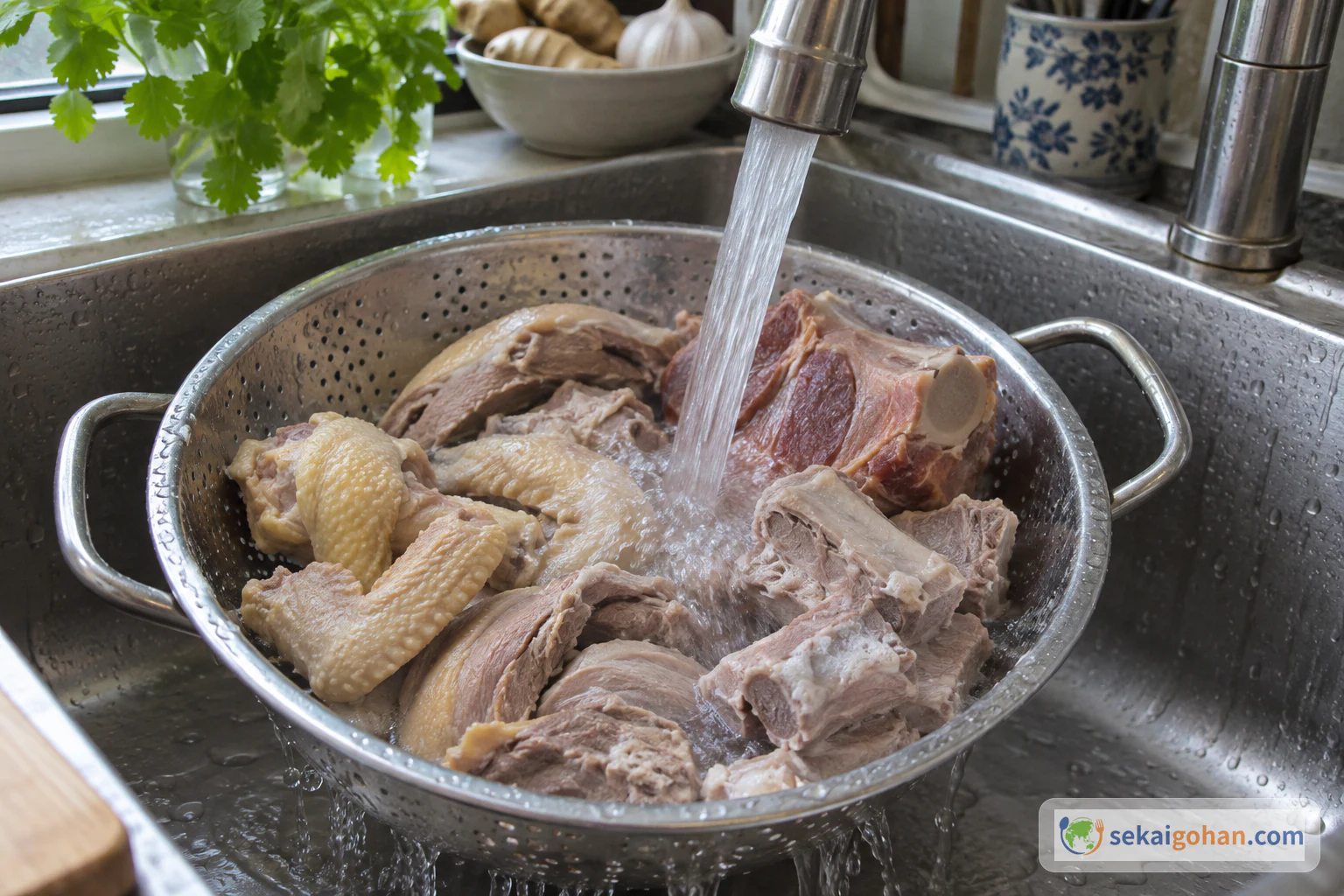
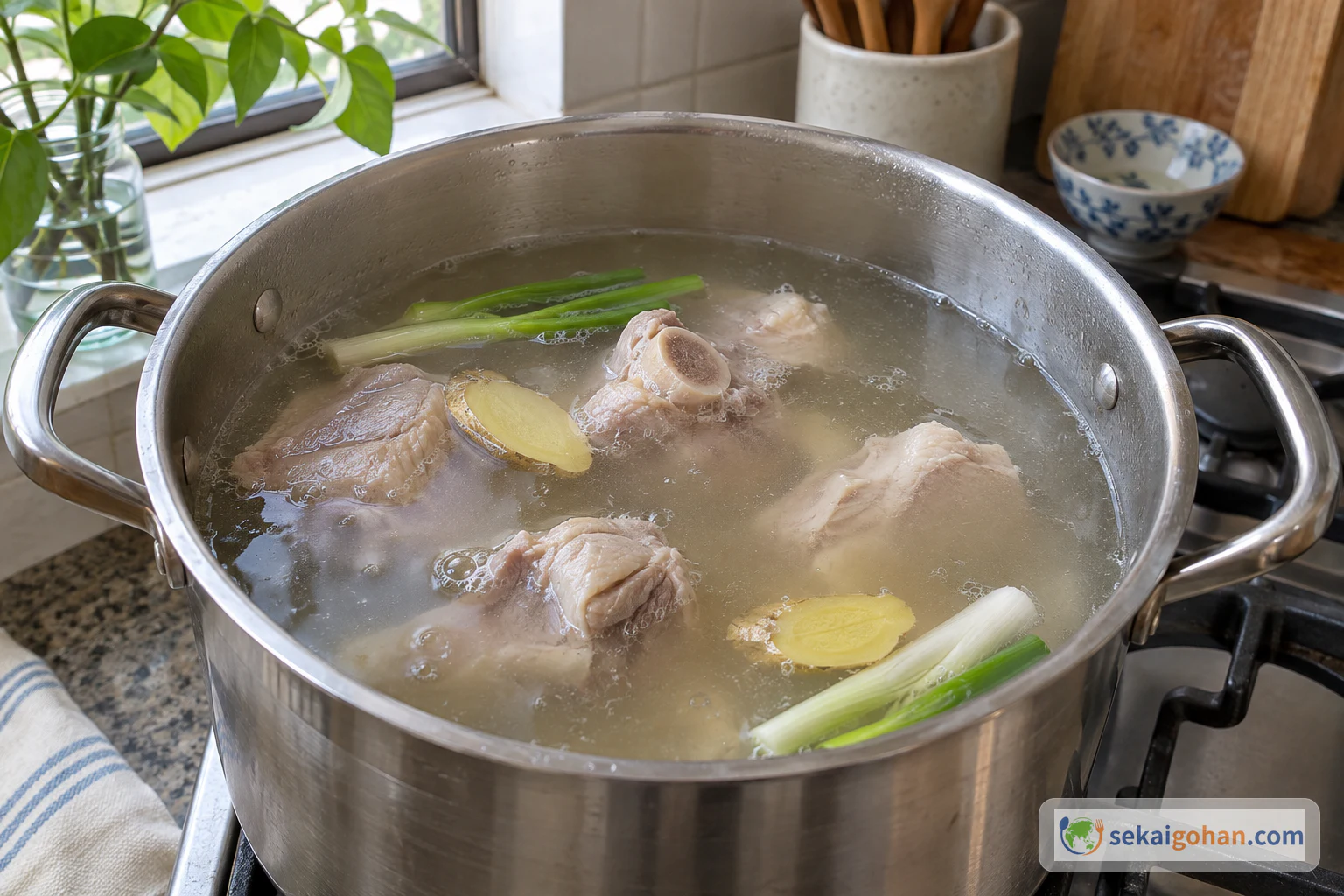
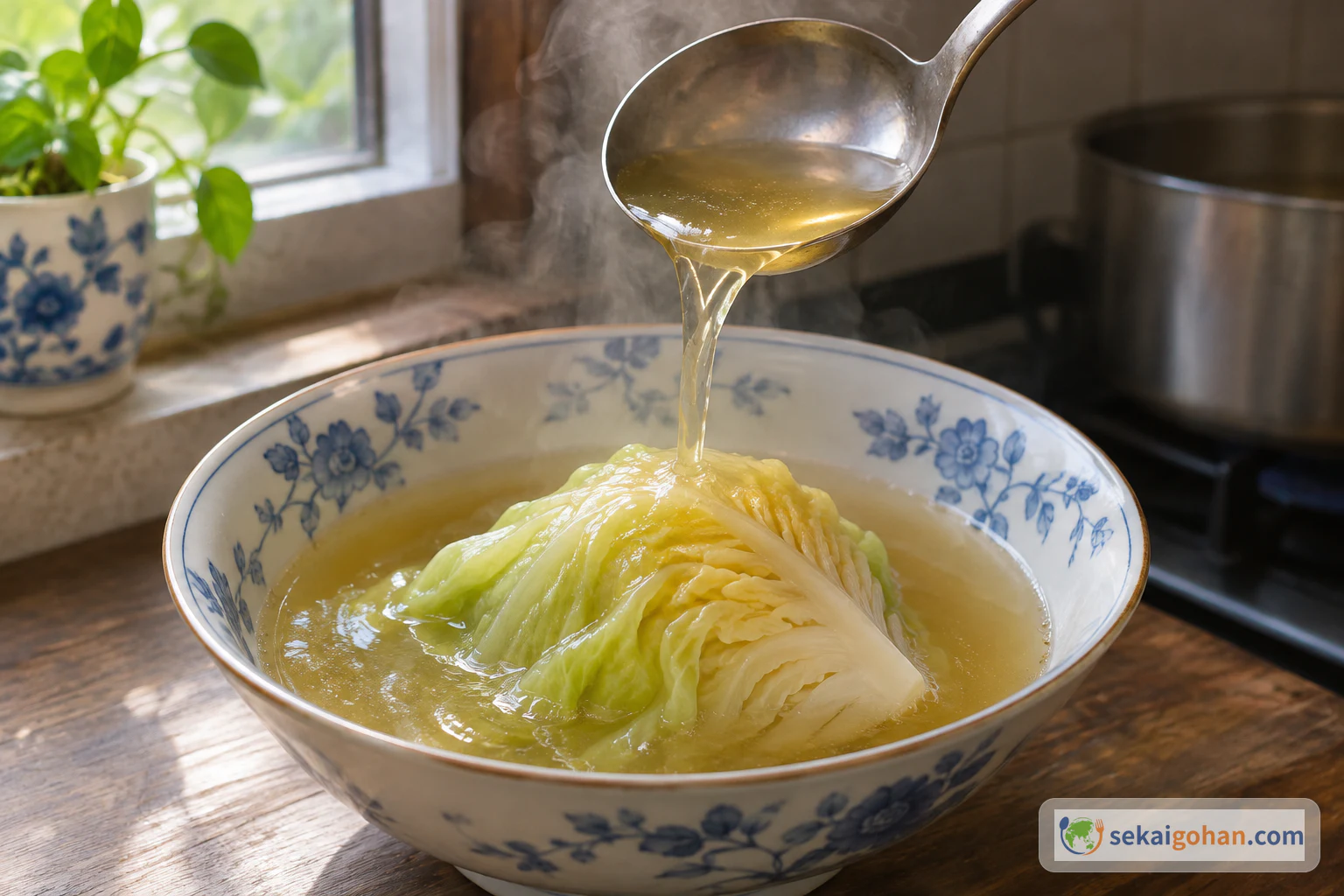
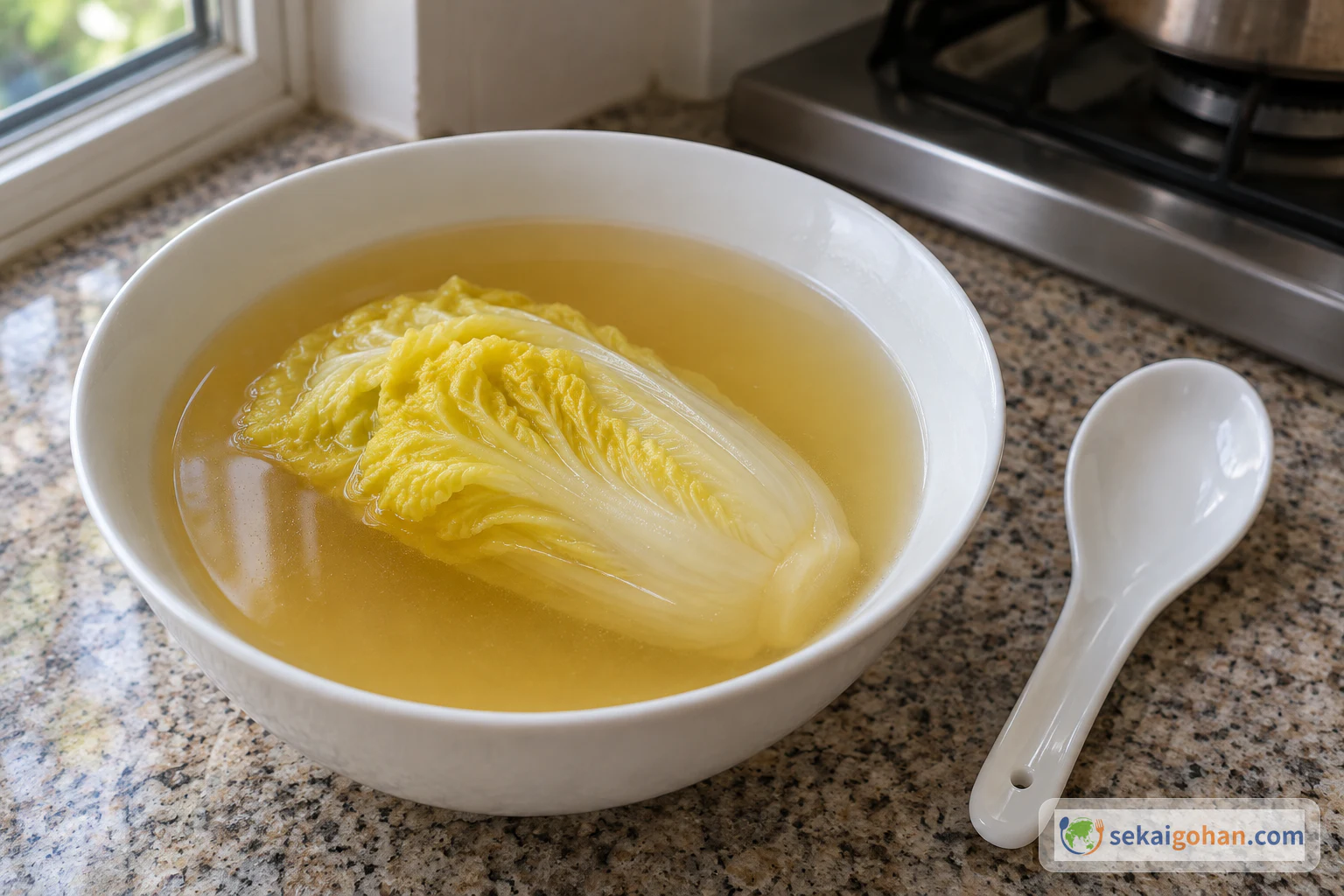
A ladle of steaming broth goes over a pale cabbage heart, runs off into the pot, and goes back over again until the leaves are tender right down to the base. Then the bowl is filled one last time with fresh broth so clear that the white porcelain shows through it, with no bead of fat on the surface. This is kaishui baicai, "boiled-water cabbage", from the Sichuan kitchen. The water in its name is a stock of hen, duck, pork ribs and ham bone, simmered for hours and then swept clean with pounded meat. In the spoon it tastes fresh and quiet and deeply savory, with no oil and no heaviness.
A Plain Name for a Banquet Bowl
Next to mapo tofu or shuizhu yu, with their chili and numbing pepper, this bowl looks as if it came from another kitchen. It is the same cuisine at its most restrained. Nothing in it is fried and nothing is red. Everything rests on a clear stock (清汤, qīngtāng) and on the softest center of a napa cabbage, and it shows a side of Chinese cooking that people who know Sichuan food only for its heat rarely meet.
开水 (kāishuǐ) is plain boiled water, the kind poured from a kettle, and 白菜 (báicài) is napa cabbage. The name describes how the dish looks in the bowl. What you actually taste is a stock that simmers for hours.
A story more than a record
Where the dish began is told as a story rather than set down in a record. The usual telling credits Huang Jinglin (黄敬临) with creating it in the kitchens of the Qing palace, and Empress Dowager Cixi appears in that story. Luo Guorong (罗国荣) is credited with carrying it forward until it became a famous dish at China's state banquets. Chen Songru (陈松如), who later ran the kitchen of the Sichuan Restaurant in Beijing, is also named as a cook who refined it. How his work fits with Luo Guorong's line is not settled.
Where the work goes
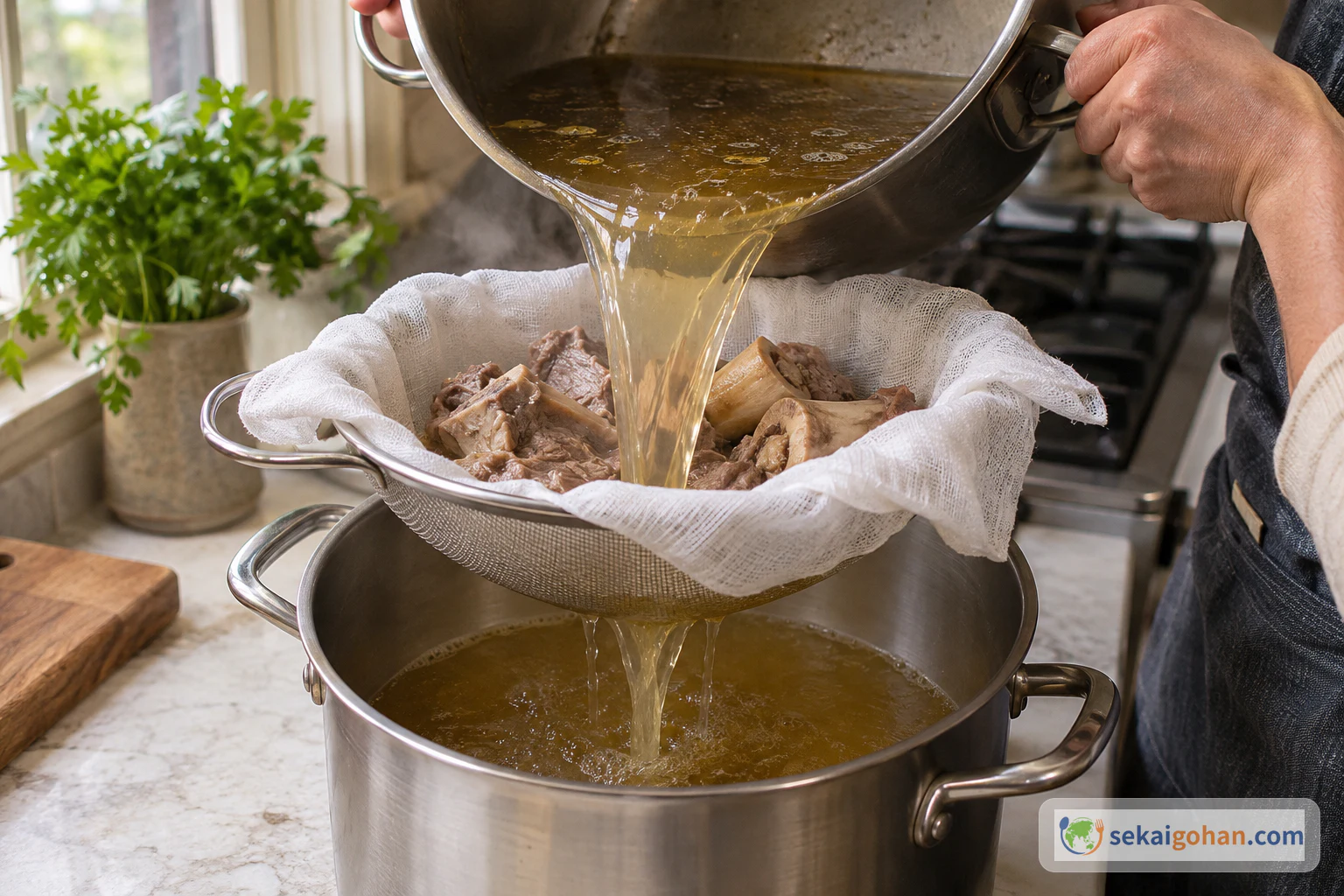
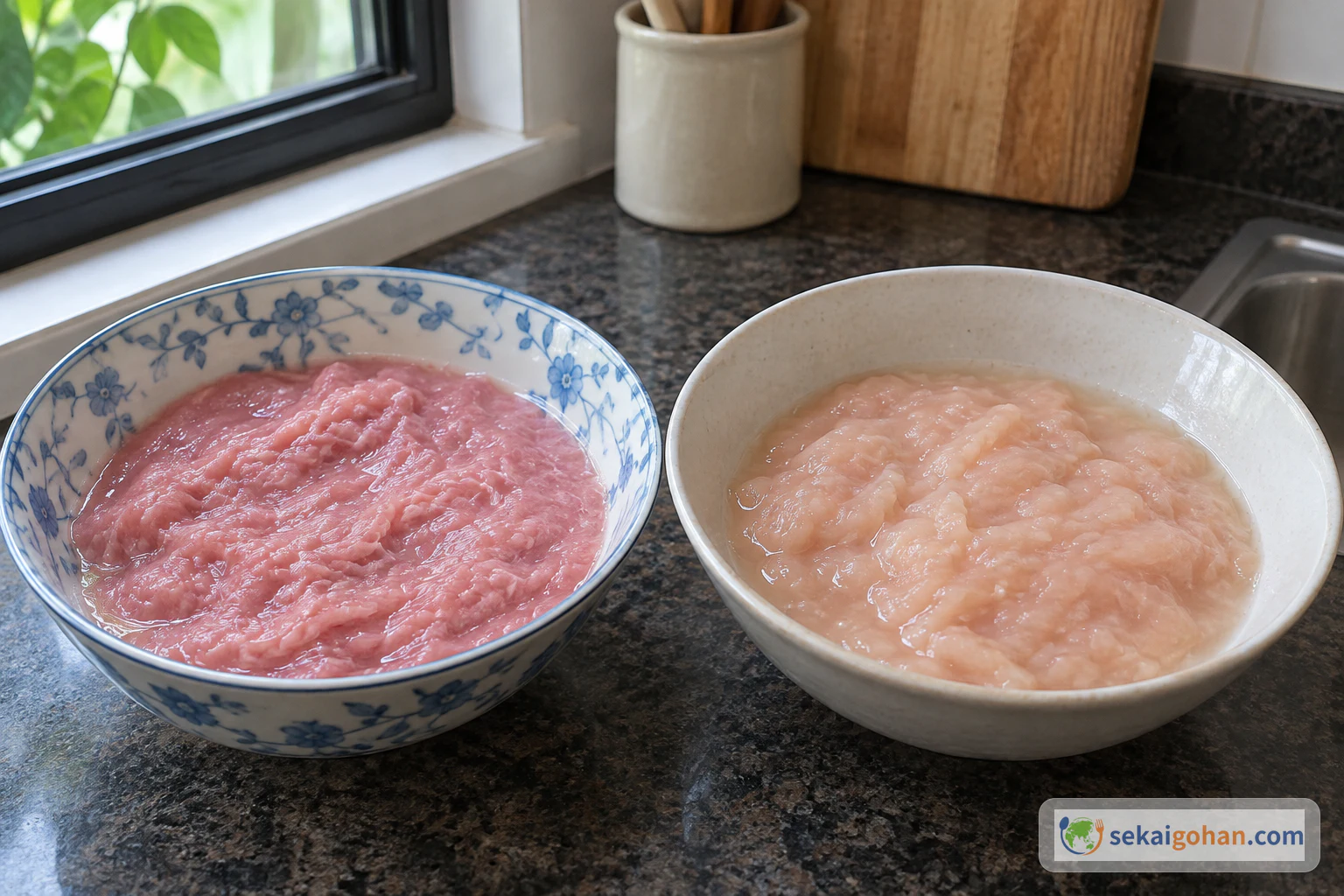
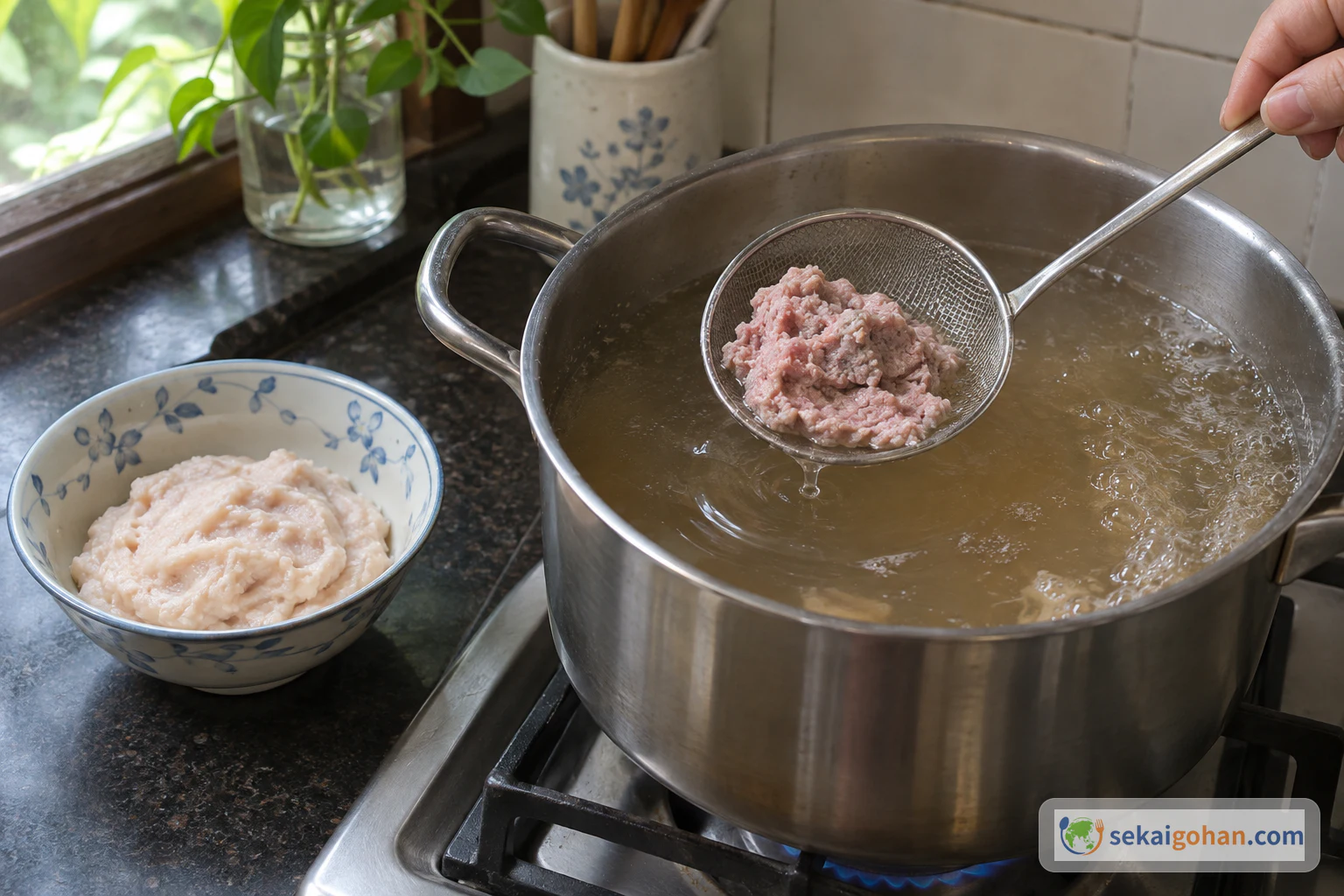
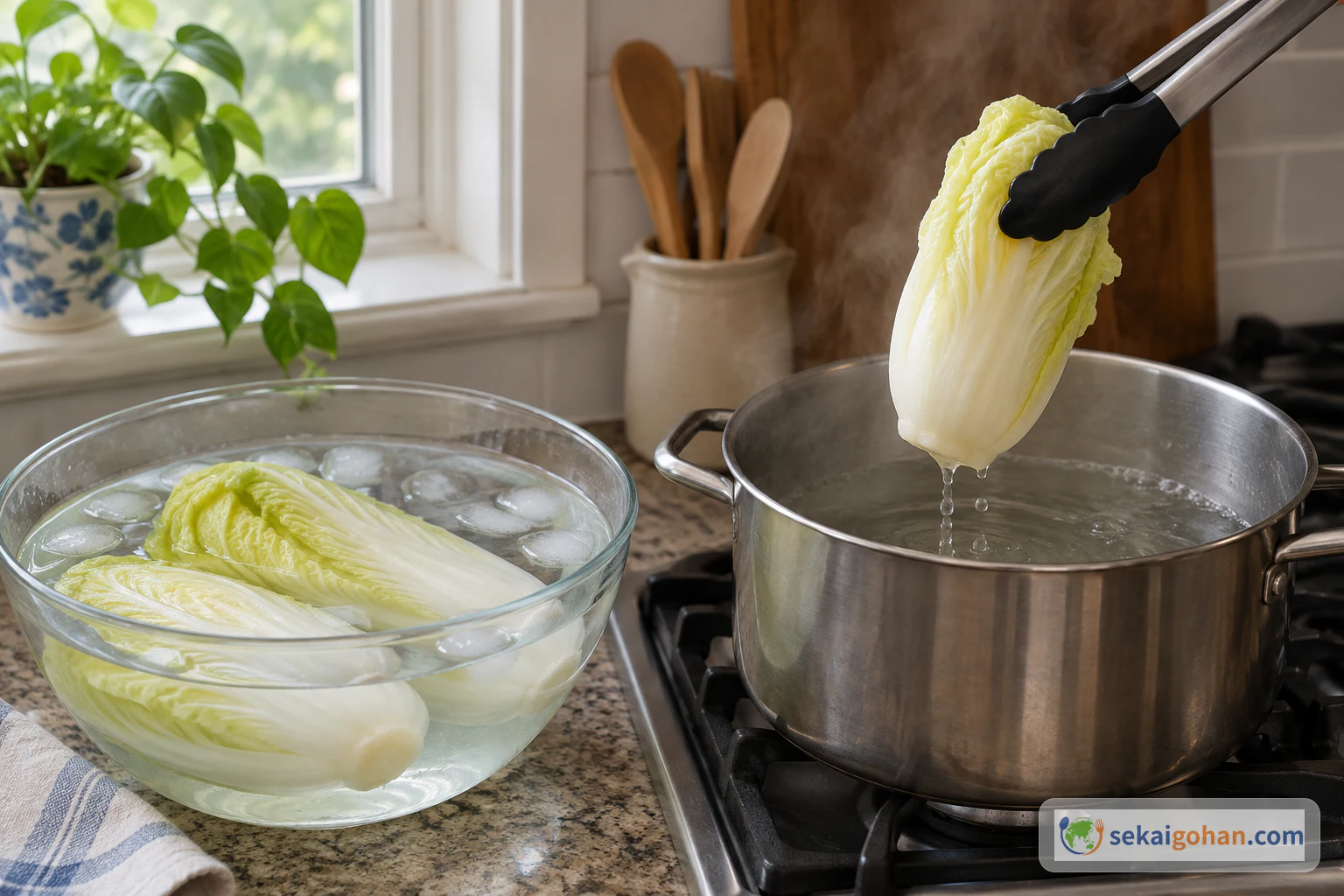
Two things set this stock apart from an everyday chicken soup. The first is the sweep (扫汤, sǎotāng). Lean pork pounded into a "red paste" (红蓉) and chicken breast pounded into a "white paste" (白蓉) are stirred into the simmering stock one after the other. Each paste sets into a clump that gathers the cloudiness, and is lifted out with it, so that the broth ends up clear and free of oil. The second is the cabbage. Only the tender yellow-white heart is used, and it is cooked by pouring hot broth over it rather than by boiling. The cabbage heart is never boiled in the broth itself.
Ingredients
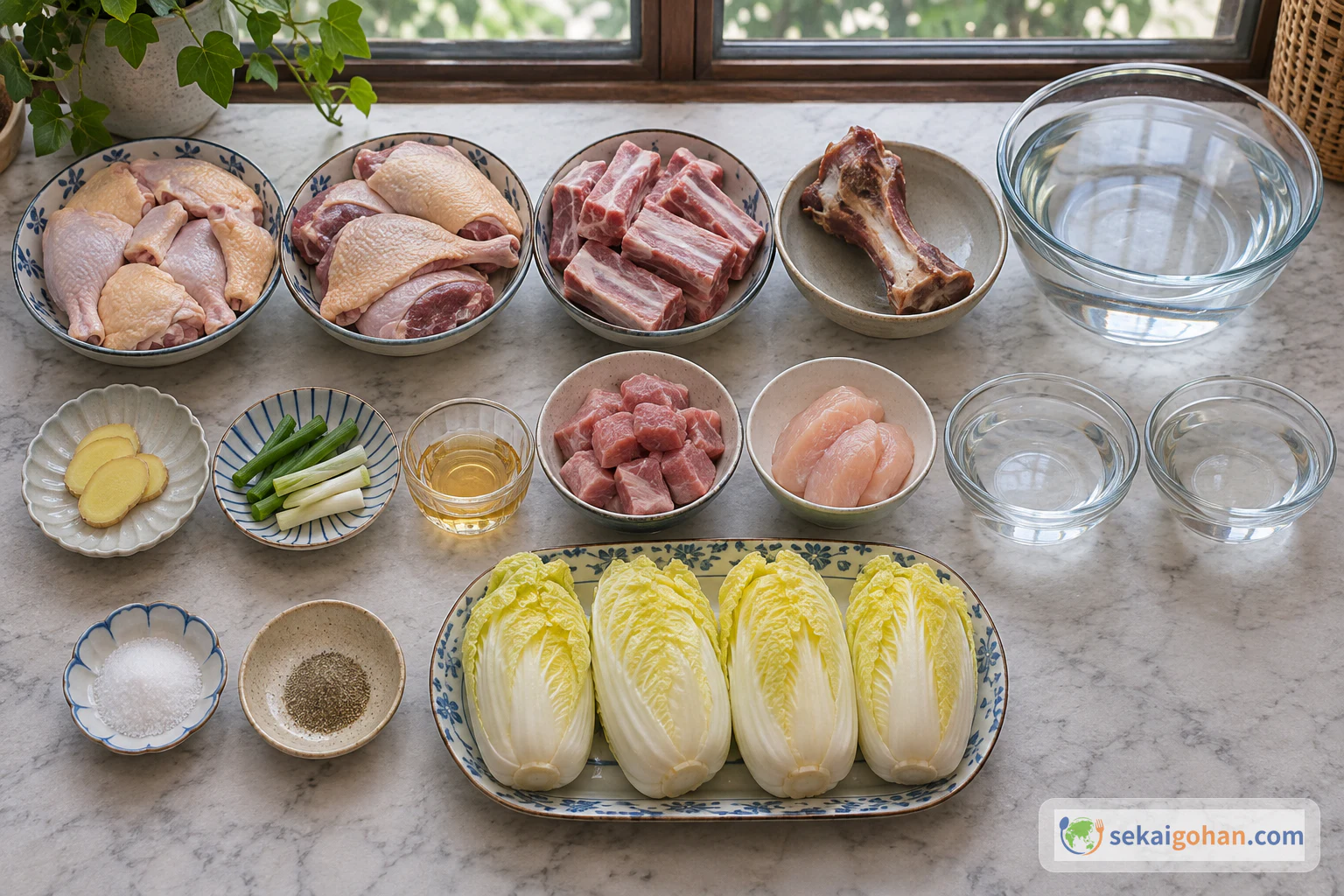
The broth contains chicken, duck and pork. Read the labels on Chinese cooking wine and on any cured ham or ham bone for added ingredients. Dried scallop, if you add it, is shellfish.
Equipment
- A tall stockpot for the long simmer
- A wide pot for sweeping the broth
- A fine-mesh stainless sieve
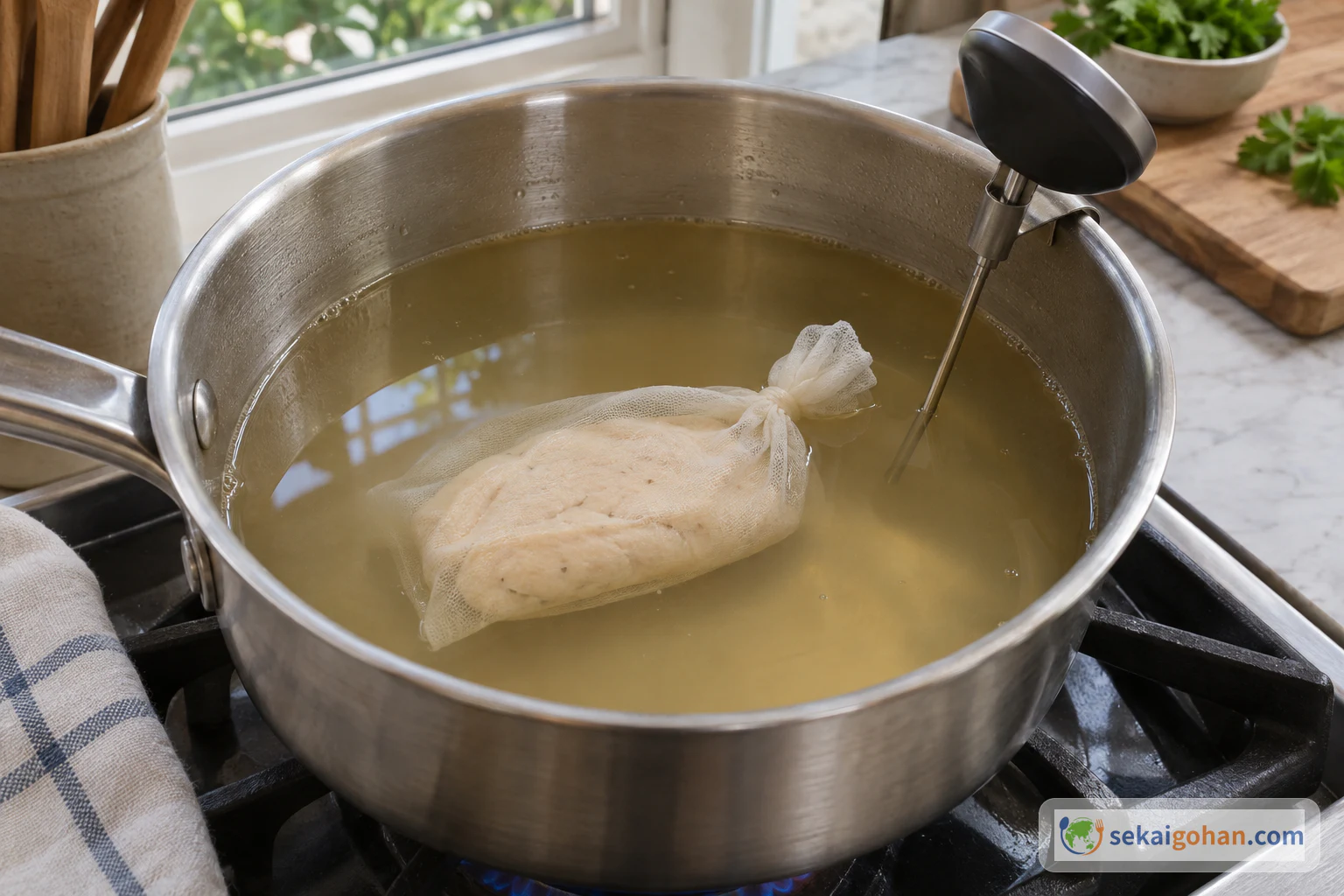
- Cheesecloth or fine muslin, for straining and for wrapping the white paste
- A fine mesh skimmer
- A kitchen thermometer
- A cleaver or heavy knife for pounding the pastes
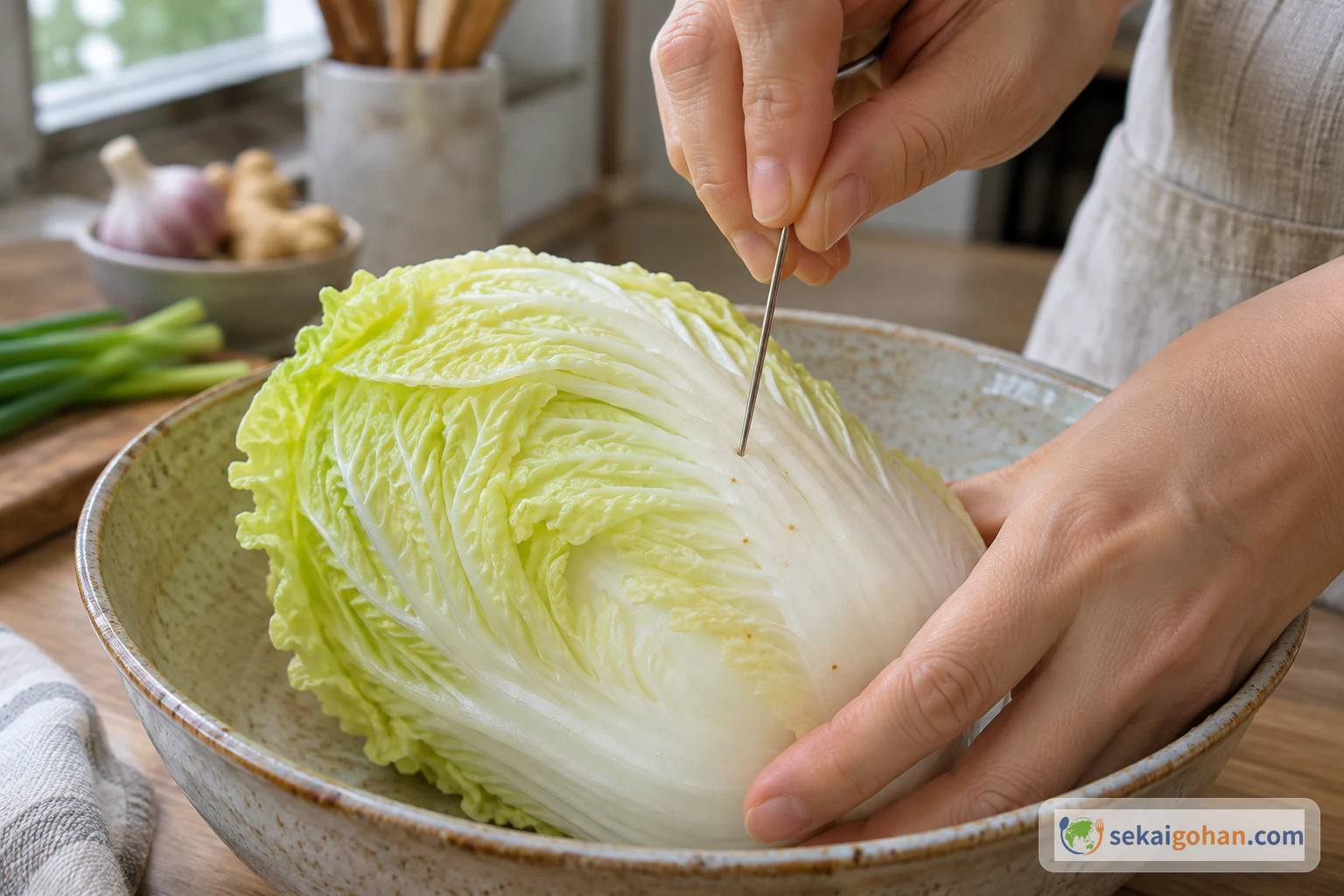
- A fine needle or thin skewer kept only for food
- Tongs, a bowl of cold water and serving bowls
Choosing and Substituting
The Jinhua ham bone is the hardest thing to find outside China. Prosciutto end pieces or a cured ham bone from a deli stand in well. They salt the stock differently, though, so add the measured salt in stages and finish by taste. An old laying hen gives the broth its depth. A stewing hen from a butcher is the closest match, and bone-in chicken thighs work when nothing else is available, though the broth tastes younger and lighter. Duck pieces are easiest to find at an Asian butcher.
Jinhua ham meat and dried scallop also appear in versions of this stock, alongside poultry, pork bones and lean meat. Dried scallop is optional and deepens the savoriness. Choose cabbages with a soft, pale yellow-white heart, and keep only that center for the bowl.
What makes the dish taste like itself is the long simmer, the two sweeps and the tender heart. The exact ham can change with what you can buy.
Cured ham substitutes vary in saltiness. When you use one, add the salt a little at a time in step 5 and taste the finished broth before the final pour.
Method
The stock takes the most time: 4–5 hours at a bare simmer, almost all of it hands-off. Pound the pastes once the stock is strained, then sweep and clear the broth. The cabbage comes last, when the clear broth is hot and ready to pour.
When It Goes Wrong
| What you see | Why | What to do |
|---|---|---|
| The stock is cloudy before the sweep | It boiled too hard during the simmer | Keep it at a bare tremble from the first skim. The two sweeps clear it, so give each paste time to set and lift out every bit |
| The paste breaks into shreds instead of a clump | The broth was not yet bubbling on that side, or the paste was stirred | Wait for steady bubbles on one side, pour the paste in and leave it alone until it holds together |
| The broth clouds again at the end | It went above 158–176°F (70–80°C) with the parcel in it | Turn the flame down and hold it in range until the broth clears again |
| The cabbage tastes grassy | Outer leaves were used, or the hearts sat in the blanching water | Use only the pale inner heart, discard the blanching water and cool the hearts in fresh cold water |
| The base of the heart is still firm | The blanch was too short or the broth cooled between pours | Keep the broth steaming on the burner and keep pouring until the base is tender |
| The broth is too salty | A cured ham substitute added salt of its own | Next time, add the salt in stages and taste before the final pour |
Serving, Variations and Storage
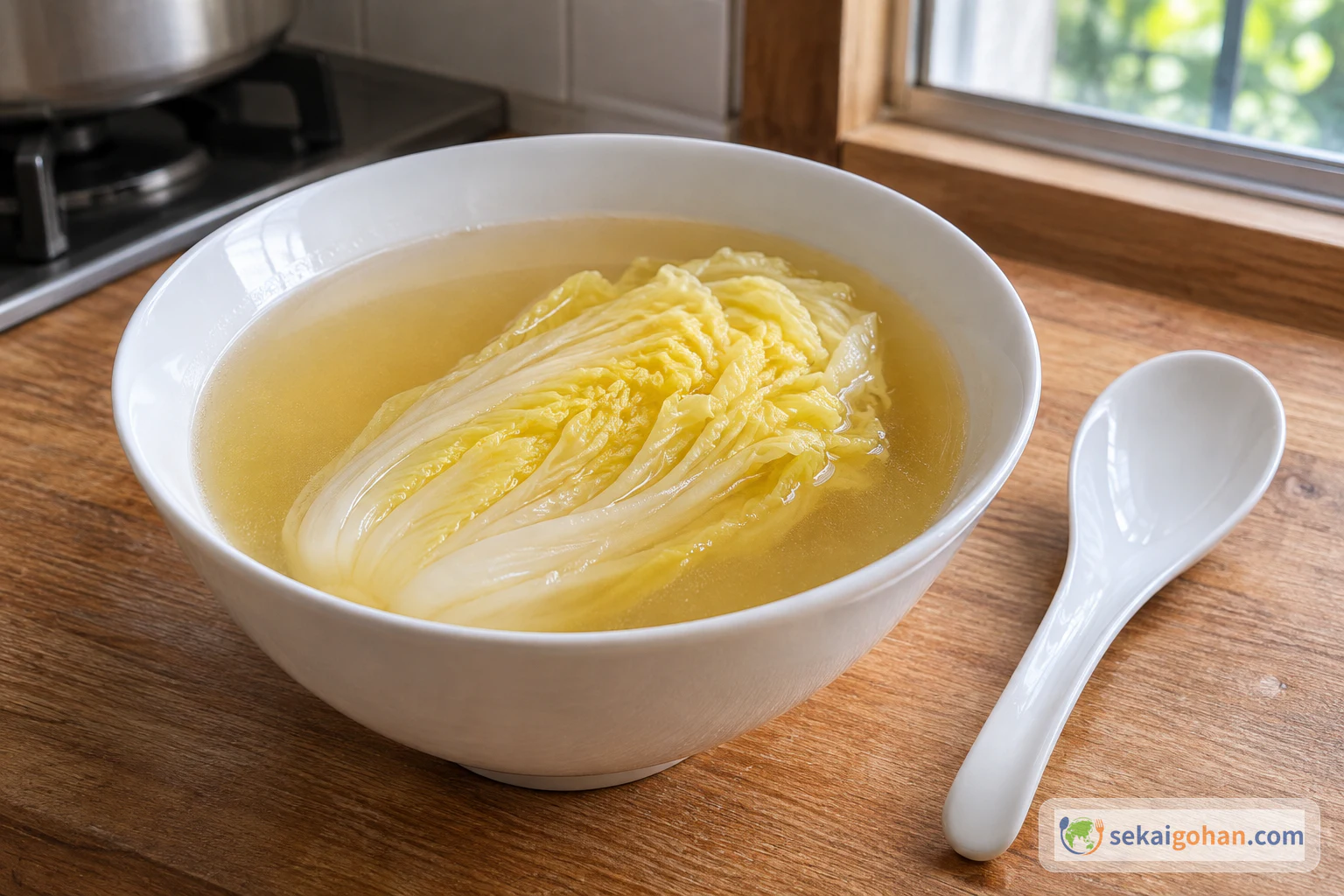
At the table
Serve each heart in its own small bowl with a porcelain spoon, hot from the final pour. On a table with chili-heavy Sichuan dishes, it is the bowl people come back to between bites. Bring it out last, once everything else is on the table, so the broth is steaming when the spoons go in.
Variations
- Dried scallop in the stock. A few pieces simmered with the bones add a deeper, sea-sweet savoriness. Rinse them with the meats in step 1.
- Ham meat as well as the bone. A piece of cured ham in the pot makes the broth saltier and more aromatic. Add the salt in stages.
- Bone-in chicken thighs in place of an old hen. The broth is lighter and younger in taste, and still clears the same way.
Storage
Leftover broth was simmered for hours, so cool it quickly. Divide it into small portions in shallow containers, cover and refrigerate promptly. Reheat it until it is steaming hot all the way through before you pour it over a fresh cabbage heart.
Frequently asked questions
Can I clear the broth without a thermometer?
It is harder. The range is 158–176°F (70–80°C), and a thermometer is the dependable way to hold it for the whole clearing step. Without one, use the lowest flame, keep the surface barely moving with no bubbles breaking, and lift the pot off the heat briefly if the broth starts to bubble.
What do I do with the outer cabbage leaves?
Save them for another dish, such as a stir-fry or a soup. Only the tender yellow-white heart goes into this bowl, because the outer leaves are tougher and grassier and stand out against the clear broth.
Is there a quicker version?
Quick versions that clear a stock with ground meat are a different, simpler dish. They do not have the depth of a stock simmered for hours with hen, duck, ribs and ham bone. Some kitchens also soak the cabbage and steam it instead of pouring broth over it. Pouring the broth over and over is the way that keeps the heart tender and the bowl clear.
Can I make the stock the day before?
Yes. Strain it, cool it quickly in shallow containers and refrigerate it covered. The next day, bring it back up and carry on with the sweep in step 5, then cook the cabbage when the broth is clear.