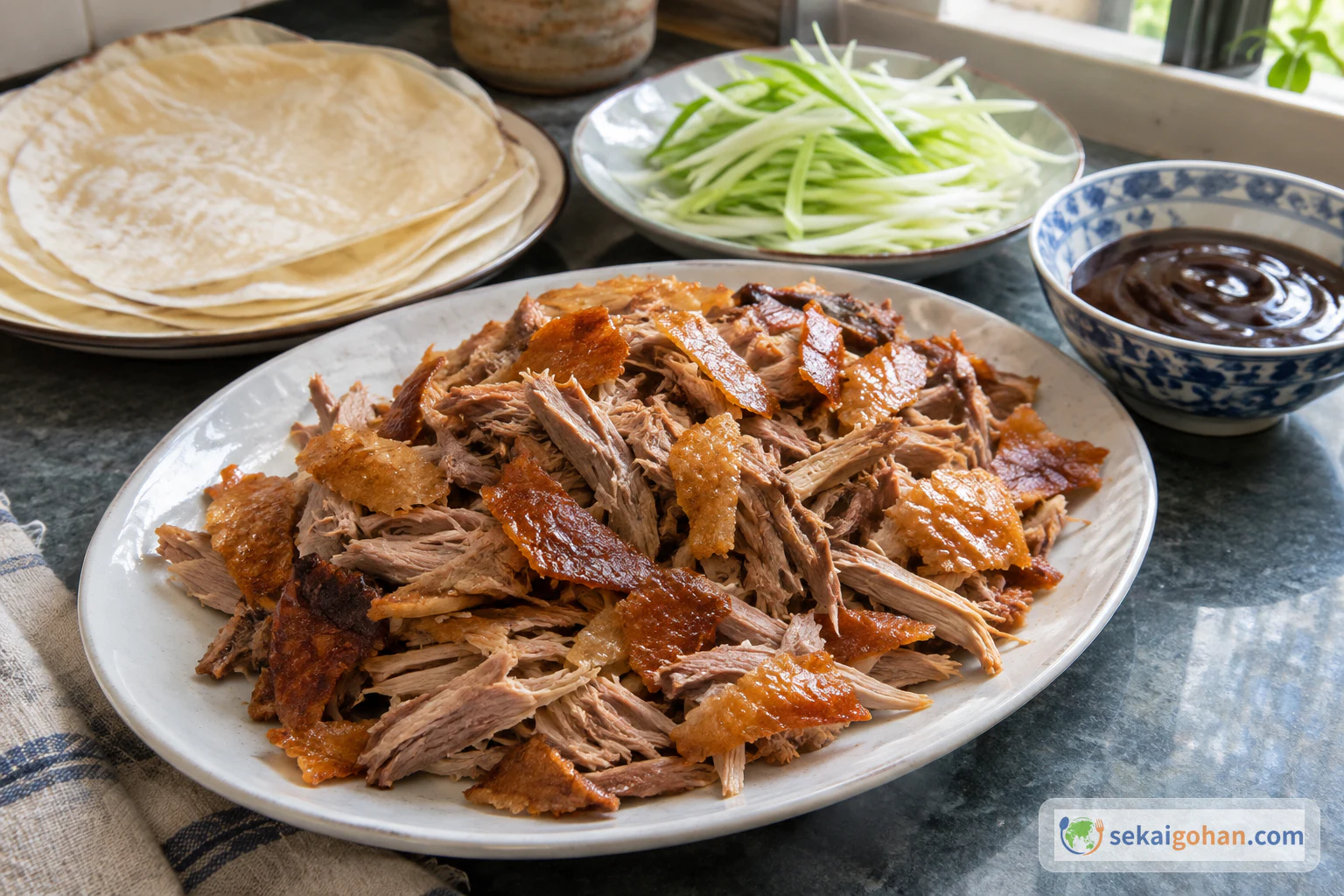
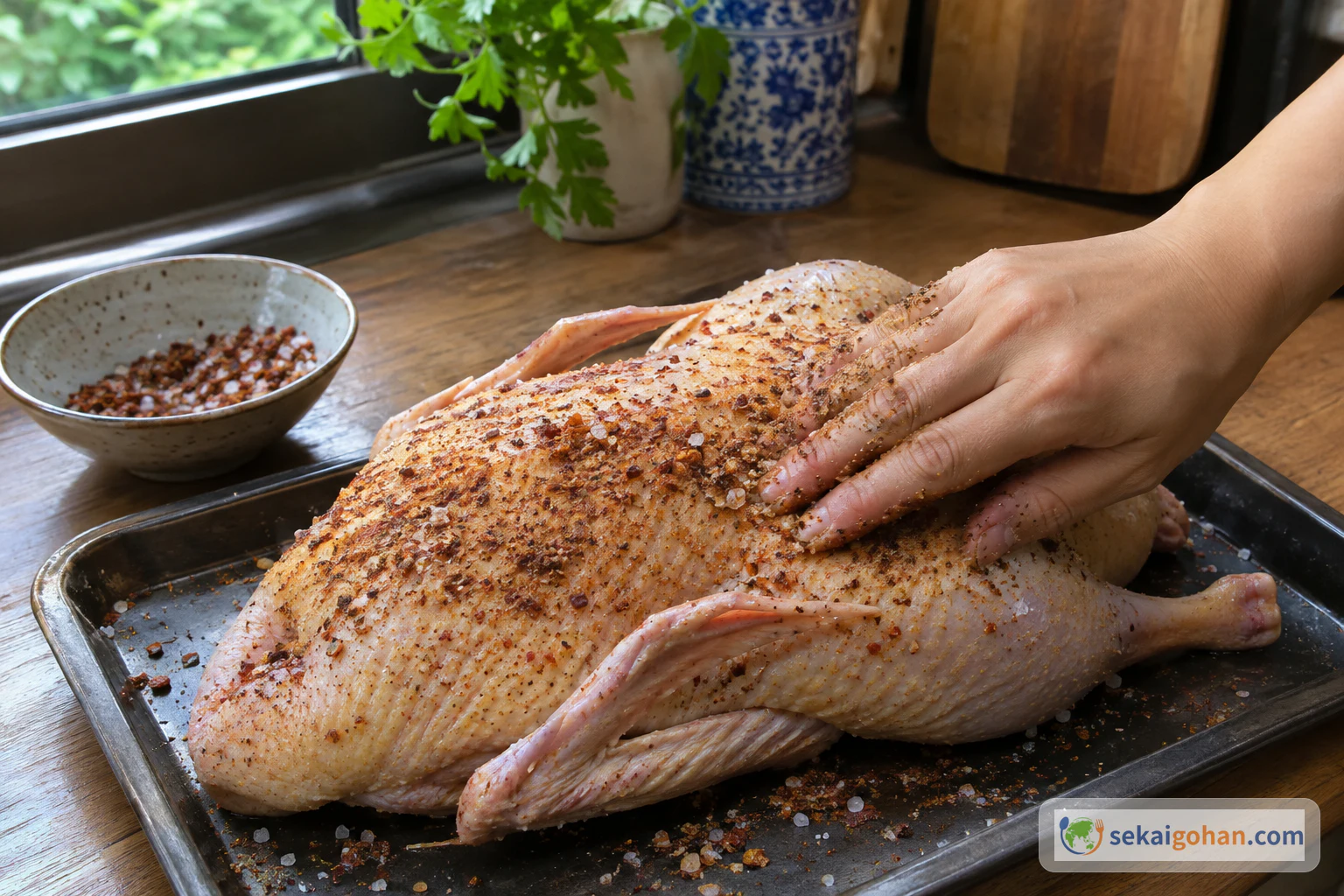
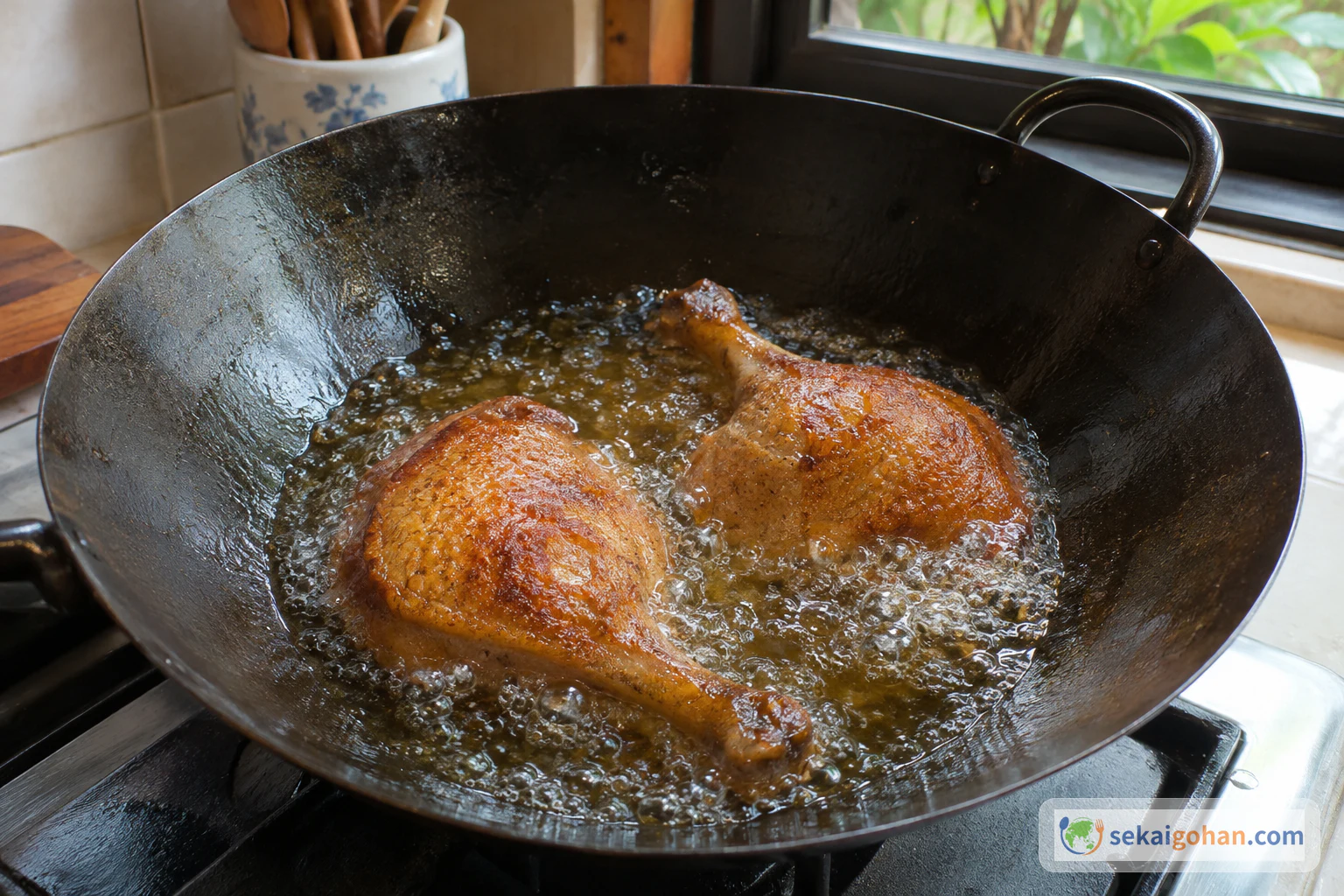
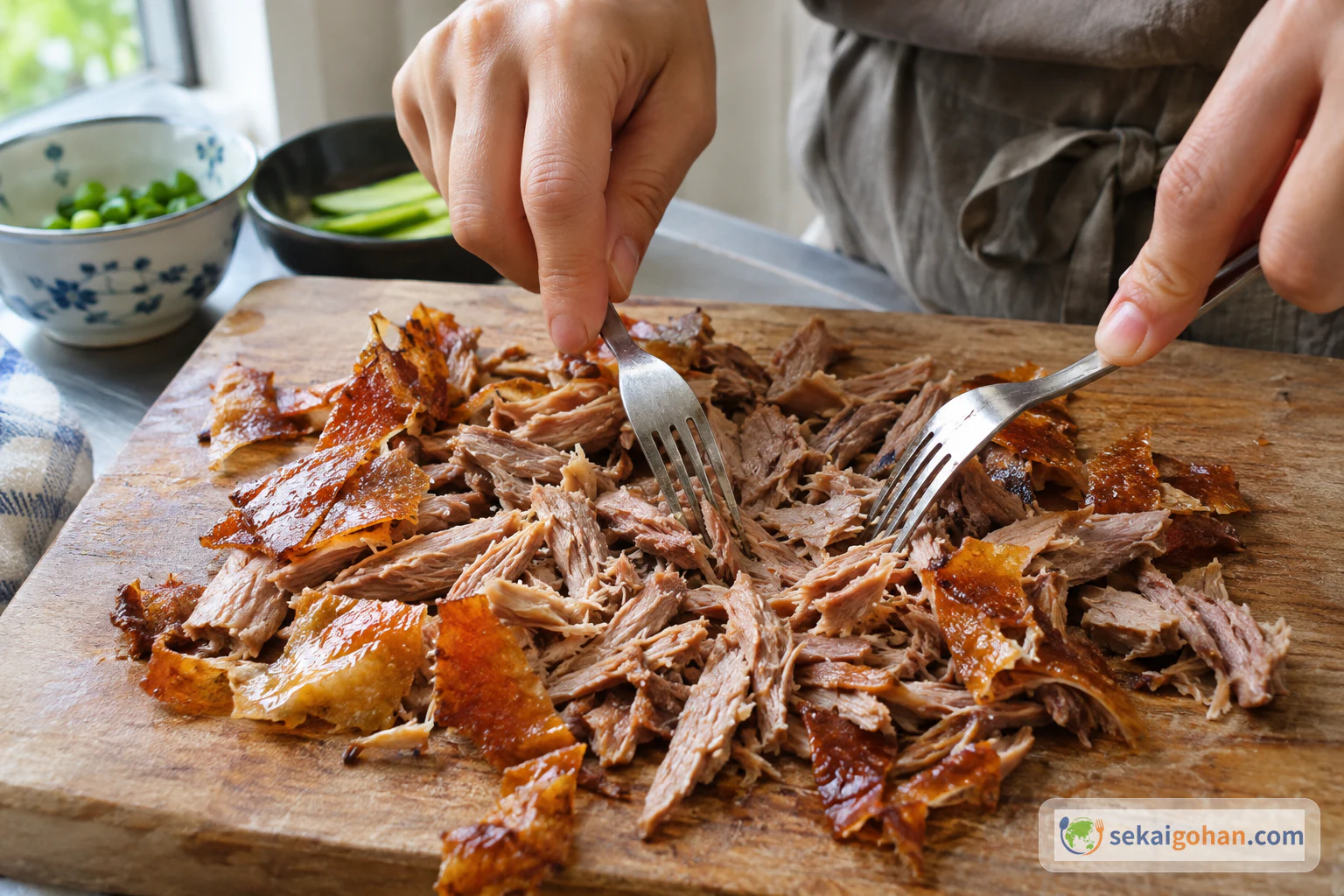
The duck quarters go into oil that is almost smoking, and the kitchen fills with the smell of five-spice, cumin and Sichuan pepper as the skin starts to crackle. A few minutes later you pull the meat off the bone with two forks. Strands of tender, spiced meat fall away and shards of crisp skin break off with them. Everyone at the table takes a thin pancake, brushes it with hoisin, lays on spring onion and a pinch of duck, and rolls it up. Crispy aromatic duck is a Chinese dish made the way British Chinese restaurants made it famous. It is rubbed with spice and salt, steamed until tender, dried, then fried. The result is deeply fragrant, salty-savory meat with a shattering skin, set against sweet, dark hoisin and the sharp freshness of raw spring onion.
A Fragrant, Crisp Duck Between Sichuan and London
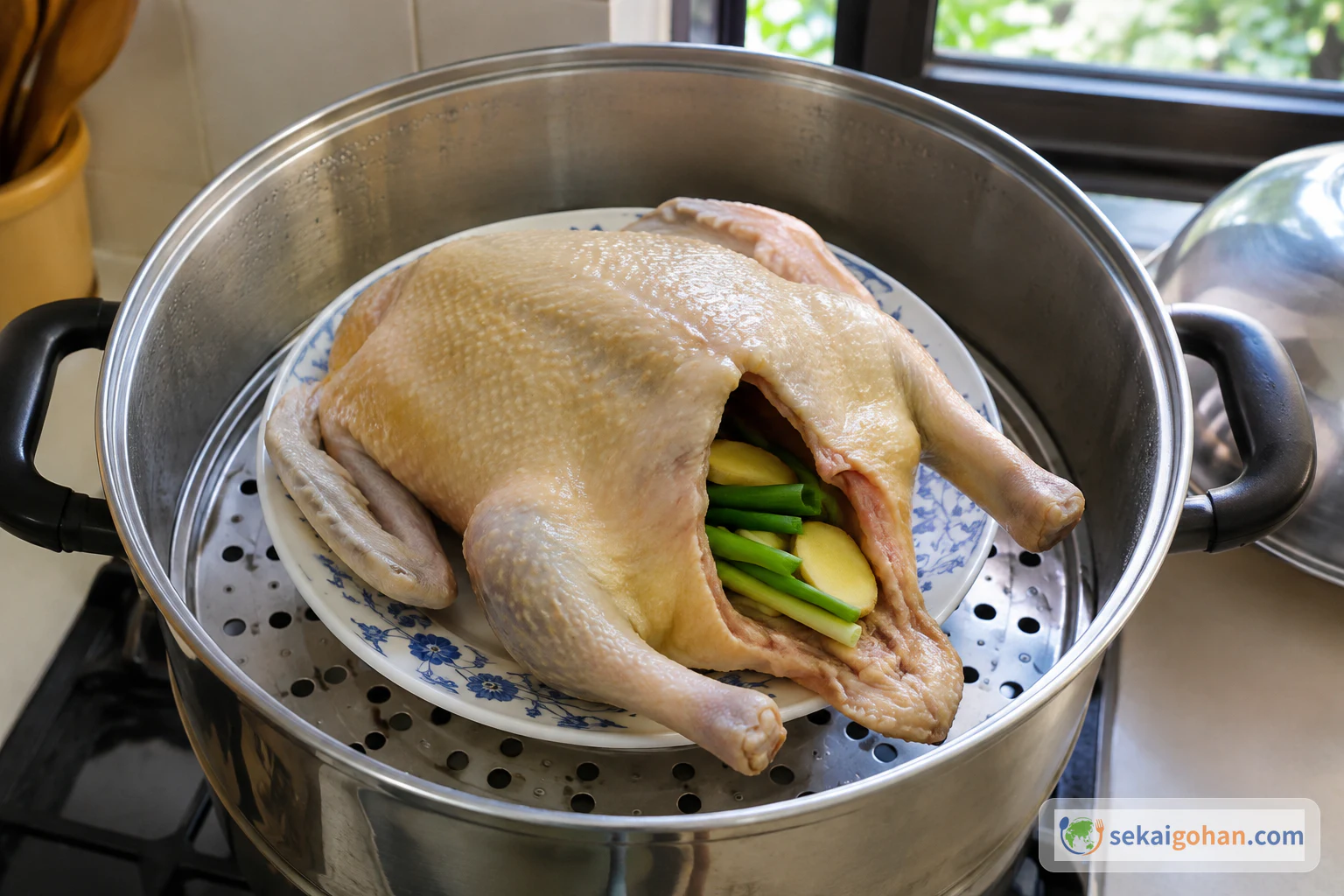
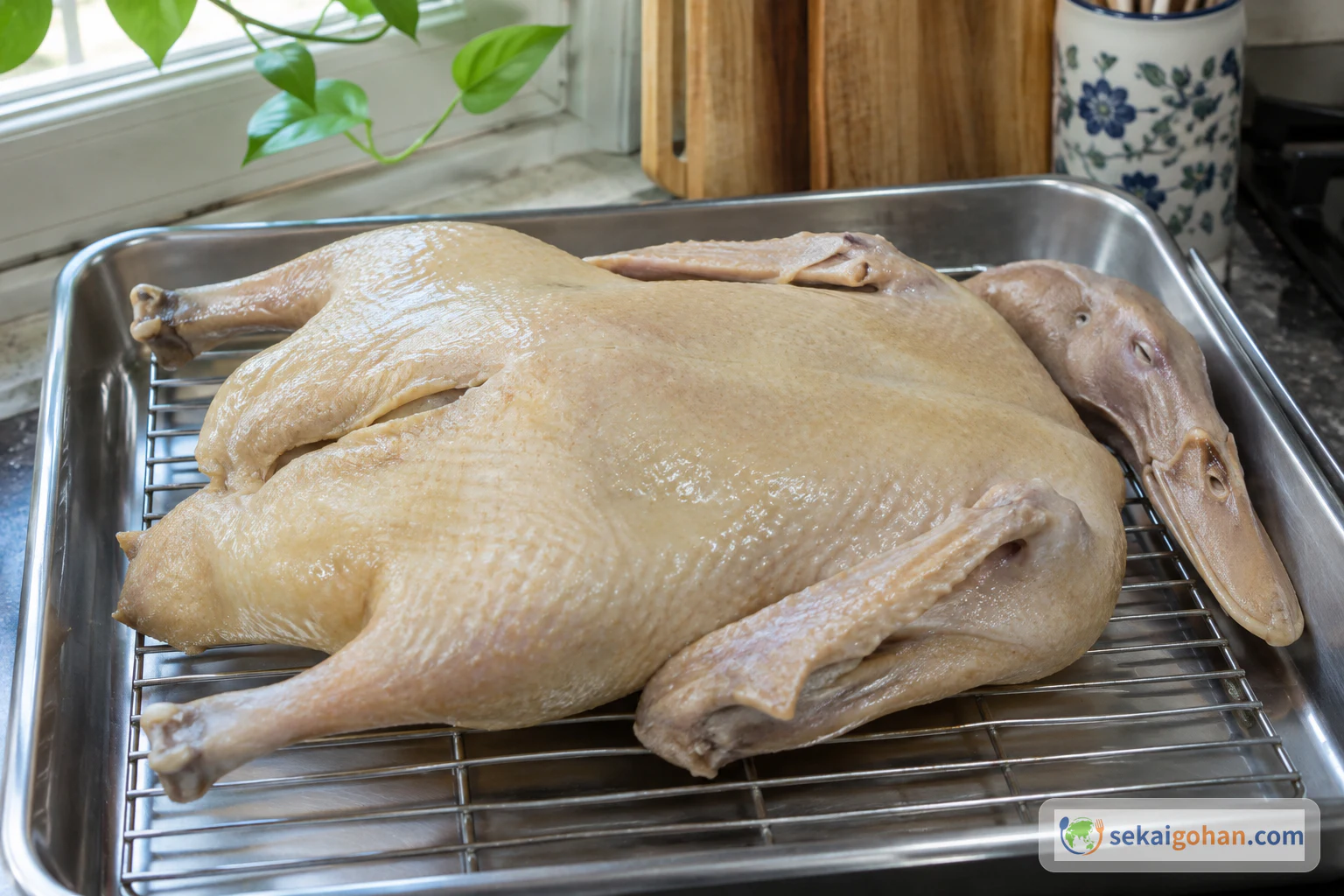
The two-stage cooking is the whole point. Steaming renders the fat and makes the meat soft, and the duck has to be cooled and dried before it meets the oil, because water left on the skin spits in hot fat and keeps the skin from crisping. Frying then gives the crust. The duck does all its slow cooking in steam and only a short time in oil.
How it differs from Peking duck
People often confuse it with Peking duck, which also turns up in Chinese restaurants abroad, but the two are cooked in completely different ways. Peking duck is roasted, either in a closed oven or hung in an open-fronted one. Crispy aromatic duck never sees a roasting oven. It is steamed and then fried, so the meat comes out softer and more shreddable, and the spice rub gives it an aroma all its own. Treat them as two separate dishes. Many more dishes from the same country are gathered on the China page.
The Sichuan name and an unsettled origin
The Chinese name, 香酥鴨 (xiāng sū yā), also belongs to a Sichuan fried duck. In Sichuan the duck is cured with salt, Sichuan pepper and five-spice, steamed, fried, then cut into small pieces and eaten on the bone, with no pancakes. One food blogger traces the British version back to that dish. The difference is how it is served: shredded and wrapped in pancakes with spring onion, cucumber and hoisin. Nobody knows who first served it that way. It was being served in London's Chinatown, and where it went from there is not settled.
香 (xiāng) means fragrant and 酥 (sū) means crisp. "Fragrant crispy duck" is the literal reading, and "crispy aromatic duck" is its familiar English menu name. Traditionally the duck is eaten bones and all. For pancakes, the meat is taken off the bone and shredded.
Ingredients (serves 4)
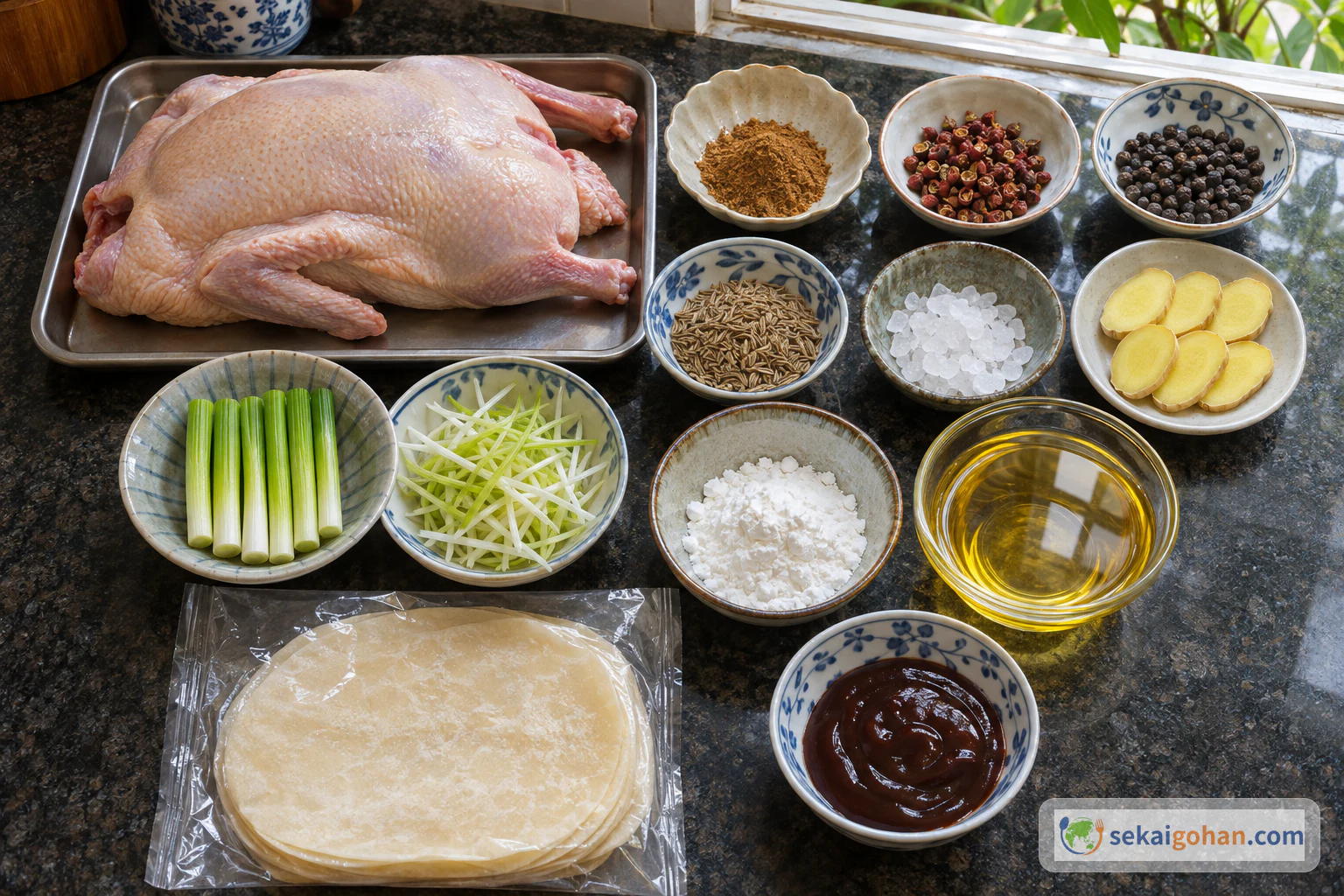
The rock salt draws out moisture and seasons the duck overnight, but brush off the excess before steaming. If the crust stays on, the meat turns harshly salty.
Groundnut oil is peanut oil. Chinese pancakes and all-purpose flour contain wheat. Check the labels on hoisin sauce and pancakes for wheat, soy and other allergens before serving guests.
Equipment
- A steamer large enough for a whole duck, or a large lidded pot with a rack
- A heatproof plate that fits inside the steamer with room for steam to rise around it
- A cooling rack
- Cling film
- A heavy knife or cleaver for quartering
- A deep wok or heavy, deep pan with plenty of room above 5 cups (1.2 L) of oil
- A slotted spoon or spider, and tongs
- Paper towels
- Two forks for shredding
Choosing and Substituting
The spices are what make this duck taste like itself. Five-spice, Sichuan peppercorns, whole black peppercorns and cumin seeds together give the warm, slightly numbing aroma, so get all four. Chinese grocers and online spice shops sell Sichuan peppercorns and five-spice. Buy the cumin and black pepper whole, not ground. Chinese pancakes come in packs, chilled or frozen, at Chinese and East Asian grocers. Hoisin is easy to find in supermarkets.
| Item | Swap | What changes |
|---|---|---|
| Cornflour | Cornstarch | The same thing under its US name. Use it for the dusting. Yellow US corn flour is a different product and will not work |
| Cornflour | All-purpose flour or potato starch | Both work as a dry coat that crisps in the oil. Cornstarch is the one to start with |
| Rock salt | Coarse sea salt | Fine to use, but measure it by weight. The grains are a different size, so a cup of one is not a cup of the other |
| Groundnut oil | Vegetable oil or rapeseed (canola) oil | Neutral, heat-tolerant oils that fry just as well. Also the better choice if anyone at the table has a peanut allergy |
| Fresh duck | Frozen duck | Fine as long as it is fully thawed before the rub goes on |
Method: Rub, Steam, Dry, Fry
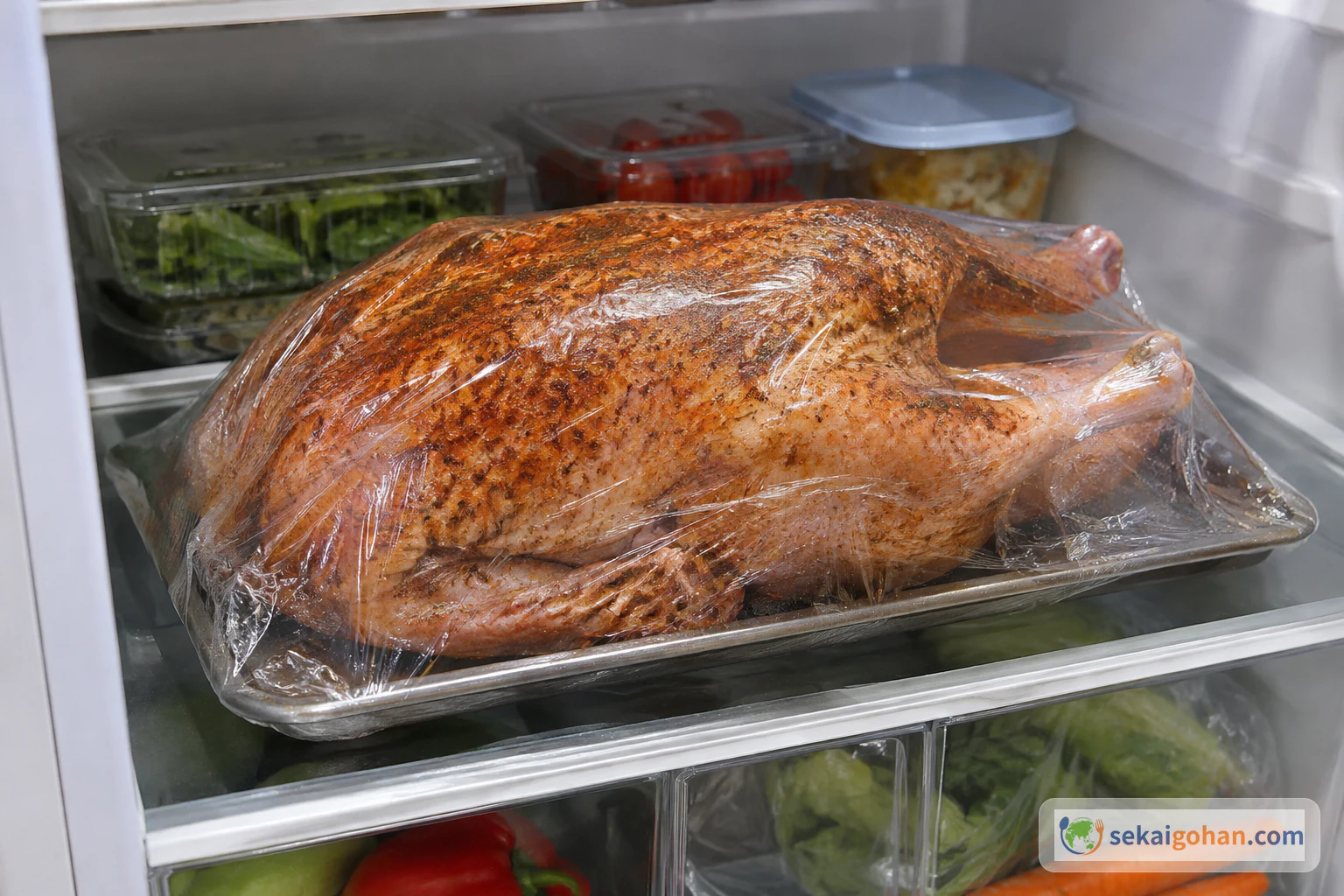
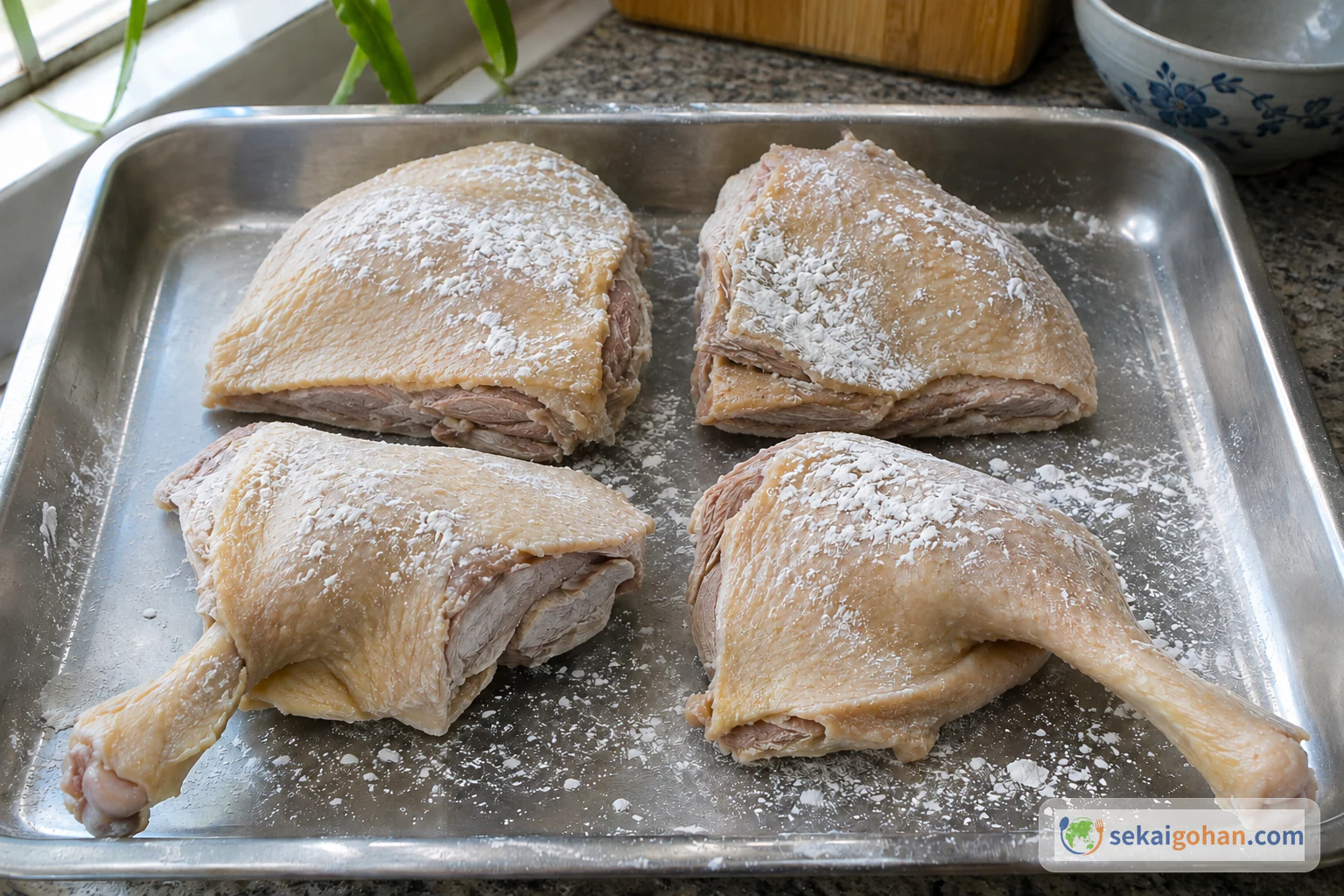
The work is spread over two days, and most of it is waiting. On day one you rub the duck and wrap it for its 24 hours in the fridge. On day two you steam it, then let it cool and dry. You can stop at that point and refrigerate it. The frying is the only part that needs your full attention, so do it right before you eat, with the pancakes, spring onion and hoisin already on the table.
The 2-hour cooling and drying is what makes the skin crisp. A duck that goes into the oil damp steams instead of frying, and it spits. Give it the full drying time, or make it the day before and refrigerate it.
Lift the steamer lid away from your face. Water on the duck makes hot oil spatter, so dry the duck well, shake off the excess flour, and lower the pieces in gently with tongs or a spider. Use a deep pan with plenty of headroom, never fill it near the top, and keep children and pets away from the stove while you fry.
When It Goes Wrong
| What you see | Why | What to do |
|---|---|---|
| The oil spits violently when the duck goes in | Water is left on the skin or the cut sides | Pat the quarters dry, dust them again and shake off the excess. Next time, give the duck its full drying time on the rack |
| The skin comes out soft or greasy | The oil was not hot enough, or the duck was damp | Heat the oil until it is almost smoking before each batch, and fry in two batches as in the method |
| The meat tastes harshly salty | Too much rock salt stayed on before steaming | There is no taking it out now. Use more spring onion and a lighter hand with the hoisin. Next time, brush the duck thoroughly before it goes in the steamer |
| The steamer boils dry or the plate floods with fat | The fat and water were not tended during the long steam | Pour off the fat and top up the water each time you check on it |
Serving, Variations and Making Ahead
At the table
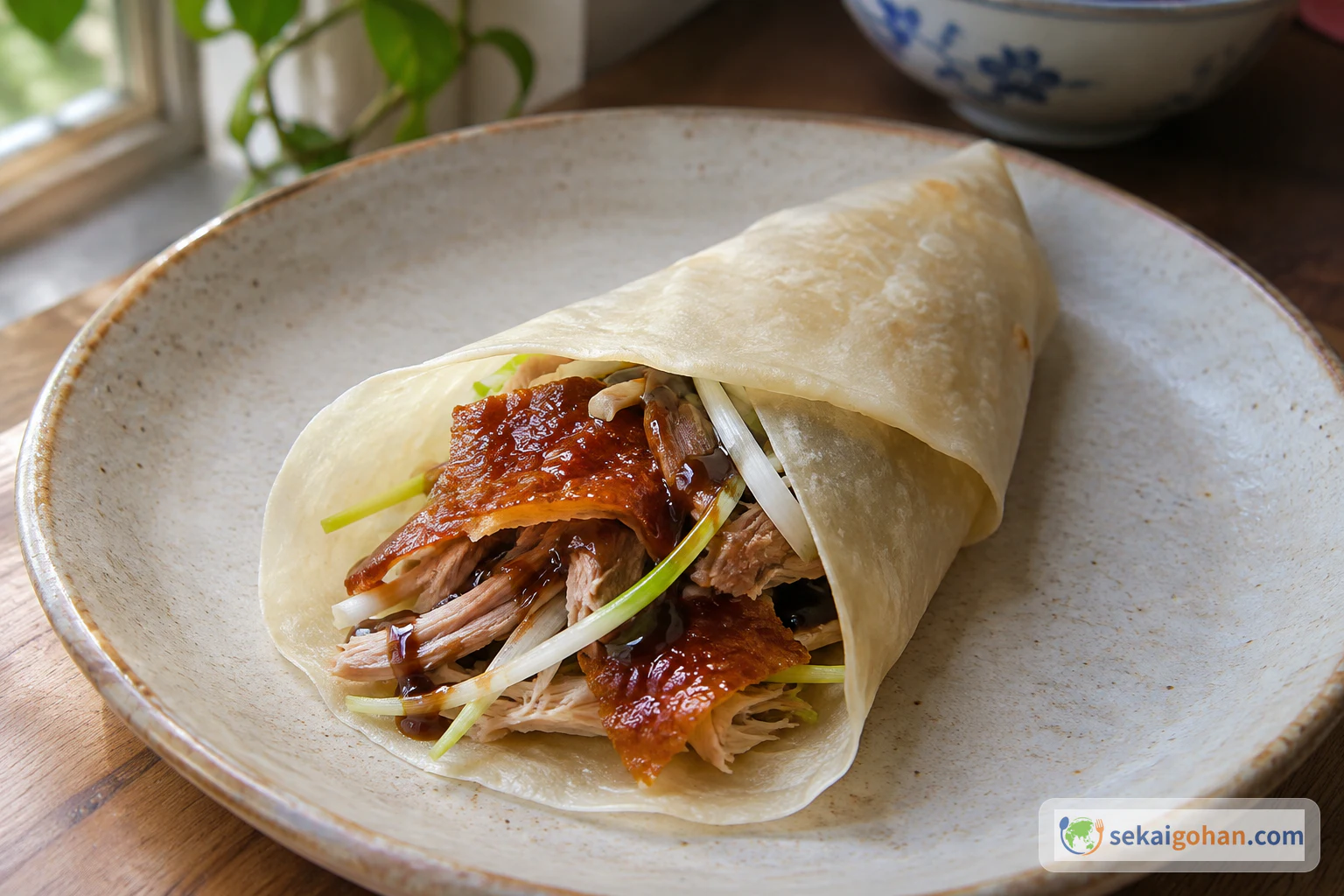
Put the shredded duck in the middle with the pancakes, prepared as the pack directs, a bowl of hoisin and the shredded spring onion. Everyone wraps their own. Spread a little hoisin on a pancake, add spring onion and duck, fold up the bottom and roll it closed. Cucumber cut into thin matchsticks is the usual extra in British Chinese restaurants, and it adds a cool, juicy crunch next to the crisp skin. The table moves from salty spice to sweet sauce to fresh onion in every bite. This is a dish to share: one duck feeds four.
Variations
- Oven-roasted whole duck. For a simpler home version, roast the duck whole at 350°F (180°C) for 1 hour 40 minutes and rest it for 15 minutes. It skips the steamer and the deep-frying.
- Duck legs, simmered and grilled. Simmer four duck legs in a spiced liquid for 1 hour 15 minutes, then crisp the skin under the grill. It is quicker and needs no large pot of oil, and you still get shreddable meat.
- Sichuan-style, on the bone. Cure the duck with 2 tbsp Sichuan peppercorns, 1 tsp five-spice and 1 tbsp salt, dry it for 24 hours, and steam it for 2 hours. Add 3 tbsp Shaoxing wine, coat it in a starch batter and fry it for about 5 minutes on each side. Chop it into small pieces with the bone in and eat it without pancakes.
Making ahead
Everything up to the end of the cooling and drying can be done the day before. Once the steamed duck has cooled, cover it and refrigerate it, then quarter, dust and fry it just before serving. If any cooked duck is left over, cool it and refrigerate it promptly in a covered container. Reheat it until it is hot all the way through.
Frequently asked questions
Can I use a frozen duck?
Yes. Thaw it completely before you start. A duck that is still icy inside will not take the rub evenly and will not cook through in the steamer the way a thawed one does. Once thawed, dry it as thoroughly as a fresh one.
Can I skip steaming and go straight to frying?
No. Steaming is what cooks the whole duck through, renders its fat and makes the meat soft enough to shred. Frying only crisps the outside of meat that is already cooked. A raw duck dropped into oil burns outside long before the inside is done.
Do I have to take the meat off the bone?
For pancakes, yes, because shredded meat is what rolls neatly. Traditionally the duck is also eaten on the bone. If you would rather do that, chop the fried quarters into small pieces and serve them without pancakes, as in the Sichuan style.