Ingredients and steps on one page. Print it, or choose “Save as PDF” in the print dialog.
Sekai Gohan
Crispy Aromatic Duck Recipe: Spice-Rubbed, Steamed, then Fried
Ingredients
| Ingredient | Amount | Role |
|---|---|---|
| Duck, fresh or fully thawed | 1 whole, 6 lb (2.75 kg) | The main ingredient |
| Five-spice powder | 2 tbsp | Spice rub |
| Sichuan peppercorns (花椒) | to taste | Spice rub, for the numbing, floral edge |
| Whole black peppercorns | scant 1 oz (25 g) | Spice rub |
| Cumin seeds | 3 tbsp | Spice rub |
| Rock salt | 7 oz (200 g) | Spice rub and cure; the excess is brushed off before steaming |
| Fresh ginger | 6 slices | Stuffed into the cavity for steaming |
| Spring onions | 6, cut into 3-inch (7.5 cm) lengths | Stuffed into the cavity for steaming |
| Cornflour (cornstarch), all-purpose flour or potato flour | 1 cup | Dusting before frying |
| Groundnut (peanut) oil | 5 cups (1.2 L) | Deep-frying |
| Chinese pancakes | 1 pack | For wrapping |
| Spring onions, finely shredded | 6 | Fresh garnish in each pancake |
| Hoisin sauce | 1 cup | Sauce for the pancakes |
Steps
1Dry the duck and rub it with the spices
Rinse the duck inside and out, then pat it completely dry with paper towels, cavity included. Mix the five-spice powder, Sichuan peppercorns, black peppercorns, cumin seeds and rock salt in a bowl. Rub the mixture over all the skin and inside the cavity, pressing it into the folds around the legs and wings. Move on when every part of the duck has a dark, gritty coat.
2Cure for 24 hours, then brush off the excess
Wrap the duck tightly in cling film so the rub stays pressed against the skin, and refrigerate it for 24 hours. The next day, unwrap it and brush off the loose spices and salt with your hands or a dry brush, over a tray. Check under the wings and between the legs, where the salt gathers. Stop when the skin shows through a thin, even film of spice and no salt crust is left.
3Stuff the duck and set up the steamer
Push the ginger slices and the spring onion lengths into the cavity. Set the duck on a heatproof plate, which will catch the fat. Pour about 2 inches (5 cm) of water into the steamer base or a large pot and bring it to a boil. Lower the plate onto the rack and cover. You are ready when steam escapes steadily from under the lid.
4Steam for about 2 hours
Keep the water at a steady boil and steam the duck for about 2 hours. Every so often, lift the lid away from you and pour or spoon off the fat collecting on the plate. Top up the water each time so the pot never boils dry. Steam it for the full time so the duck is cooked right through.
5Drain, cool and dry
Lift the plate out carefully, then pour away all the liquid and fat. Pull out the ginger and spring onion from the cavity and discard them. Set the duck on a rack in a cool place for about 2 hours to cool and dry. If you are frying later, refrigerate it once it has cooled. It is ready when the skin feels dry and taut with no wet sheen.
6Quarter and dust with flour
Cut the duck into quarters: two breast pieces and two thigh-and-leg pieces. Tip the flour onto a tray and turn each quarter in it until it is coated all over, skin and cut sides alike. Shake each piece well to knock off the excess. Move on when each quarter has a thin, dry coat with no damp patches or clumps of flour.
7Fry the breast quarters
Pour the oil into a deep wok or heavy pan, leaving plenty of room above it, and heat it until it is almost smoking. Lower in the two breast quarters, skin-side away from you. Fry for 8–10 minutes. Lift them out when the skin is deep golden brown and crisp, and the bubbling has calmed.
8Fry the thighs and legs, then drain
Bring the oil back up until it is almost smoking again. Fry the thigh-and-leg quarters for 12–15 minutes, since this thicker meat needs longer. Drain all four quarters on paper towels. They are done when the skin is evenly crisp.
9Shred the meat
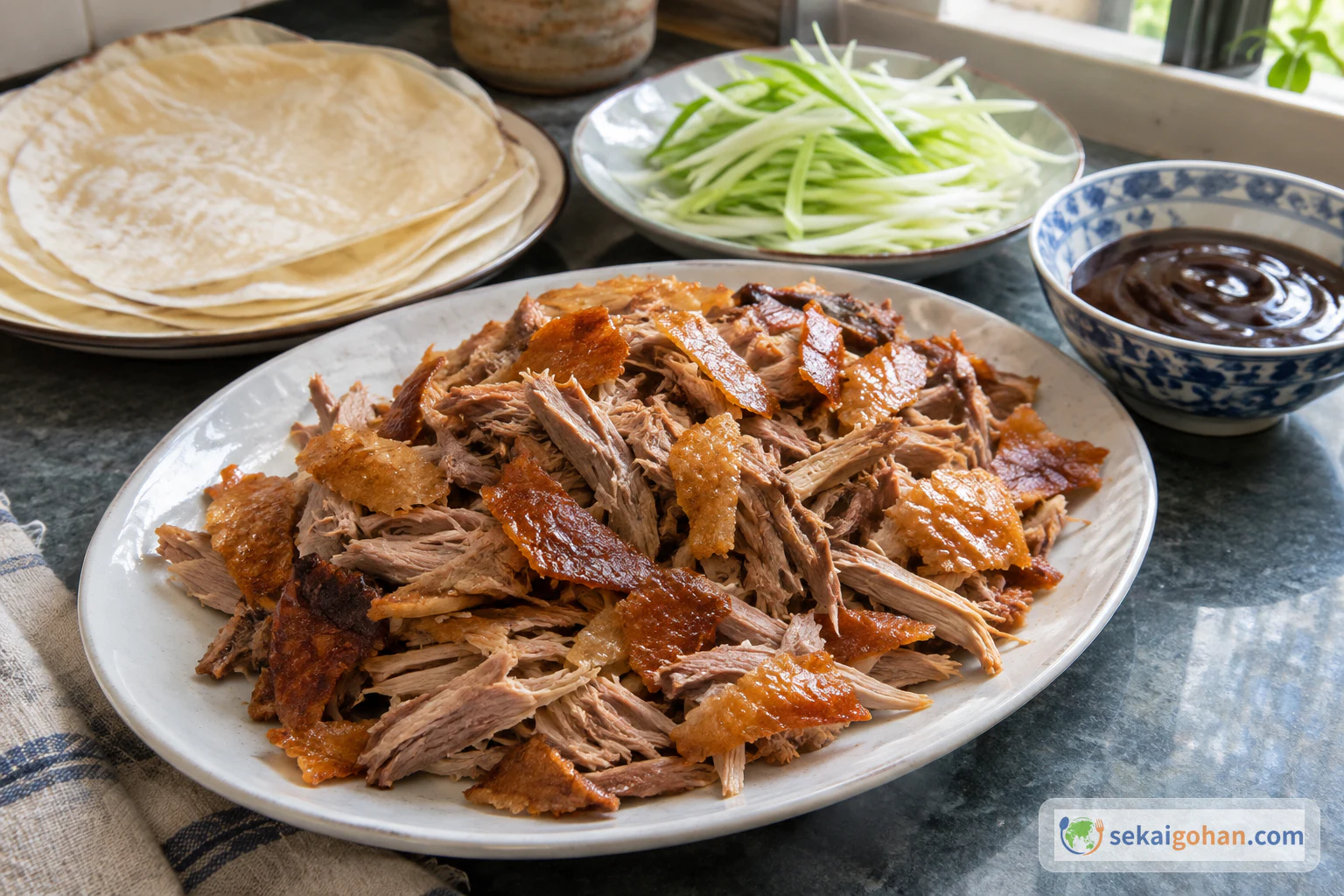
Let the quarters cool until you can handle them. Pull the meat off the bones and shred it with two forks, keeping the pieces of crisp skin in the pile. Put it on a warm platter. You want a loose heap of soft strands with brittle shards of skin that crackle under the forks.