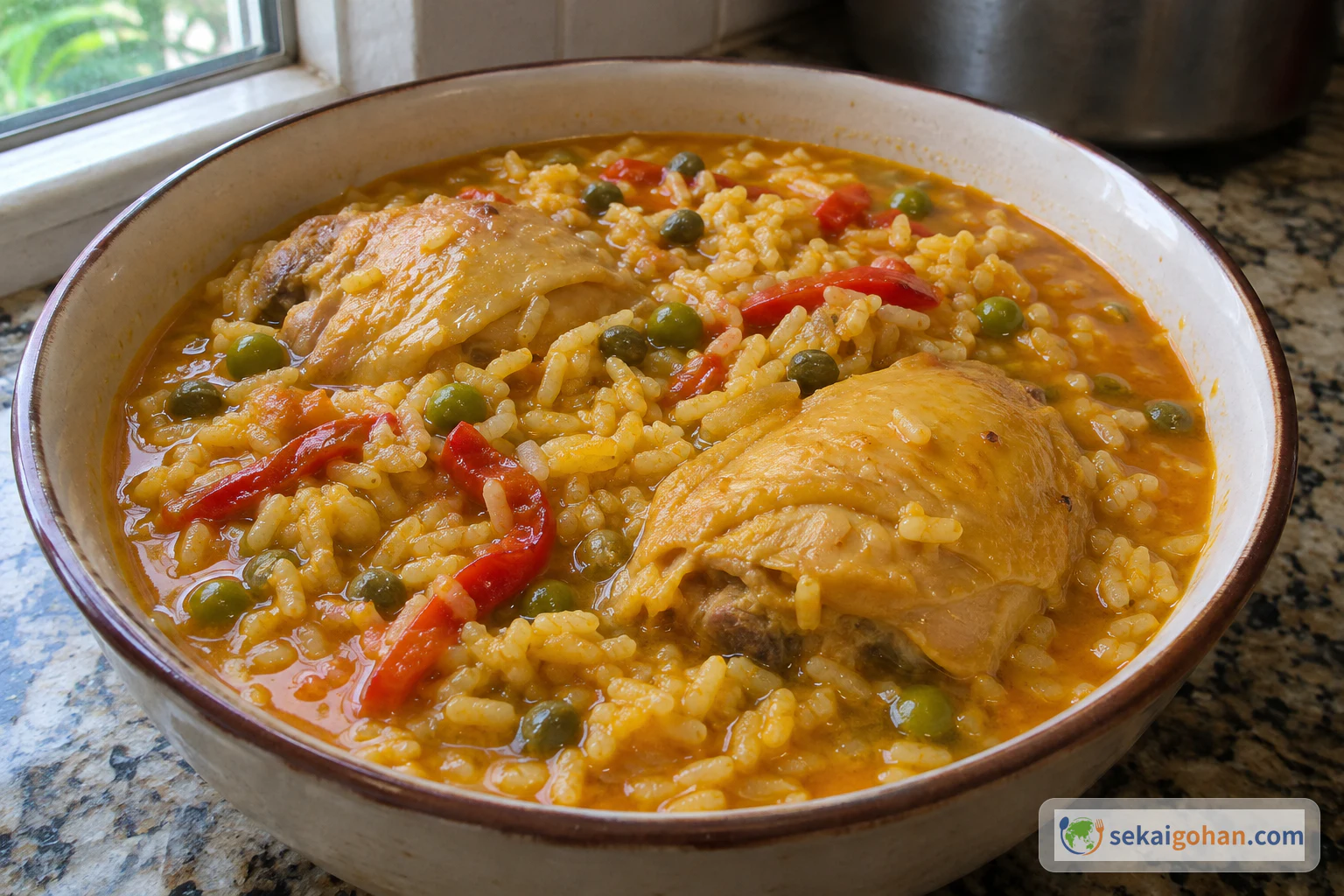
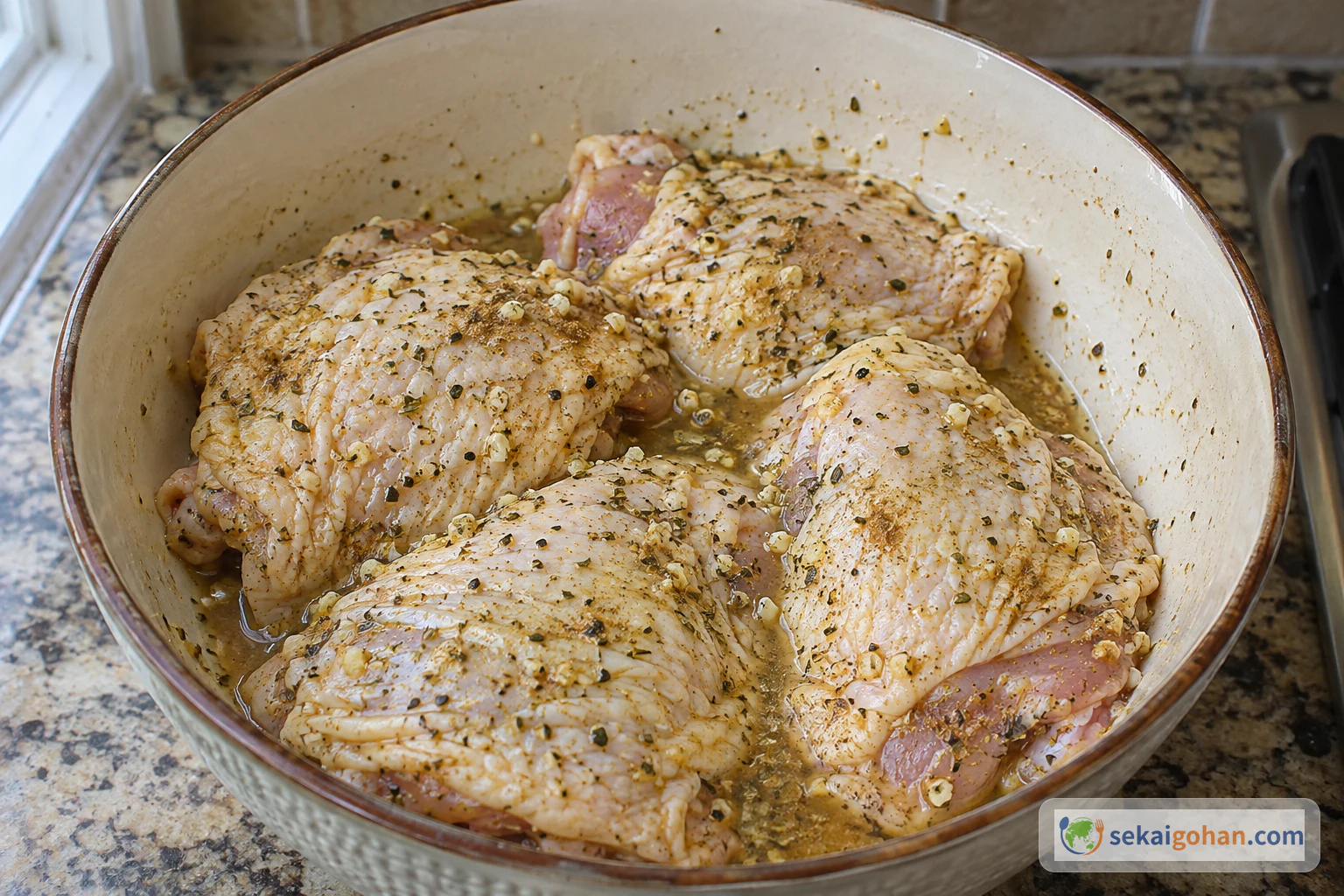
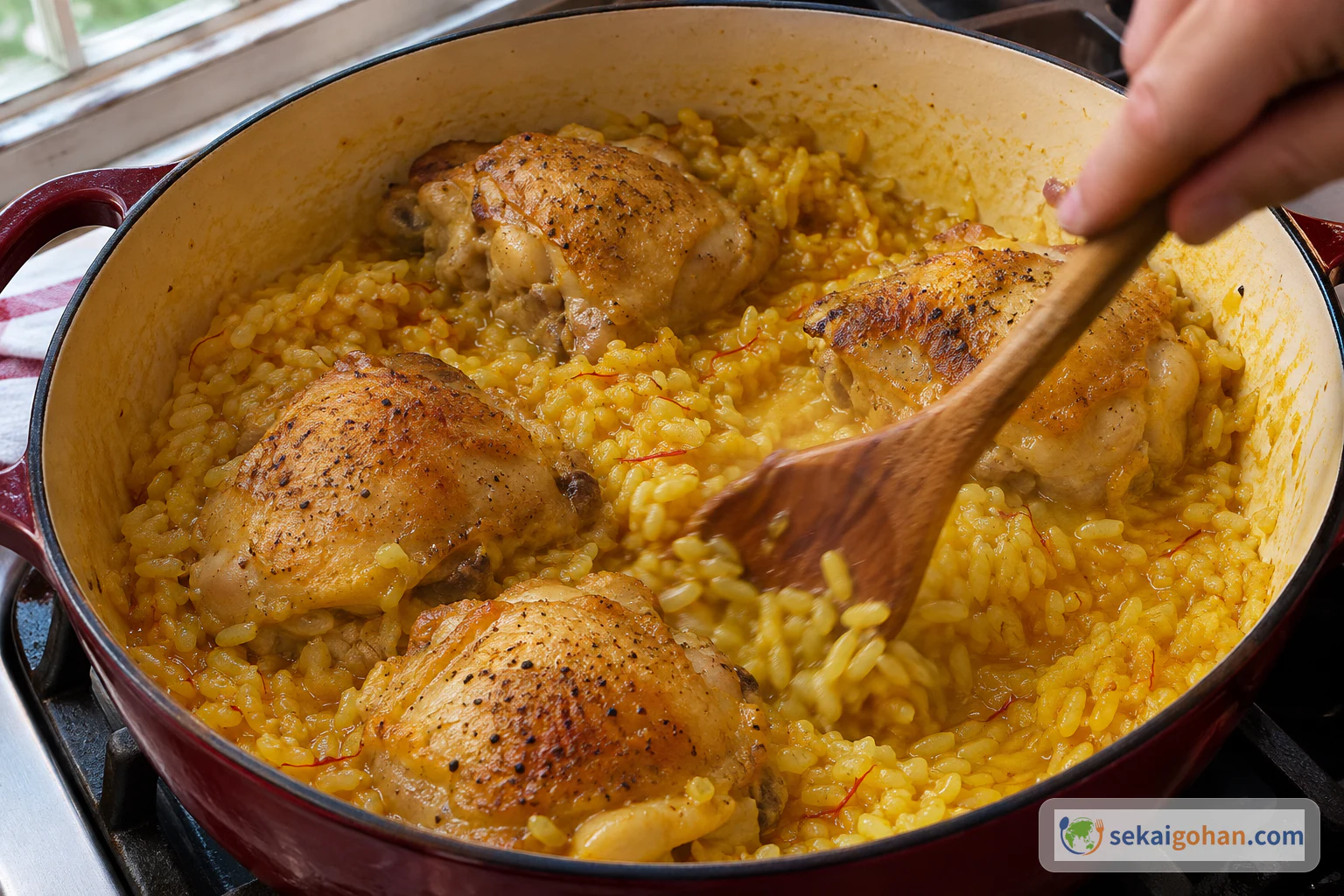
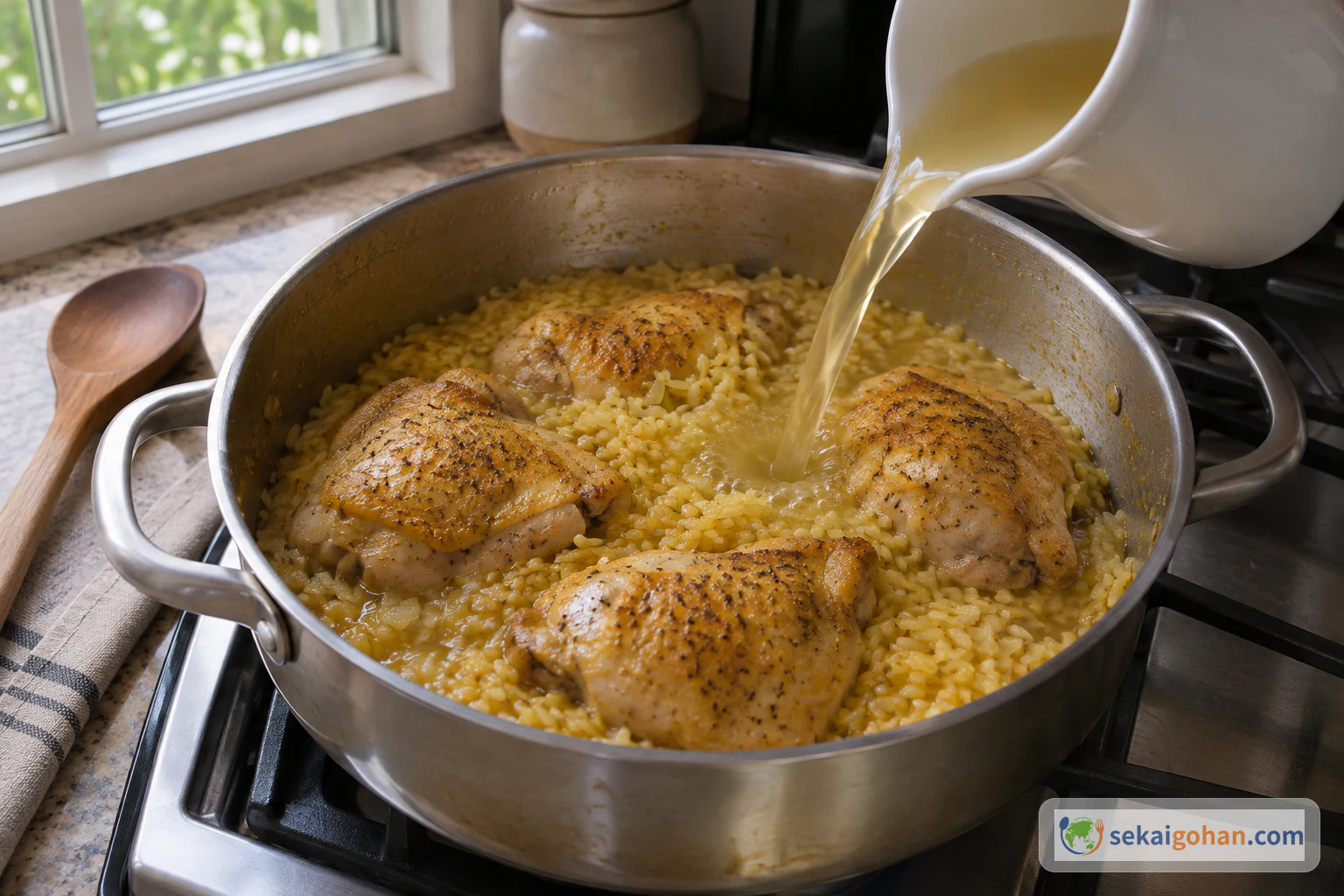
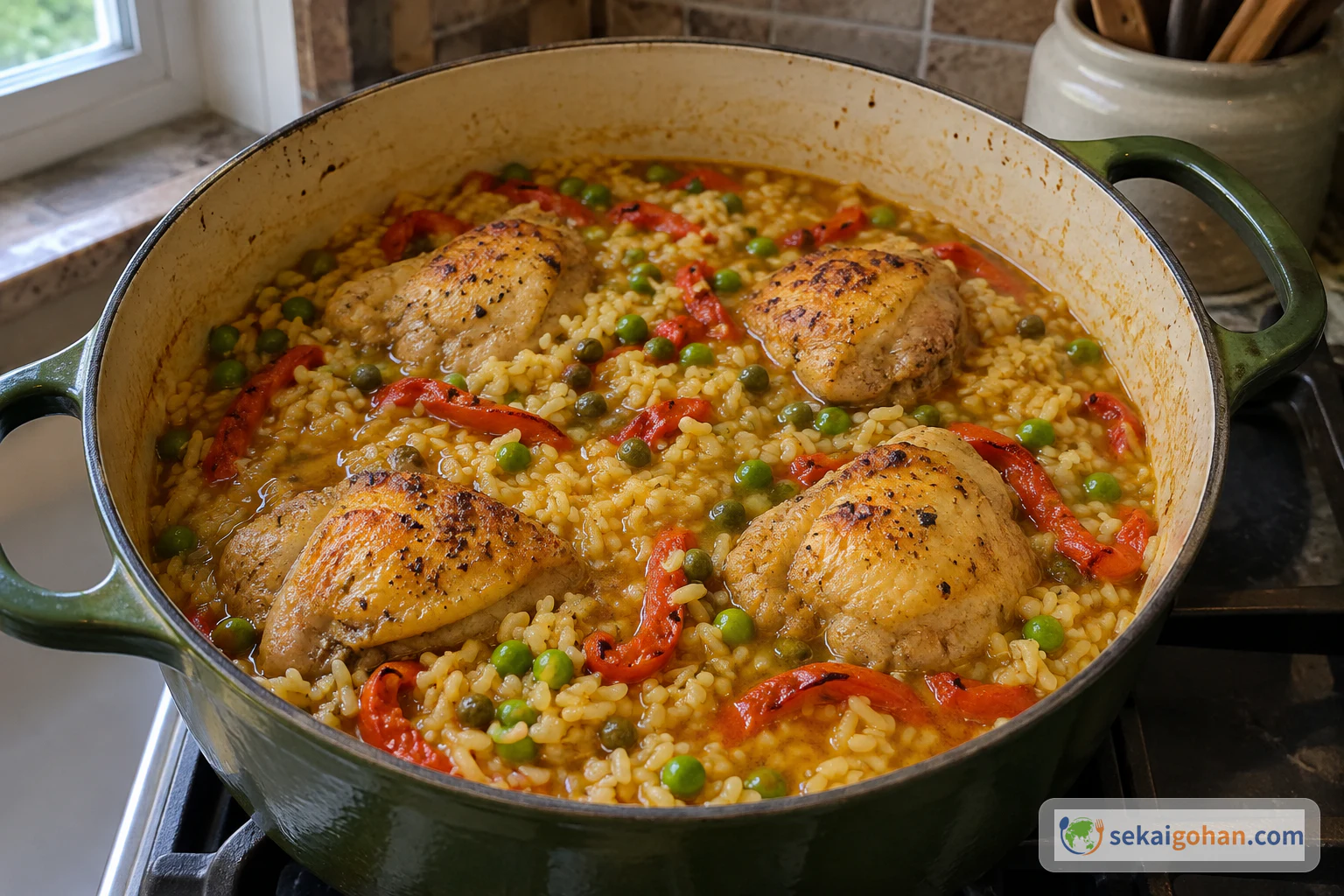
The last of the stock goes in with a splash of lager, and the pot loosens again. The rice has already turned saffron-yellow around the browned chicken thighs. You stir in the peas, capers and red pepper, put the lid on and leave it for ten minutes. What comes to the table is arroz con pollo a la chorrera, the Cuban chicken and rice that is served wet enough to eat with a spoon. Annatto oil and saffron give it its colour, and white wine and beer go into the cooking liquid. The chicken has spent time in sour orange, garlic, cumin and oregano before it ever reaches the pot, so every grain of rice tastes of that marinade, with a briny lift from the capers.
A Soupy Rice from Havana's River Mouth
Most chicken-and-rice dishes finish dry and fluffy, with the grains separate. The chorrera style goes the other way. The rice stays loose and spoonable, somewhere between a thick soup and a risotto, and the liquid goes into the pot in stages instead of all at once. It belongs to the same family as Spanish paella. In Cuba it takes its colour from achiote (annatto) and is cooked with both white wine and beer, which sets it apart from the drier arroz con pollo cooked in Colombia or Puerto Rico. Cooks describe it as a blend of Indigenous, African and European flavours with roots in the colonial period, and it sits alongside the other home dishes you can find under Cuban cooking.
Where the name comes from
Where the name began is not settled, and there are two stories. The first is about a place. In the late nineteenth century, a restaurant called Casa Arana near the Chorrera tower, at the mouth of the Almendares River in Havana, made the dish famous. In that telling, Spanish soldiers in the last years of colonial rule were fond of it, and the name of the spot stayed with the food. The second story comes from the pot. A la chorrera describes something that pours or runs, and the rice here is cooked wetter than usual, with liquid added as it goes, the way you would make a risotto. Both stories fit the dish. Neither has been proven.
El Torreón de la Chorrera is a small fortified tower at the mouth of the Almendares River, completed around 1646. It is a real landmark. Its link to the dish only goes back as far as the Casa Arana story.
How soupy, and when
Households disagree on how wet "a la chorrera" should be. Some pots are barely loose. Others are close to a broth with rice in it. One simpler Cuban home version leaves out the beer and saffron and cooks the rice covered over low heat, finished with canned asparagus. The version below has plenty of liquid, with stock, wine and beer added in turns to medium-grain rice. It feeds ten, which makes it a natural fit for a long Sunday lunch or a big pot for a potluck.
Ingredients (serves 10)
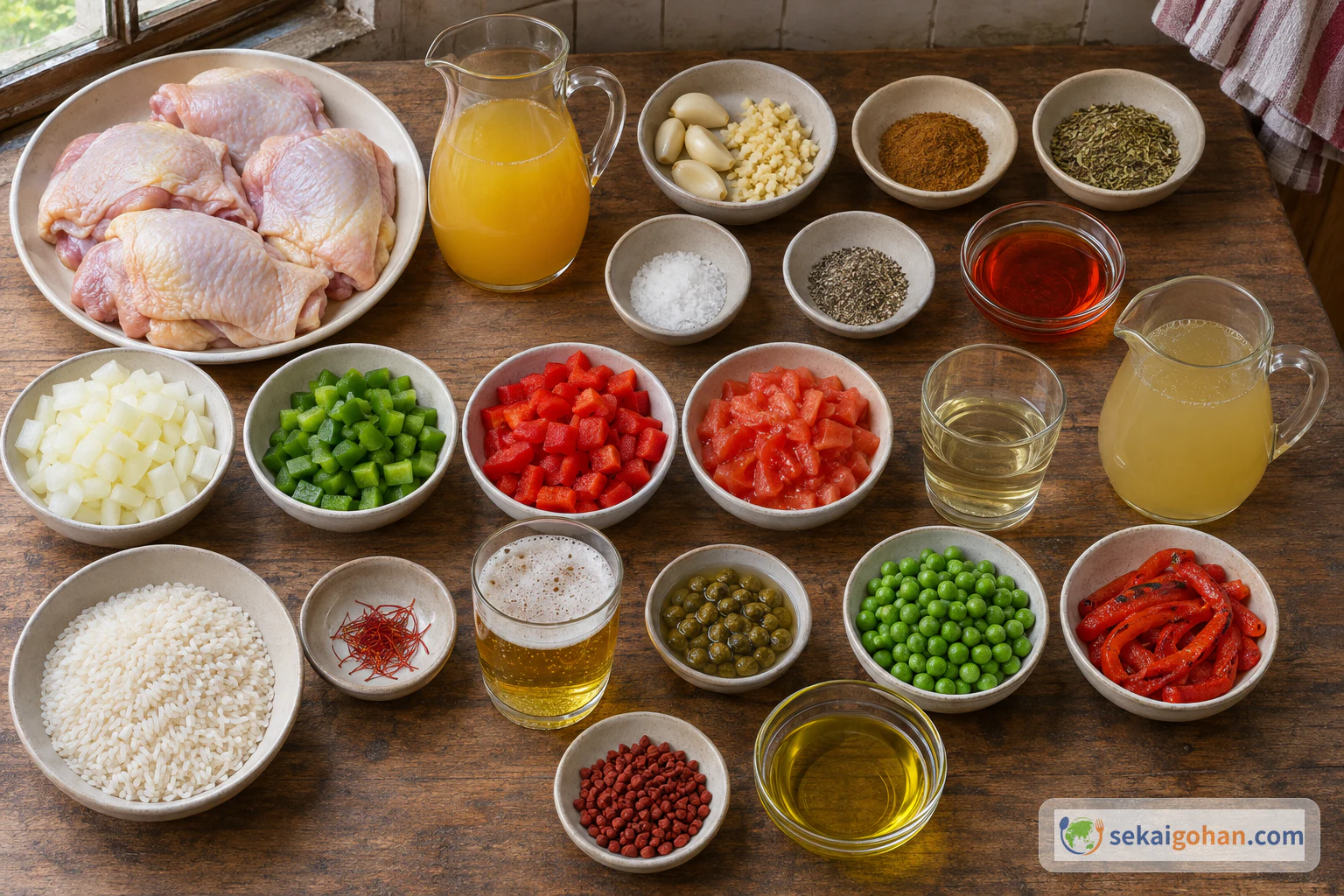
The garlic is listed twice because it is used twice. The tablespoon goes into the marinade, and the two cloves go into the sofrito.
Beer is brewed from grain, usually barley, so it contains gluten. Check the labels on the stock and the capers if anyone at the table avoids particular ingredients. The beer and wine both contain alcohol.
Equipment
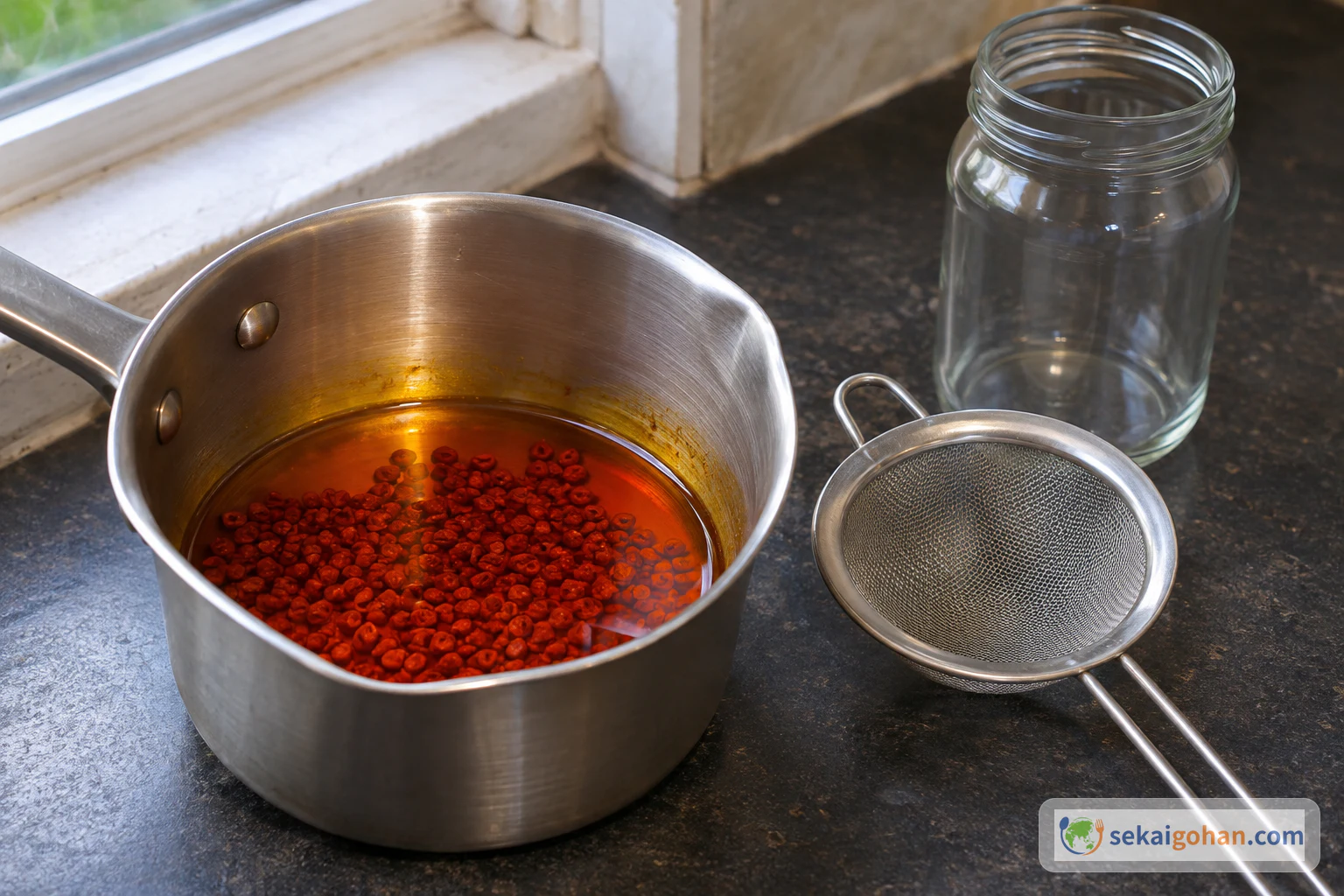
- Small saucepan, fine strainer and a clean jar for the annatto oil
- Large mixing bowl for marinating
- Wide, heavy pot with a lid, big enough to hold ten servings of rice and liquid
- Plate for the seared chicken
- Wooden spoon and a ladle
- Measuring cups and spoons
- Paper towels
Choosing and Substituting
Saffron and achiote are the two things worth tracking down. Achiote seeds are sold at Latin American grocers and online. Saffron threads, capers in brine and jarred roasted red peppers are on most good supermarket shelves. Without saffron the rice loses its yellow and its aroma, so do not skip it.
| What you're missing | Swap | What changes |
|---|---|---|
| Achiote seeds | Ground annatto, or paprika, plus the saffron | You get the colour back. The flavour is a little different |
| Sour orange | Equal parts lime juice and orange juice | A close match for the bitter-sour marinade |
| Medium-grain rice (Valencia type) | Japanese short-grain or another sticky rice | It absorbs liquid differently and turns stickier, so watch the texture and add stock as needed |
| Chicken stock | Water | Allowed. The broth comes out lighter |
| Lager | Any pale lager | No real change |
The two things to protect are the saffron-and-annatto colour and adding the liquid in three rounds. Those two decide whether you end up with a chorrera or with ordinary chicken and rice.
Method
Make the annatto oil first. It needs to cool before you strain it, and you can make it days ahead. The chicken then marinates for at least half an hour, which leaves time to chop the sofrito vegetables. After that, everything happens in one wide pot, and you need to stay with it. Have all three portions of stock measured and the beer opened before the rice goes in, because the last stages come quickly.
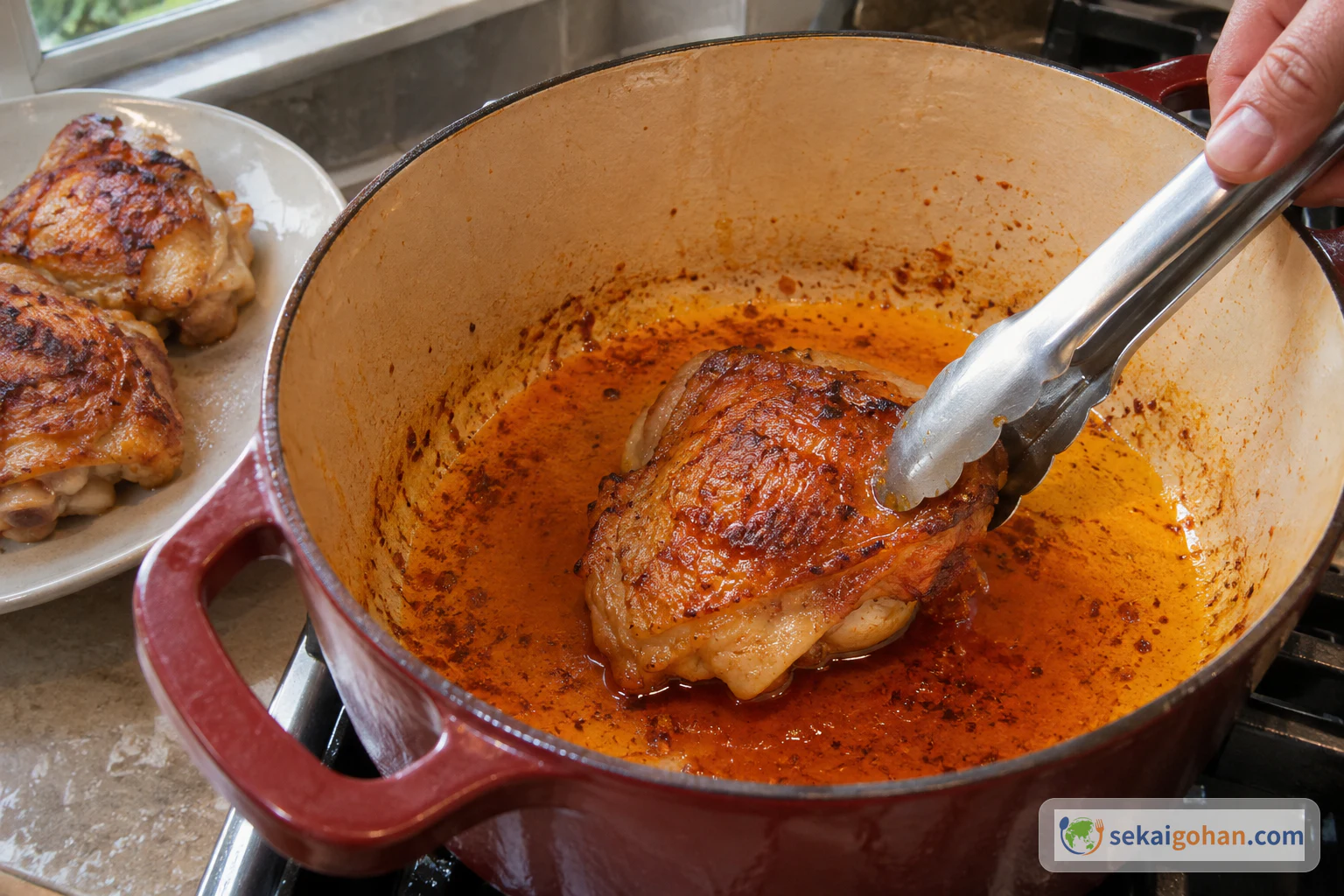
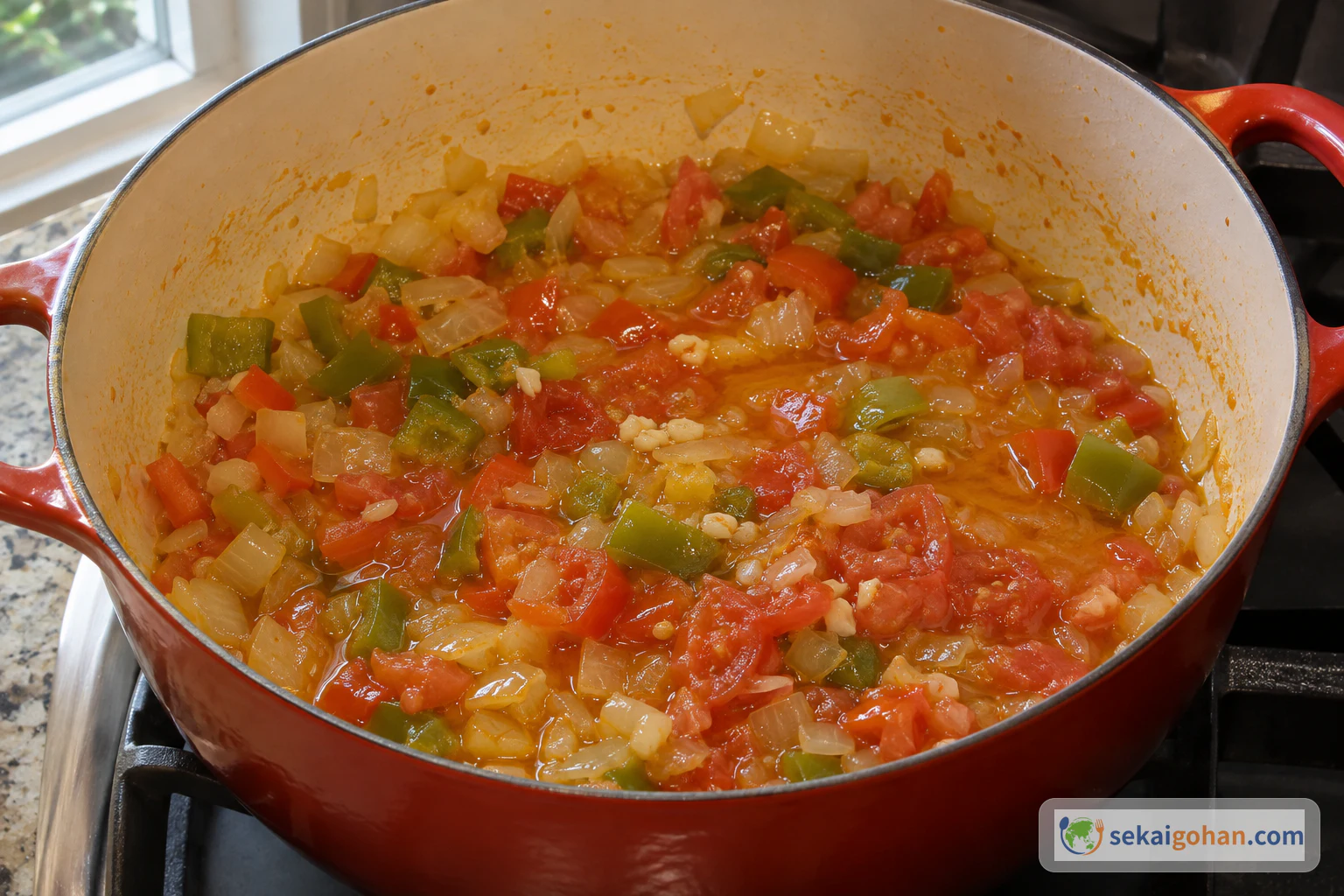
Give the thighs the full 7–8 minutes skin-side down and don't crowd them. The browned bits left in the pot become the base of the sofrito, and the wine lifts them into the sauce.
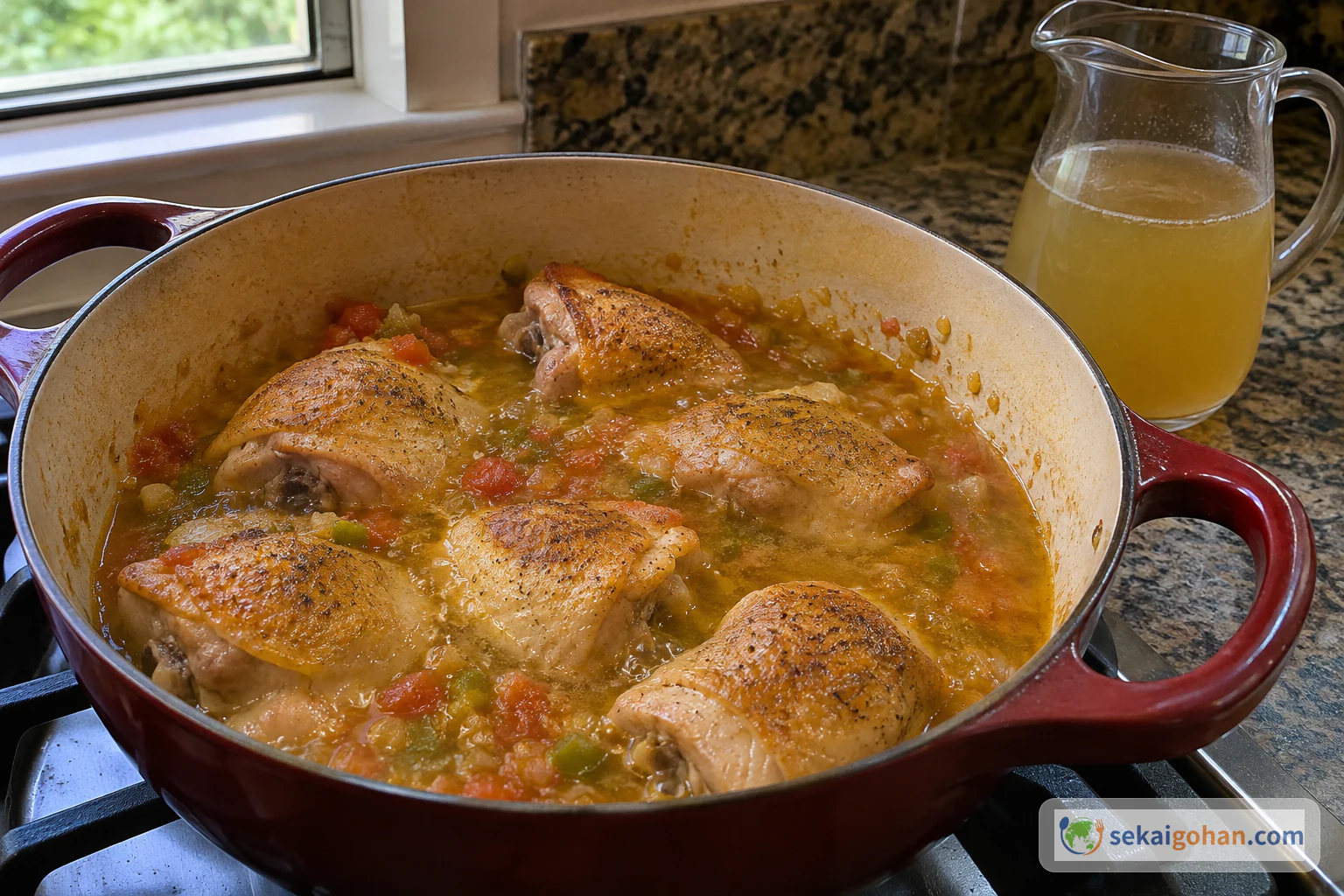
Adding the liquid in stages lets the rice swell slowly and stay loose, as it does in a risotto. If you pour it all in at once, you boil the rice instead.
Pat the chicken dry before it goes into the oil. Wet skin spits. Cook the thighs through, with no pink left at the bone. If you see any, cover the pot and keep it over low heat until the meat is done.
Taste the broth in step 6. Once the rice has soaked up the liquid, the salt is hard to adjust evenly, so the broth needs to taste right first.
When It Goes Wrong
| What you see | Why | What to do |
|---|---|---|
| Rice catching on the bottom | The liquid ran low between additions, or the pot sat too long without stirring | Scrape gently, add the next portion of stock now and stir from time to time |
| Pale rice instead of yellow | The annatto oil was warmed too briefly, or the saffron went in whole | Next time, warm the oil for the full 5–7 minutes and crumble the saffron |
| Pale, flabby skin | The chicken was wet, or the pot was crowded | Pat it dry and sear in smaller batches |
| Dry, stodgy rice at the end | The liquid cooked off too fast in a wide pot, or a stickier rice drank more | Stir in a little more stock as needed before resting, until it's loose again |
| Flat flavour | Short marinating, or the broth wasn't tasted before the rice went in | Salt to taste at the end, and marinate longer next time |
Serving and Variations
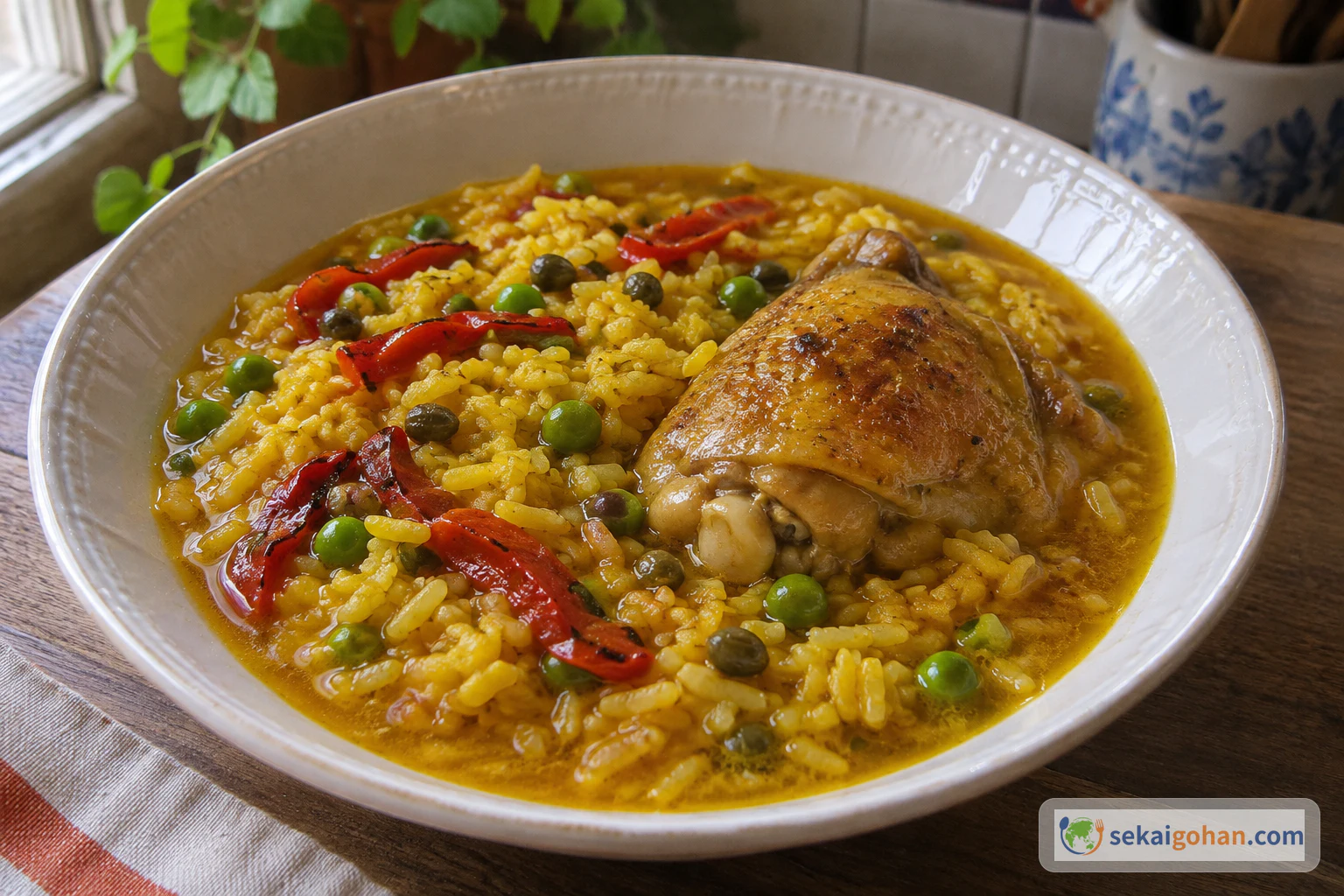
Serve it in deep plates or wide bowls so they hold the liquid, with a spoon, a thigh on each plate and a lime wedge on the side. It goes with a long Sunday lunch and travels well to a potluck. A glass of the same lager suits it.
Variations
- Drier and simpler. Leave out the beer and saffron and cook the rice covered over low heat. You get the plainer Cuban home style, firmer and less soupy. It is finished with canned asparagus.
- Paprika in place of achiote. Brown the chicken in plain olive oil with paprika and keep the saffron. The colour stays close and the earthy annatto note goes.
- Lime and orange instead of sour orange. Equal parts of each give the marinade the same bitter-sour bite.
Frequently asked questions
Can I make a smaller pot?
Yes. Halve everything: 1½ cups (292 g) rice, 2 tbsp (30 ml) annatto oil, and three additions of 1 cup (240 ml) stock. Use a smaller pot. Judge each stage by the cues (most of the liquid absorbed, plump grains, a loose finish) more than by the minutes, because a smaller pot cooks at a different pace.
What do I do with the leftover annatto oil?
Keep it in its jar. It lasts about a month. Use it to colour and flavour other rice dishes, or to brown meat.
Does the alcohol cook off?
Not completely. The beer and wine both cook in the pot, but some alcohol stays in the finished rice. Keep that in mind when you serve it to children or anyone who avoids alcohol.
Can I use boneless chicken?
Use bone-in, skin-on thighs. The skin browns and leaves the flavour that the sofrito picks up, and the thighs hold up through the long simmer with the rice.