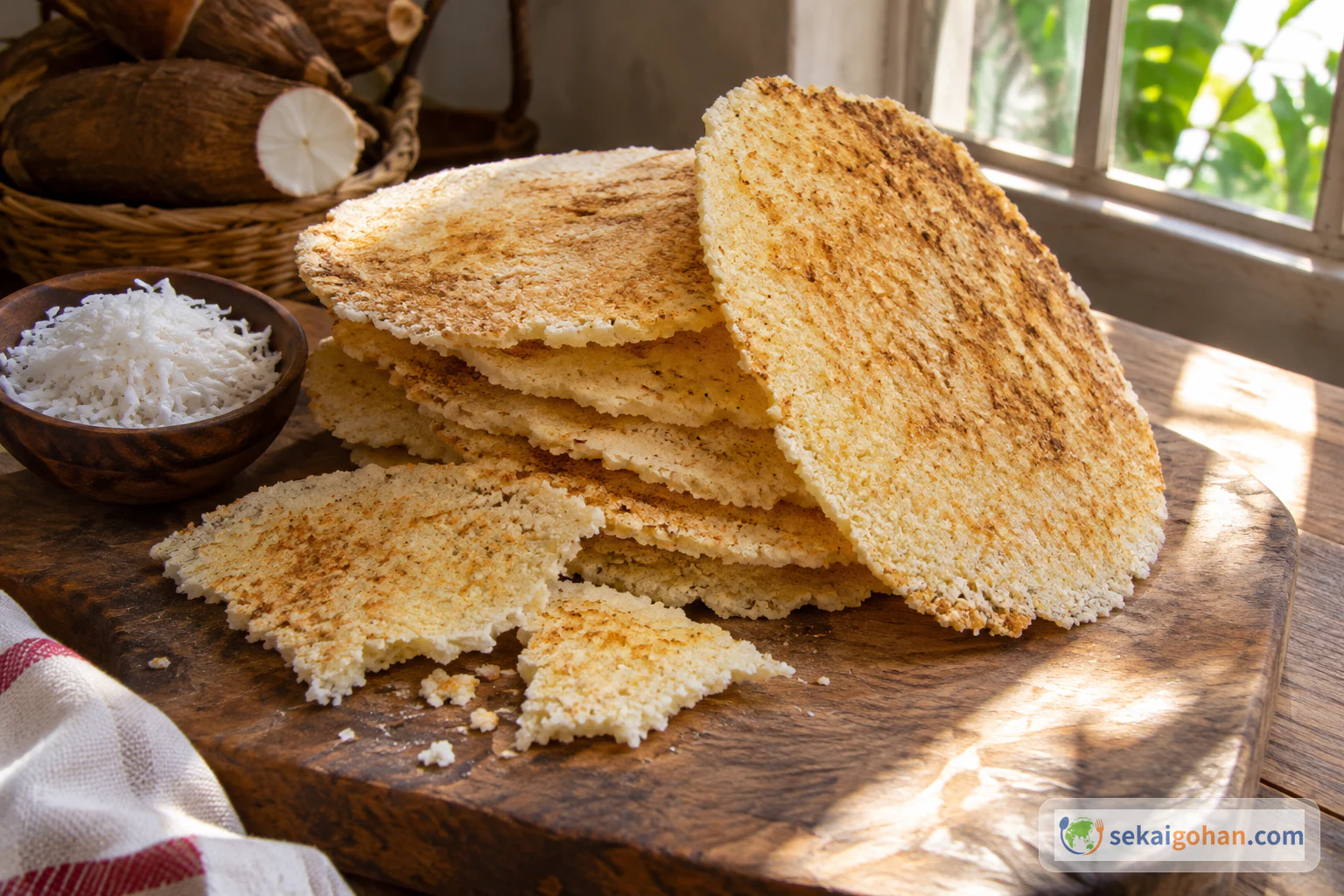
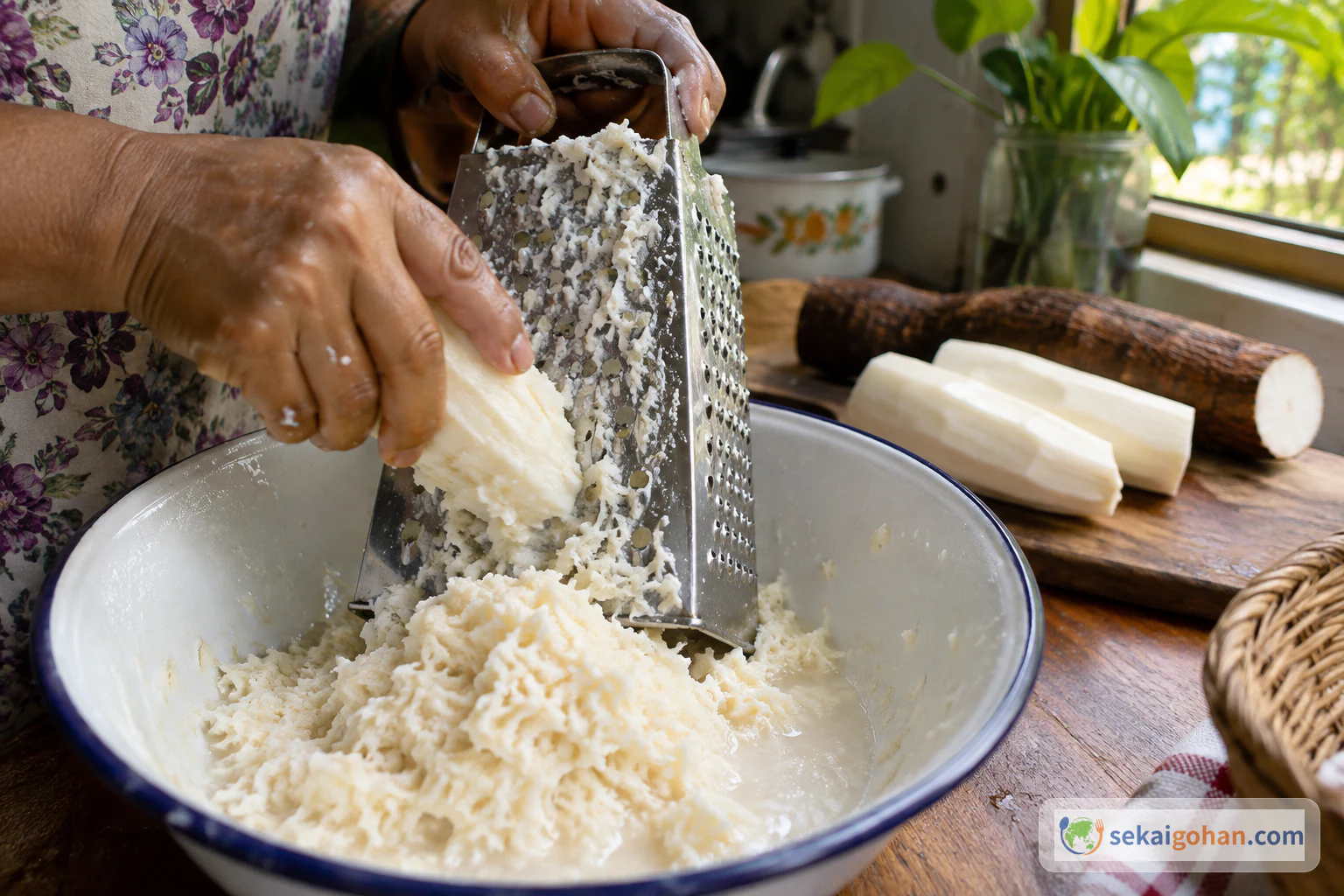
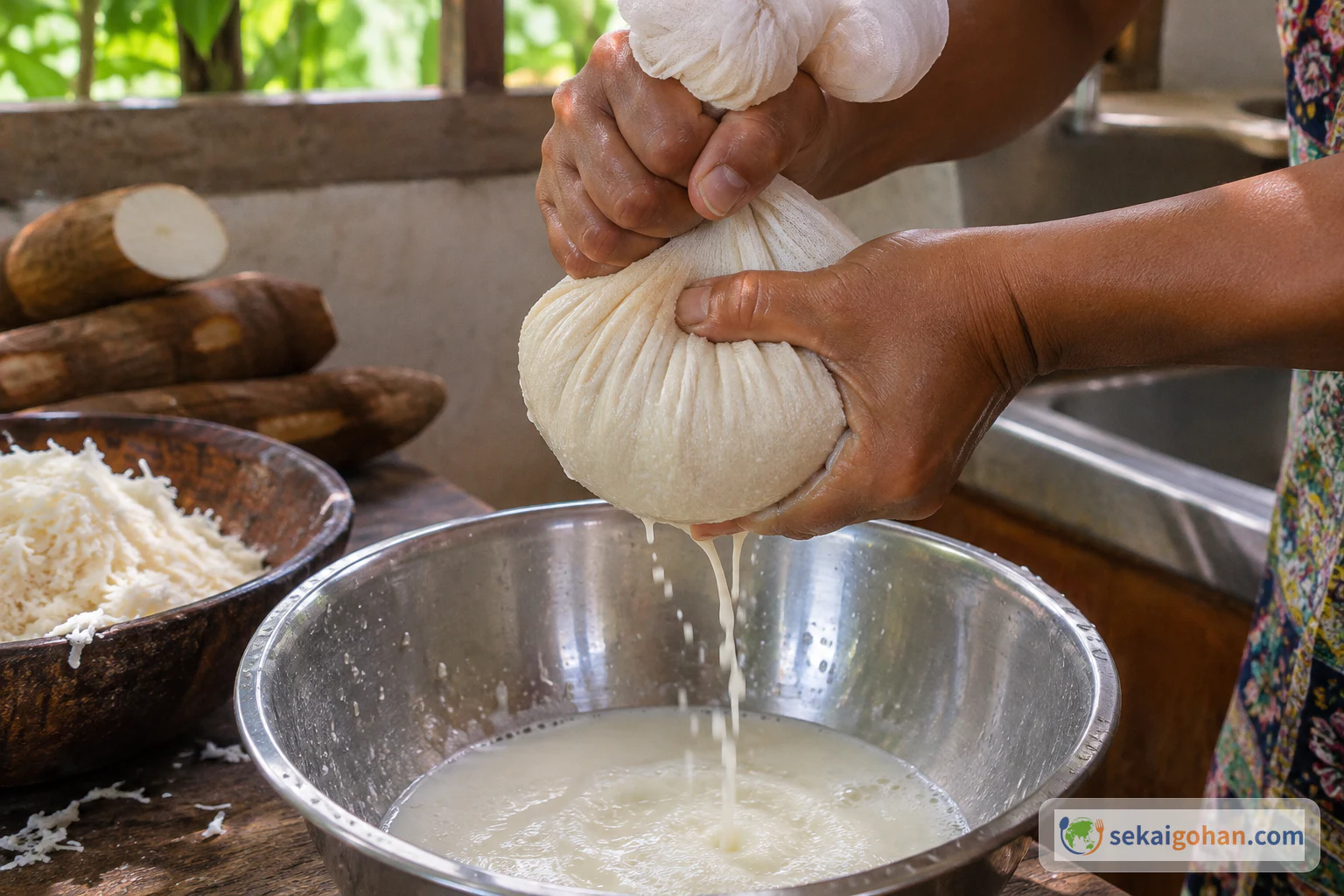
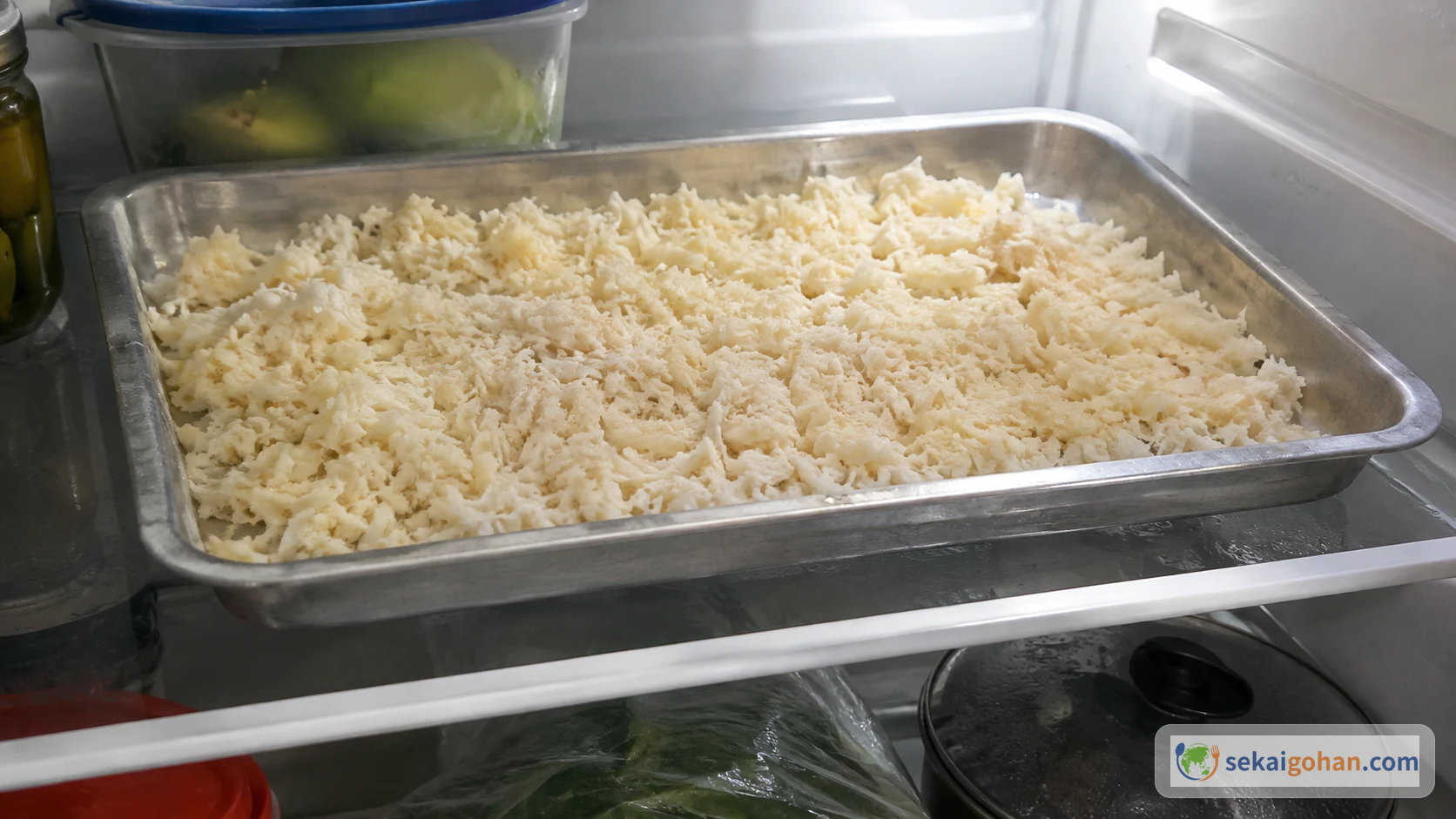
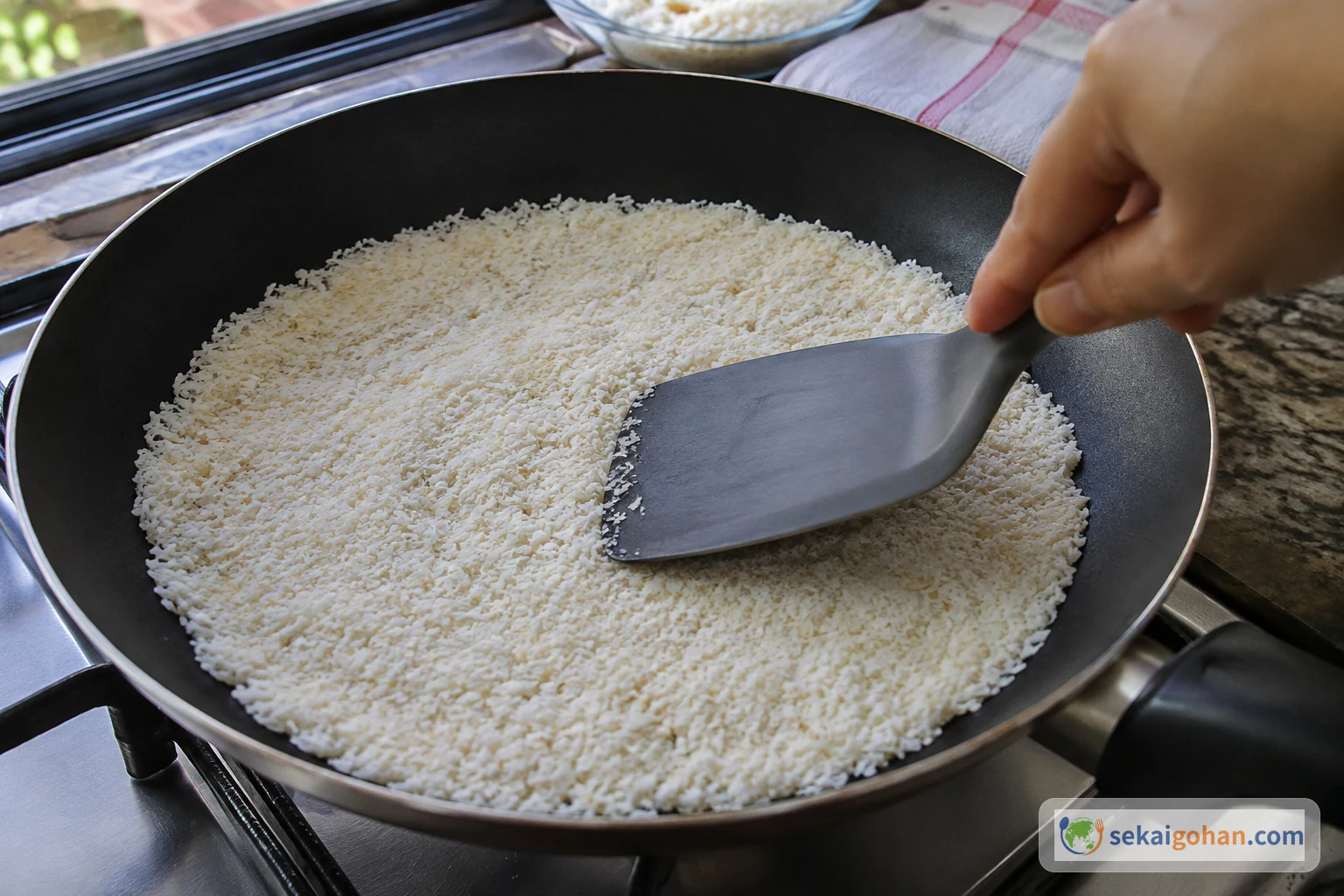
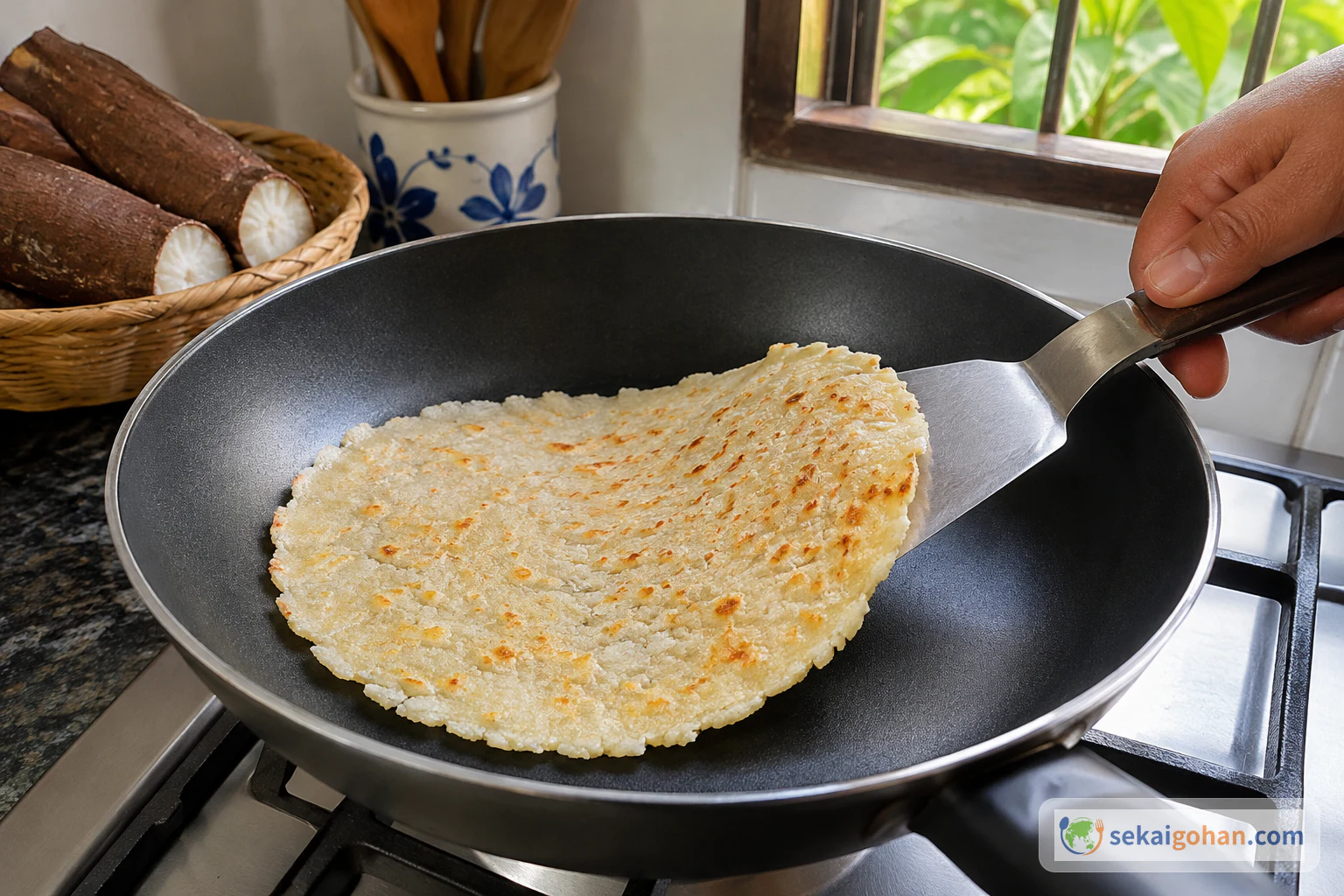
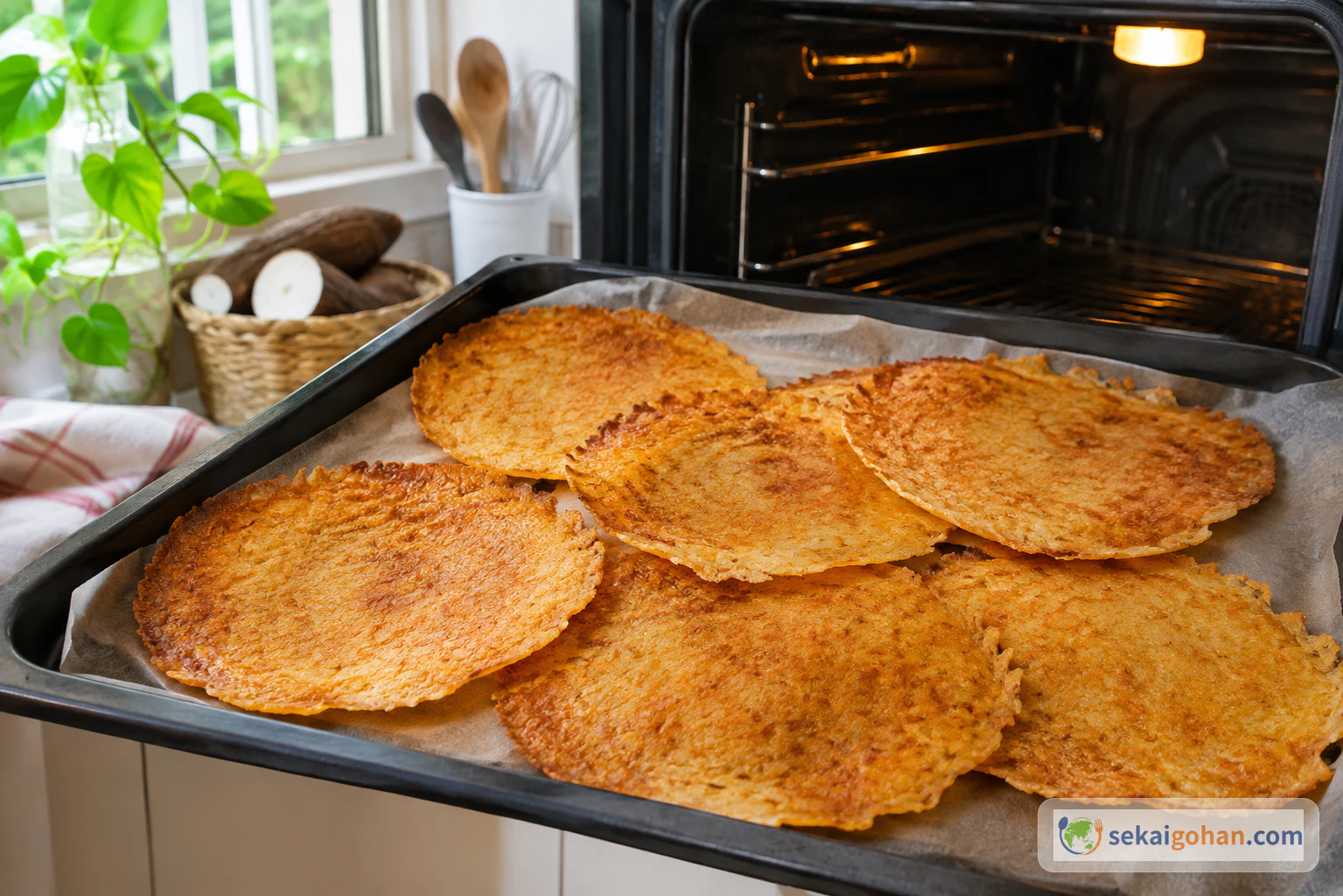
The grated cassava goes into the dry pan as a pale, damp-looking crumble, and within a minute it has knitted into one thin round that lifts in a single sheet on the spatula. A few minutes in a low oven turn it a deeper gold, and when it cools it breaks with a clean snap. That is casabe, the cassava flatbread of Cuba, made from grated cassava and nothing else. It eats crunchy and dry, close to a cracker or a plain cookie, with the toasted, faintly sweet taste of the root itself. On the table it plays the part bread plays elsewhere, under sugared coconut or beside a plate of saucy meat.
Bread Before Bread: Where Casabe Comes From
A food older than the colony
The word casabe (also written cazabe) comes from an Indigenous language of the Caribbean, and the bread is among the oldest foods on the island. Cassava has been a staple in Cuba since before Columbus, grown by the Ciboney and the Taino. Casabe is usually counted as part of the Taino legacy, though where the bread itself first took shape is not settled; it is also traced to Indigenous peoples of northern South America, from where it spread through the islands. What is clear is why it lasted. Grated, pressed, dried and toasted, cassava became a bread that could be stored from one harvest to the next.
When the Spanish arrived they took casabe into their own diet, and it became a staple for settlers as well. The island still has a saying for making do: a falta de pan, casabe.
The phrase means "when there's no bread, casabe." Cubans use it the way English speakers say "beggars can't be choosers": take the good thing that is at hand. It also reflects how readily the Spanish settlers took casabe into their own diet.
Where it is eaten today
Casabe holds on most strongly in the agricultural east and the mountains, more than in the west, and Cuba counts it among its most typical dishes. In Quivicán, south of Havana, families still make it by hand. There the grated yuca is sifted through natural fibre, shaped into small discs and cooked on a griddle over a wood fire until it becomes a thin, white, crisp flatbread.
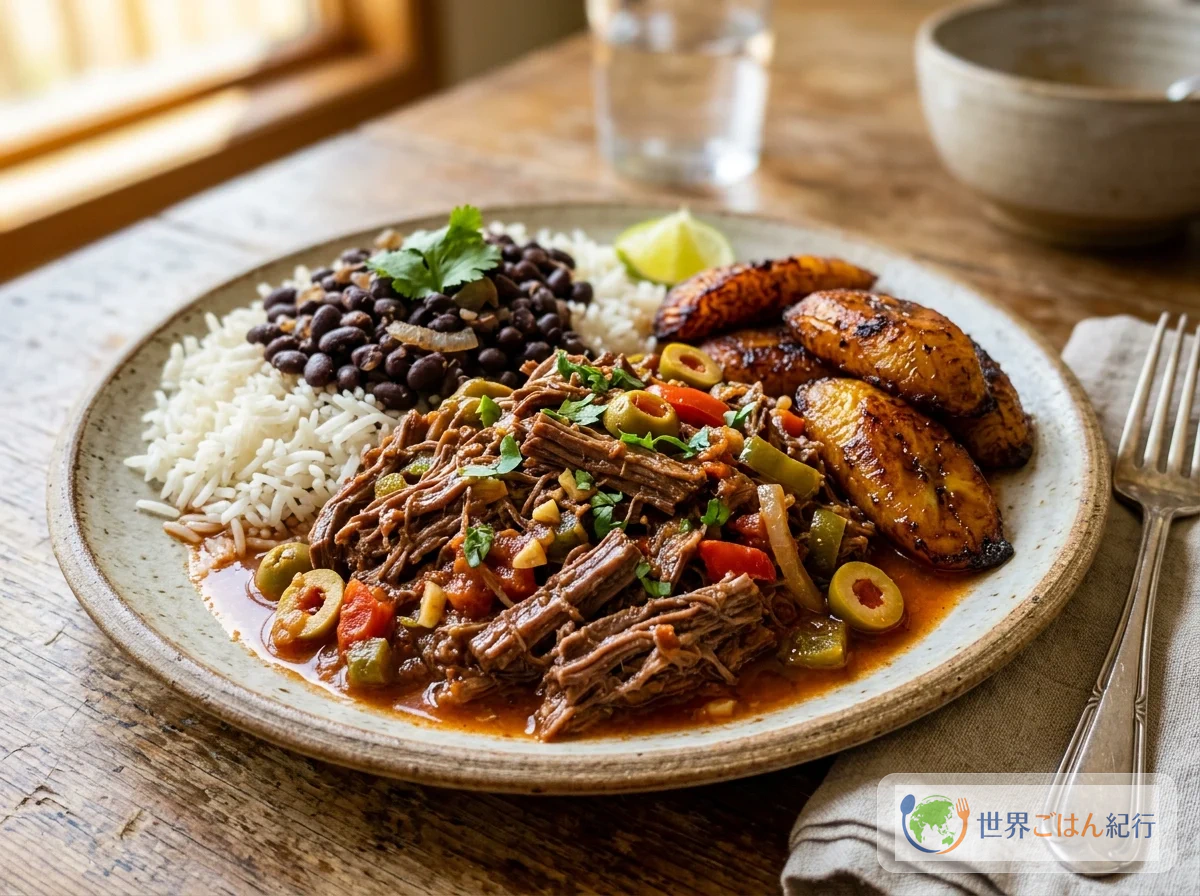
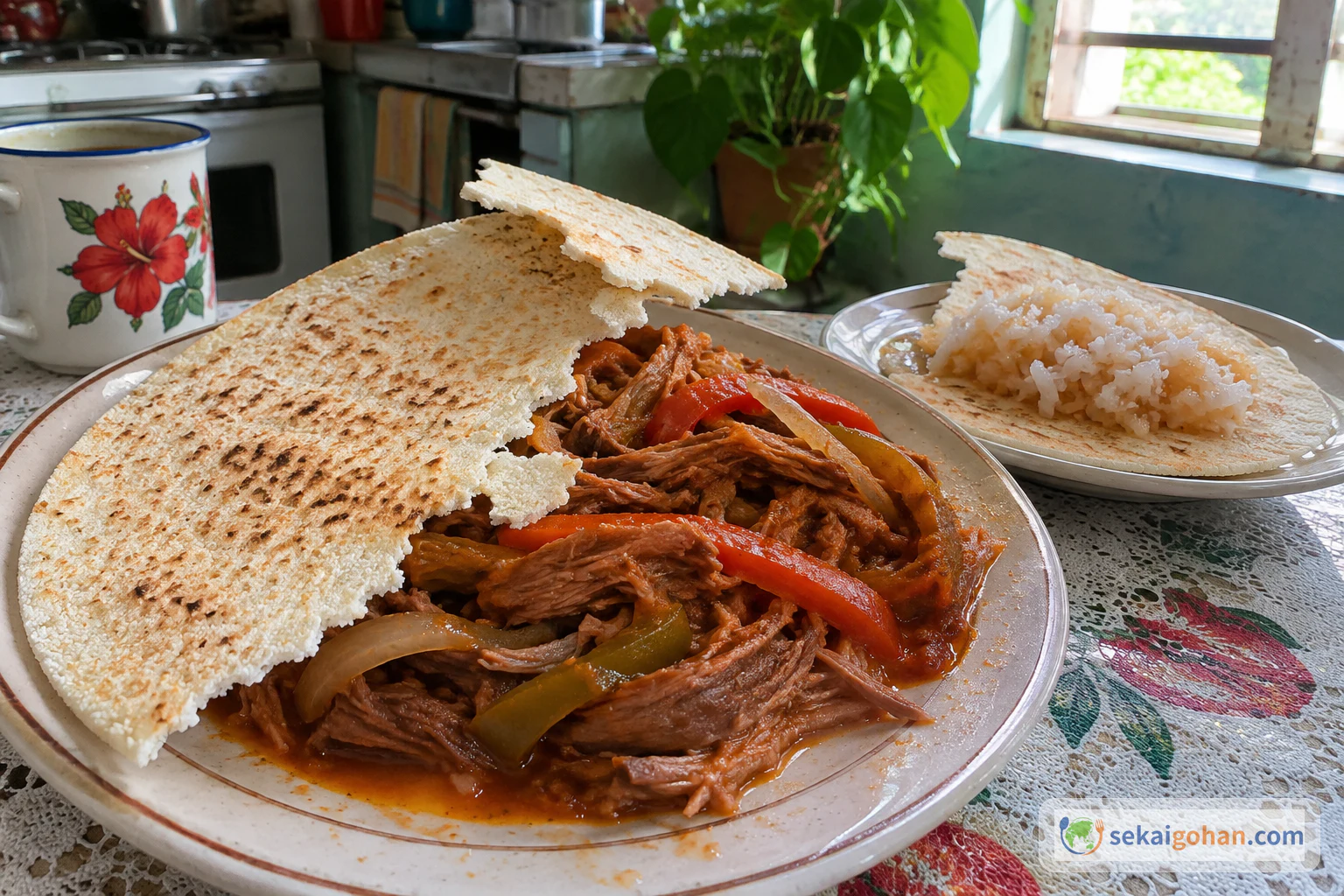
People eat it two ways. One is sweet, with sugared coconut on top. The other is as a dry, crunchy partner to moist meat or poultry, where it soaks up a little sauce with every bite; a spoonful of ropa vieja, the shredded beef stew, is exactly the kind of dish it wants beside it. Casabe is shared well beyond Cuba, and Cuba, the Dominican Republic, Venezuela, Honduras and Haiti have joined in a bid to have it recognised on UNESCO's list of intangible cultural heritage. For more of the island's cooking, see the Cuba country page.
The home method below trades the wood-fired griddle for a nonstick pan and a low oven. Instead of small hand-shaped discs, the cassava is spread across the whole base of the pan, which gives one large thin round per batch.
Ingredients
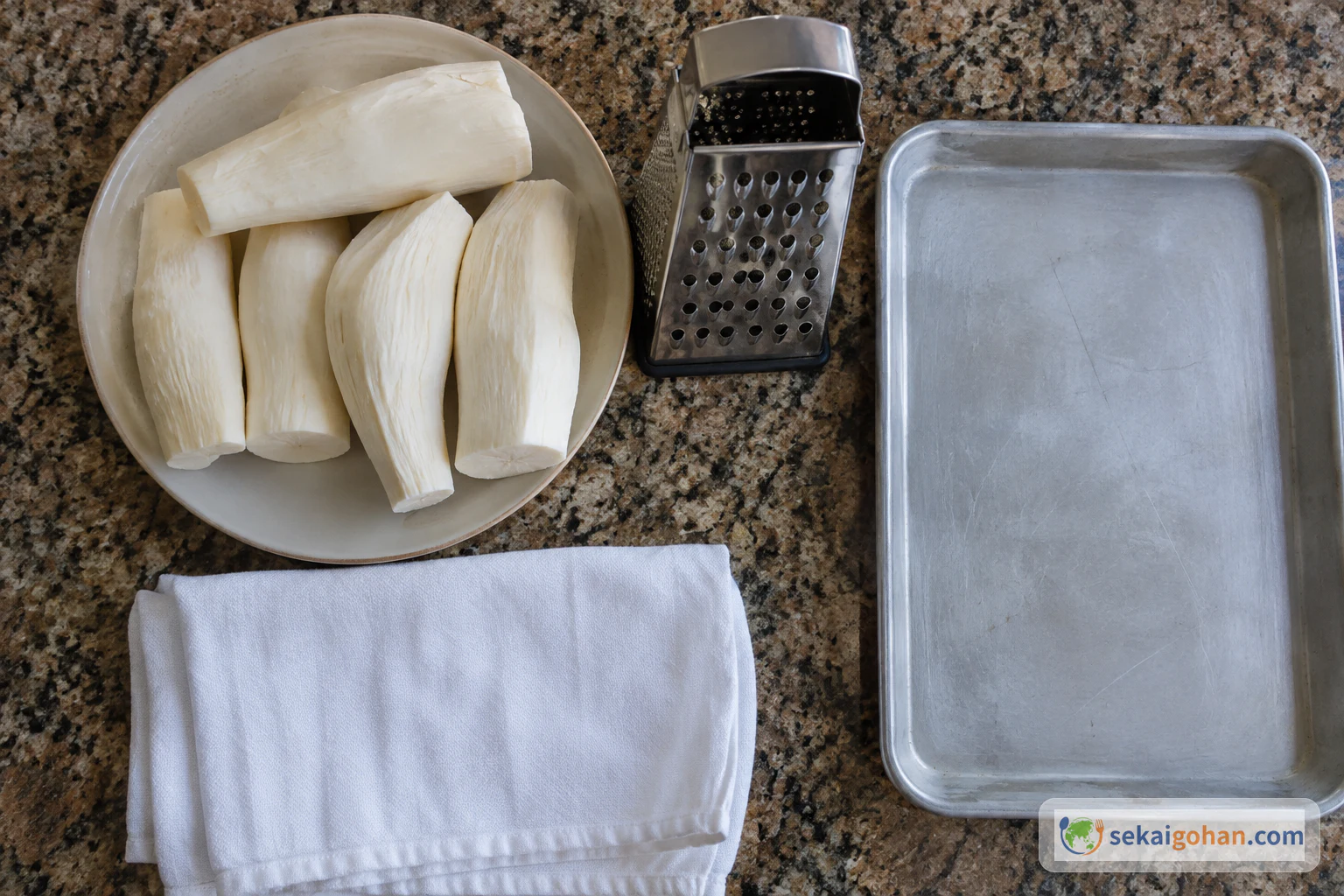
Cassava contains natural compounds that release cyanide, so it must always be cooked through. Sweet varieties hold under 50 mg per kg fresh weight and are safe once peeled and thoroughly cooked; bitter varieties hold up to 400 mg per kg and need peeling, grating, long soaking and thorough cooking. Use only cassava sold as a sweet variety. Ask the shop which variety it is, and if nobody can say, do not use that root. Never eat cassava raw or half-cooked, and never taste the raw pulp while you work.
Equipment
- Paring knife or sturdy peeler
- Cutting board and a large bowl
- Fine grater (the fine side of a box grater)
- Clean cotton cloth, such as a muslin or flour-sack towel
- Shallow tray that fits in your refrigerator
- Nonstick frying pan
- Wide spatula
- Baking sheet
- Oven
Choosing Cassava and What Not to Swap
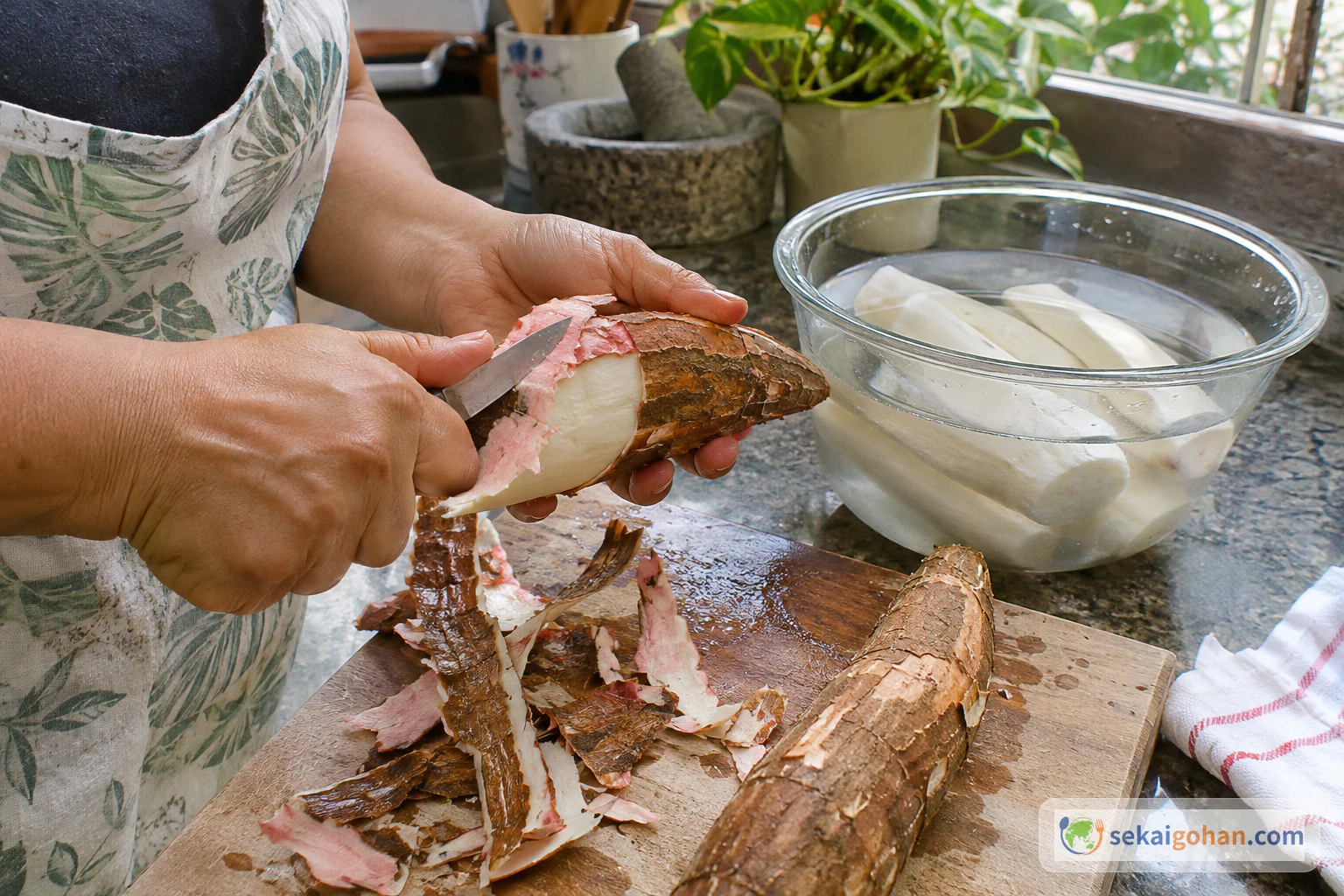
The variety decides everything here, because this home method has no long soak and no separate pressing of a bitter juice. Fresh cassava turns up in Latin American, African and Asian grocers as long brown roots with a waxy or bark-like skin. Buy it only when it is labelled or confirmed as sweet cassava. Frozen peeled cassava is the easiest route: it is already cleaned, and after thawing it grates just like fresh. Check the pack for the variety as you would with fresh roots.
In traditional Caribbean kitchens, bitter cassava was made edible through a long process of grating, soaking and pressing out the poisonous juice, then drying the flesh and pounding it into flour for a cracker-like cazabe. That knowledge is part of the bread's history. At home, stay with sweet cassava.
Dry starches look tempting, but none of them makes casabe. Tapioca flour is the extracted starch of cassava alone and gives a gummy, chewy result instead of a dry crisp sheet. Potato starch is a different plant entirely and behaves the same way. Cassava flour skips the grating and squeezing that give casabe its fibrous, crackly structure. For this bread, the root itself is the shopping list.
Casabe is made from cassava alone, with no wheat. If you are cooking for someone who must avoid gluten, read the label on frozen cassava for how and where it was packed.
Method
The active work comes in two bursts. First you peel, grate and squeeze the cassava, then the pulp rests in the refrigerator for an hour while the oven heats; that hour is your hands-off time. After that, the pan work moves fast, one thin round at a time, and the rounds finish together in the oven. Keep the baking sheet next to the stove so each round can go straight onto it.
When It Goes Wrong
| What you see | Why | What to do |
|---|---|---|
| The pulp won't bind in the pan and falls apart when flipped | Too much water left in it | Squeeze it again in the cloth and give it the full hour in the refrigerator before cooking |
| The round is crisp at the edges but soft or pale in the middle | The layer was too thick there | Spread the next round thinner; return soft rounds to the oven until they are crisp all through |
| Holes and gaps in the finished bread | Lumps were left or the crumbs didn't cover the base | Break every lump and press the layer flat with the back of the spatula before it sets |
| The bread is golden but bends instead of snapping | It has not dried out enough | Give it more time in the oven, toward the long end of the bake, and let it cool fully before judging |
Any round that stays soft or doughy inside goes back into the oven. Casabe is eaten only when it is crisp and cooked right through.
Serving and Storing
At the table
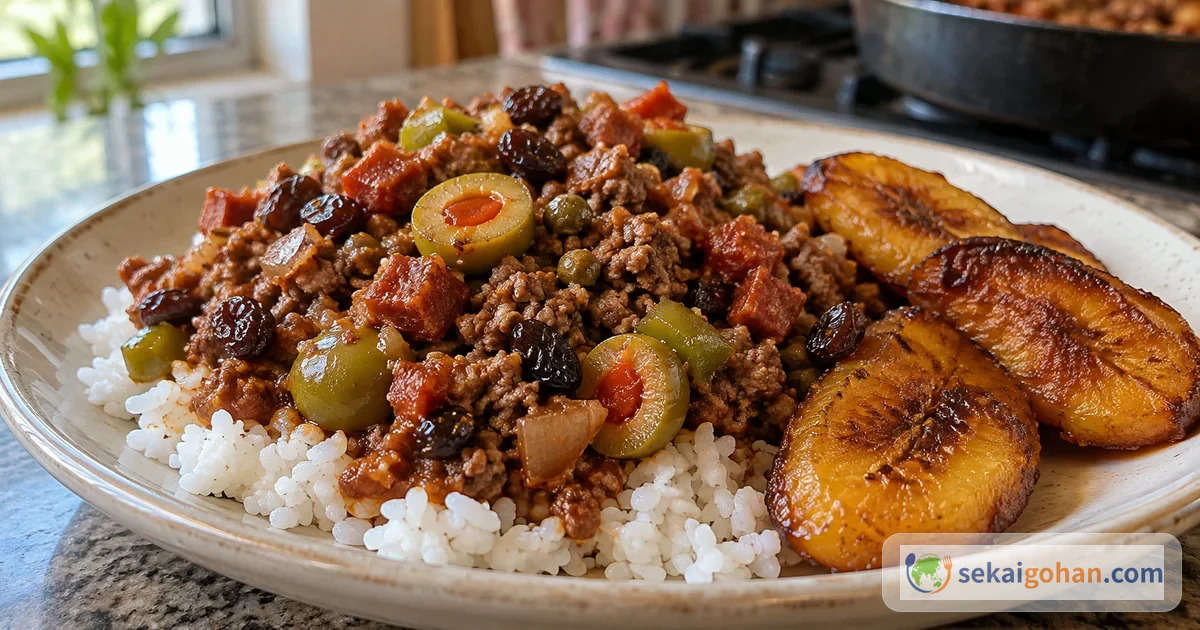
Casabe works like a cracker that loves a sauce. Break it over moist meat or poultry and let the edges soften slightly in the juices; ropa vieja is the obvious partner, and the saucy ground beef of picadillo a la habanera suits it just as well. For something sweet, serve it with sugared coconut, the way it is often eaten in Cuba.
Variations
- Parmesan or garlic: for casabe eaten on its own, add a little grated Parmesan or garlic for flavour. It turns the plain bread into a savoury snack.
- Sweet with coconut: top the cooled bread with sugared coconut. The dry crunch and the moist, sweet coconut make it a dessert or a snack with coffee.
- Small discs: shape the pulp into smaller thin rounds in the pan, closer to the hand-shaped discs from the wood-fired griddle. They are easier to serve one per person; keep them just as thin.
Storing
Casabe was made to keep, and moisture is what ruins it. Let the rounds cool completely, then store them in an airtight container away from humidity.
Frequently asked questions
Can I use frozen cassava?
Yes, frozen peeled cassava works well and saves the peeling. Thaw it fully, then grate, squeeze and dry it exactly as for fresh. Choose a pack that states the cassava is a sweet variety.
Why is there nothing else in it, not even salt?
The bread is the cassava. Toasting brings out the root's own mild sweetness, and casabe takes its seasoning from what you eat with it: the sauce of the meat, or the sugar of the coconut. When you want it savoury on its own, the Parmesan or garlic variation adds flavour.
Can I make casabe with bitter cassava if I soak it?
Not at home. Bitter cassava carries far more of the toxic compounds and needs a long, careful process to make it safe, which is outside this method. Use sweet cassava only.
My rounds came out uneven sizes. Does that matter?
Only thickness matters. Rounds of any size bake well as long as each one is thin and even, so the centre crisps at the same time as the edge.