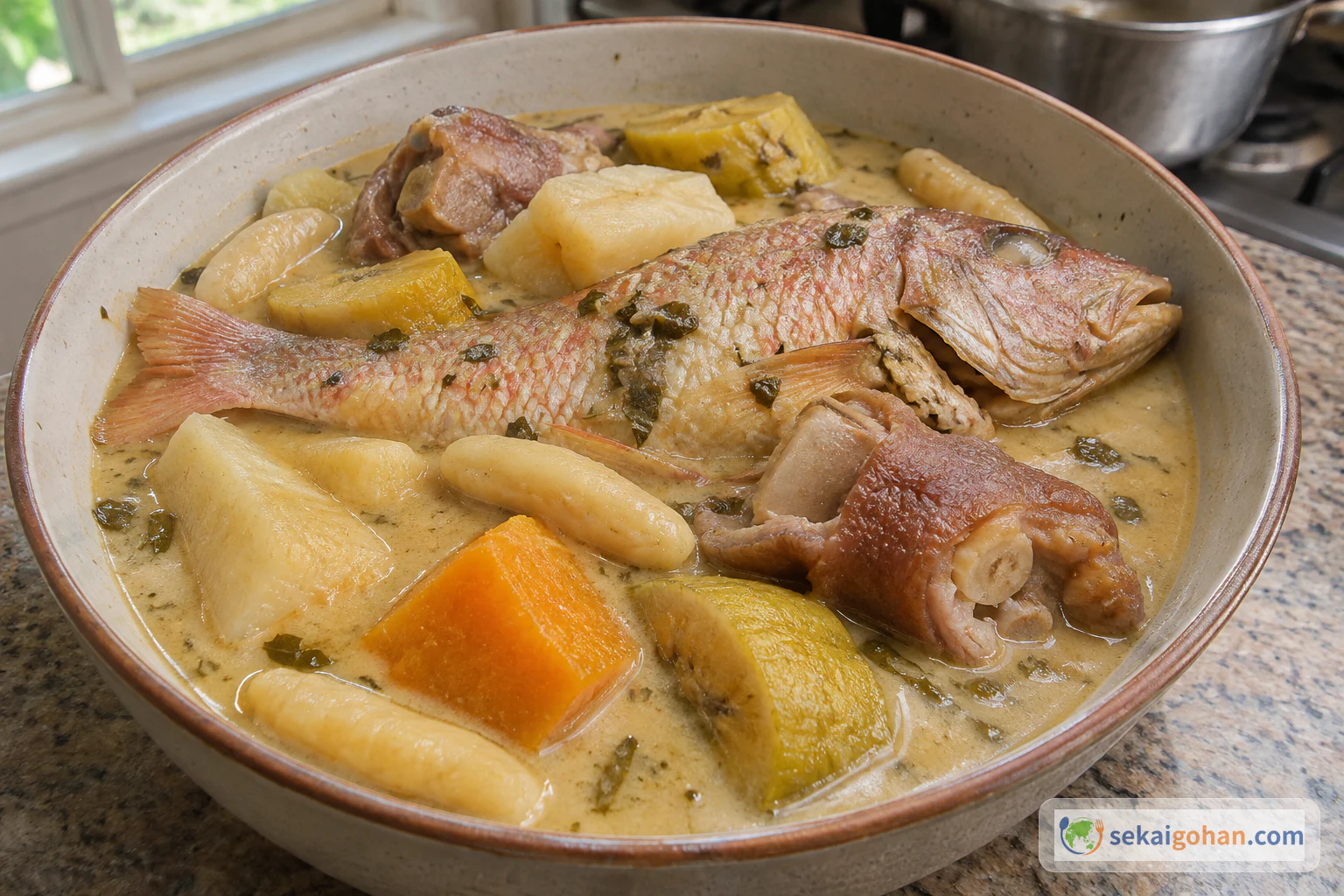

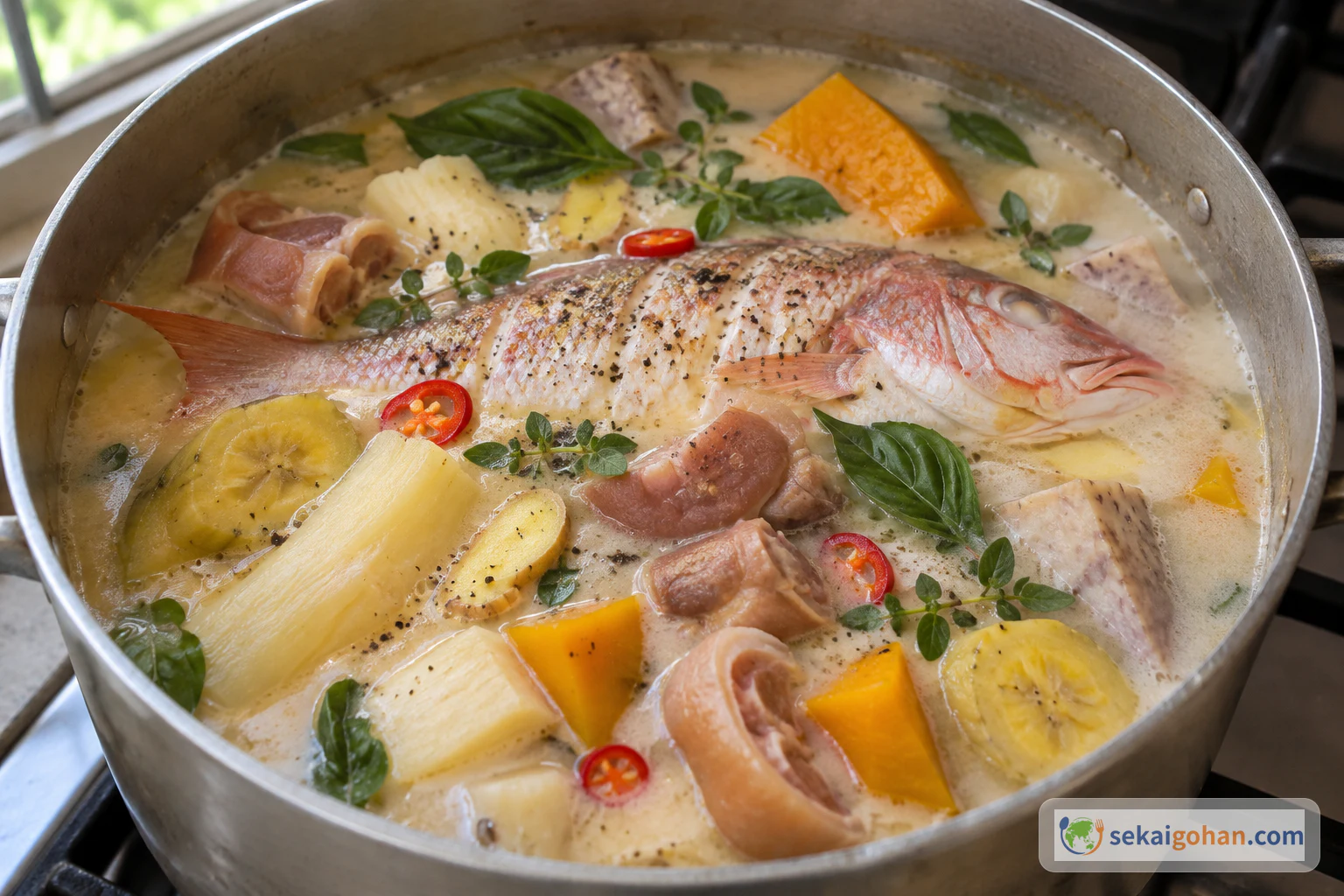
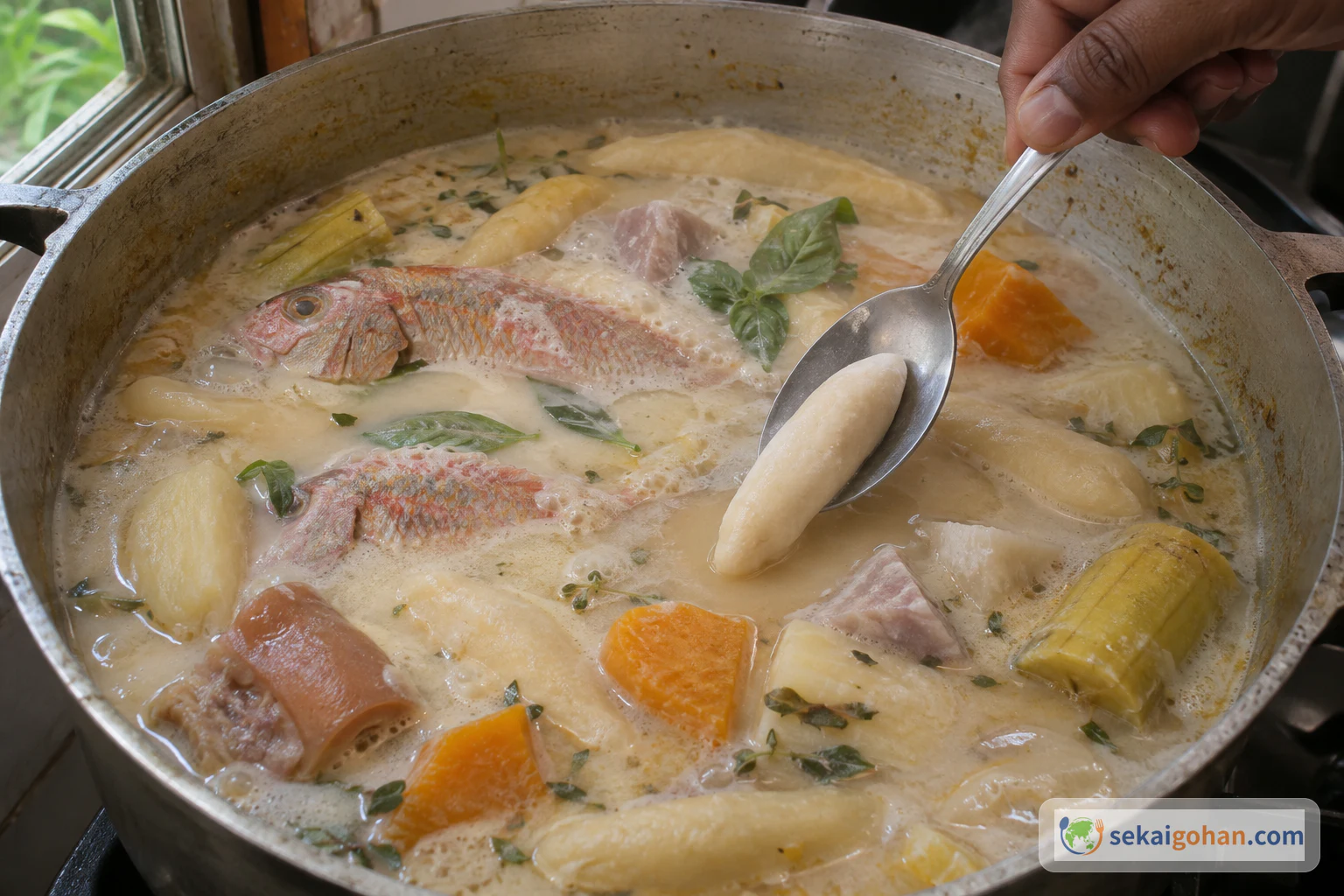
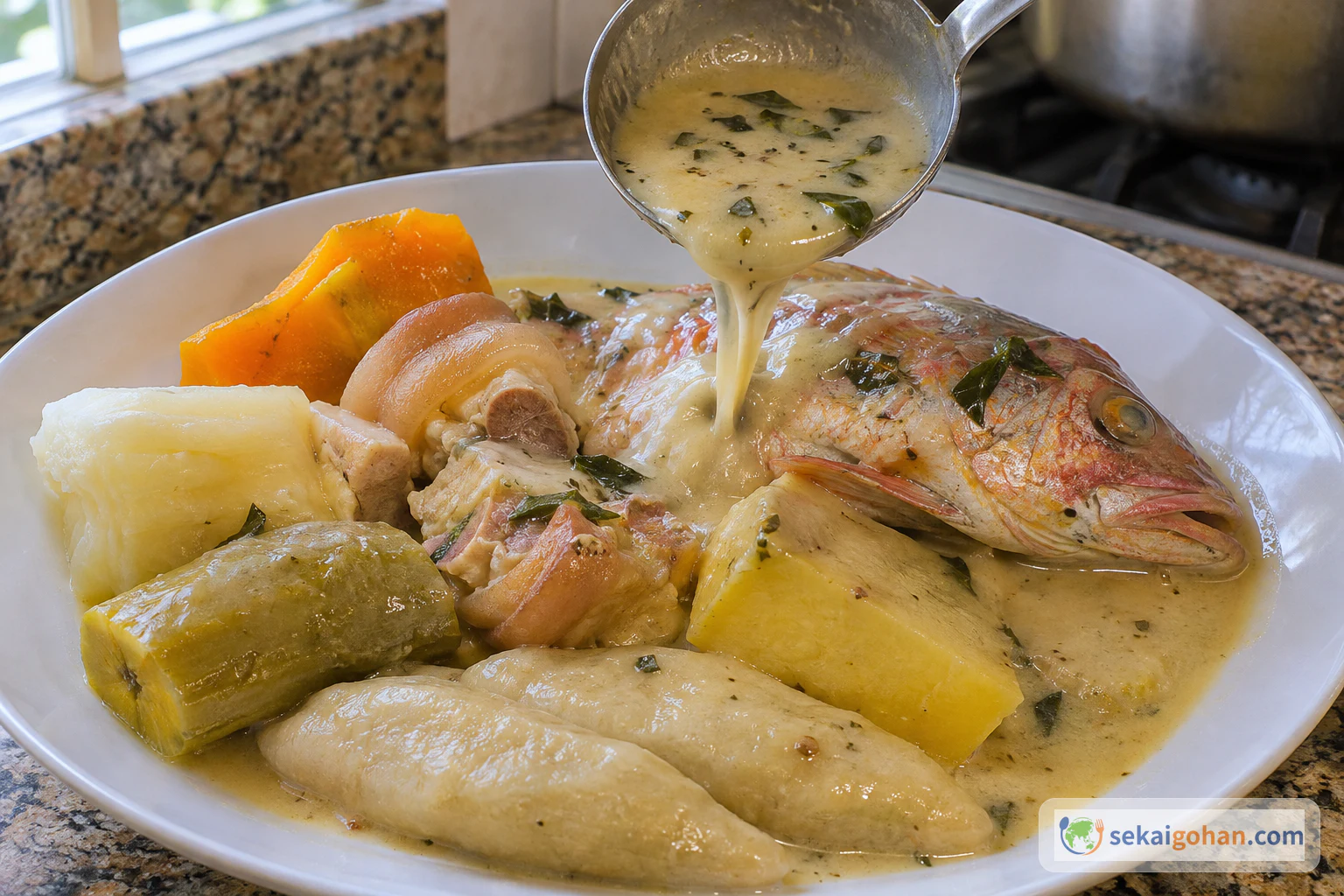
The last thing into the pot is a handful of small flour dumplings. They drop into a pale, bubbling coconut broth that already holds whole small fish, pieces of pig tail, yuca, yam, pumpkin and green plantain, and five minutes later the cooking is done. The solids are lifted out onto plates or banana leaves, and the broth, now reduced, is ladled over them. This is rondón, the coconut stew of San Andrés and Providencia, Colombia's islands in the Caribbean. It tastes of sweet coconut, sea fish and starchy roots. Basil, oregano, ginger and a little chili lift the flavour, and the pig tail gives it a salty edge.
A Stew from the Islands, with an English Name
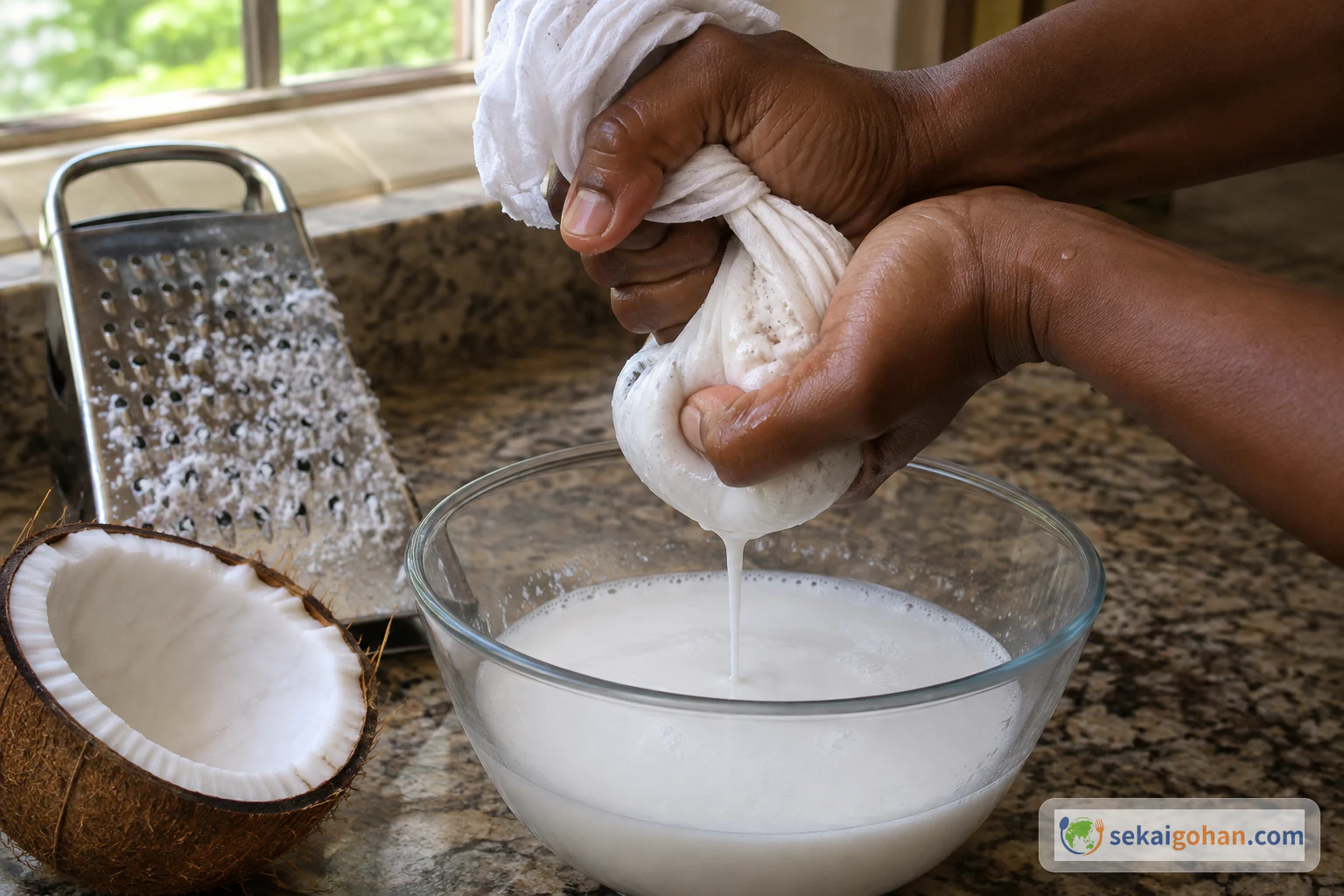
Rondón is a traditional soup of the raizal, the native people of San Andrés and Providencia, and its roots are Afro-Caribbean. Everything starts with coconut milk pressed from fresh coconut. Fish, pig tail, green plantain, cassava and yam go into it, and depending on the house, so can crab or conch. Each household and each island kitchen builds the pot a little differently. Ask around and you will hear more than one answer about what belongs in it.
The name sounds Spanish, and that throws people. Say it aloud, though, and you hear the English words "run down", spoken the Spanish way. The dish is usually said to have reached the Caribbean coasts of Central America with Afro-Jamaican laborers. In earlier days the fish was corned fish, salted and dried in the sun. Cooks soaked it overnight before using it. Fresh fish is the usual choice now, and it is what this recipe uses.
Nobody agrees on where the name comes from. The most widely accepted story is that women cooking the pot called the men working in the fields to run down and eat. Another story says the name describes the stew itself, cooked down until everything softens into the broth. A third ties it to cooking with whatever could be "run down" close at hand.
Same name, different pot
The name travels around the Caribbean, and the dishes change from place to place. Jamaica's run down comes with salted mackerel and either dumplings or roasted breadfruit. On Costa Rica's Caribbean coast, rondón reaches for thyme, habanero, curry powder and chicken bouillon. The San Andrés pot is gentler and more herbal, built on basil, oregano and ginger. Accounts of the island version also disagree on whether dumplings and salt fish belong in it. In this recipe the dumplings go in, at the very end.
| Where | What sets it apart |
|---|---|
| San Andrés and Providencia, Colombia | Fresh-pressed coconut milk, fish, pig tail, roots, green plantain, basil and oregano, flour dumplings added last |
| Jamaica (run down) | Salted mackerel, served with dumplings or roasted breadfruit |
| Caribbean coast of Costa Rica | Thyme, habanero, curry powder and chicken bouillon in the pot |
Inland Colombia eats very differently. Compare this pot with the hearty mountain plate bandeja paisa, or with sancocho de gallina, a hen and root vegetable stew. If coconut is what pulls you to the coast, arroz con coco uses it in rice. There are more dishes from the country on the Colombia page.
Ingredients (serves 5)
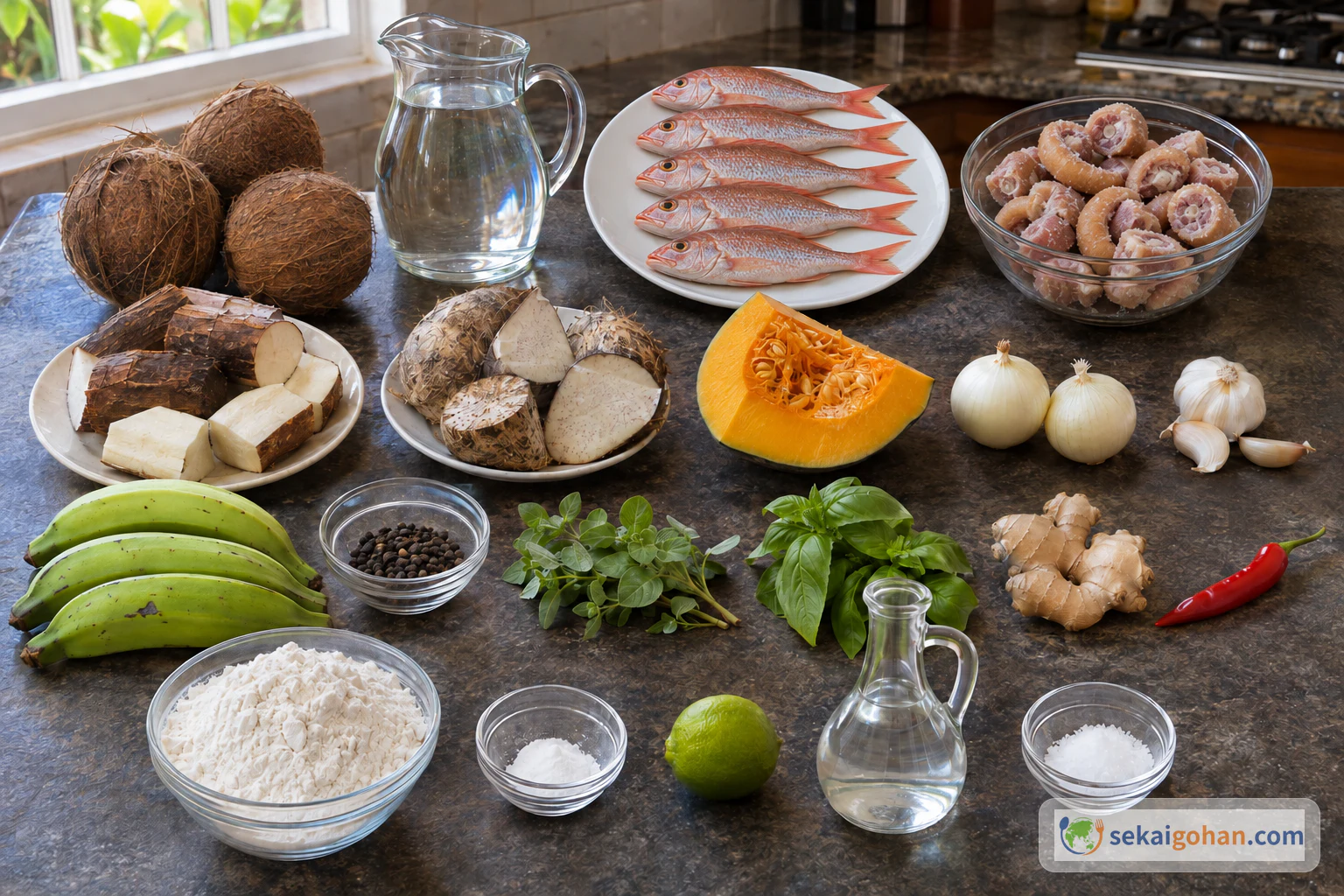
Use either whole fish or fillets, not both. The conch is optional.
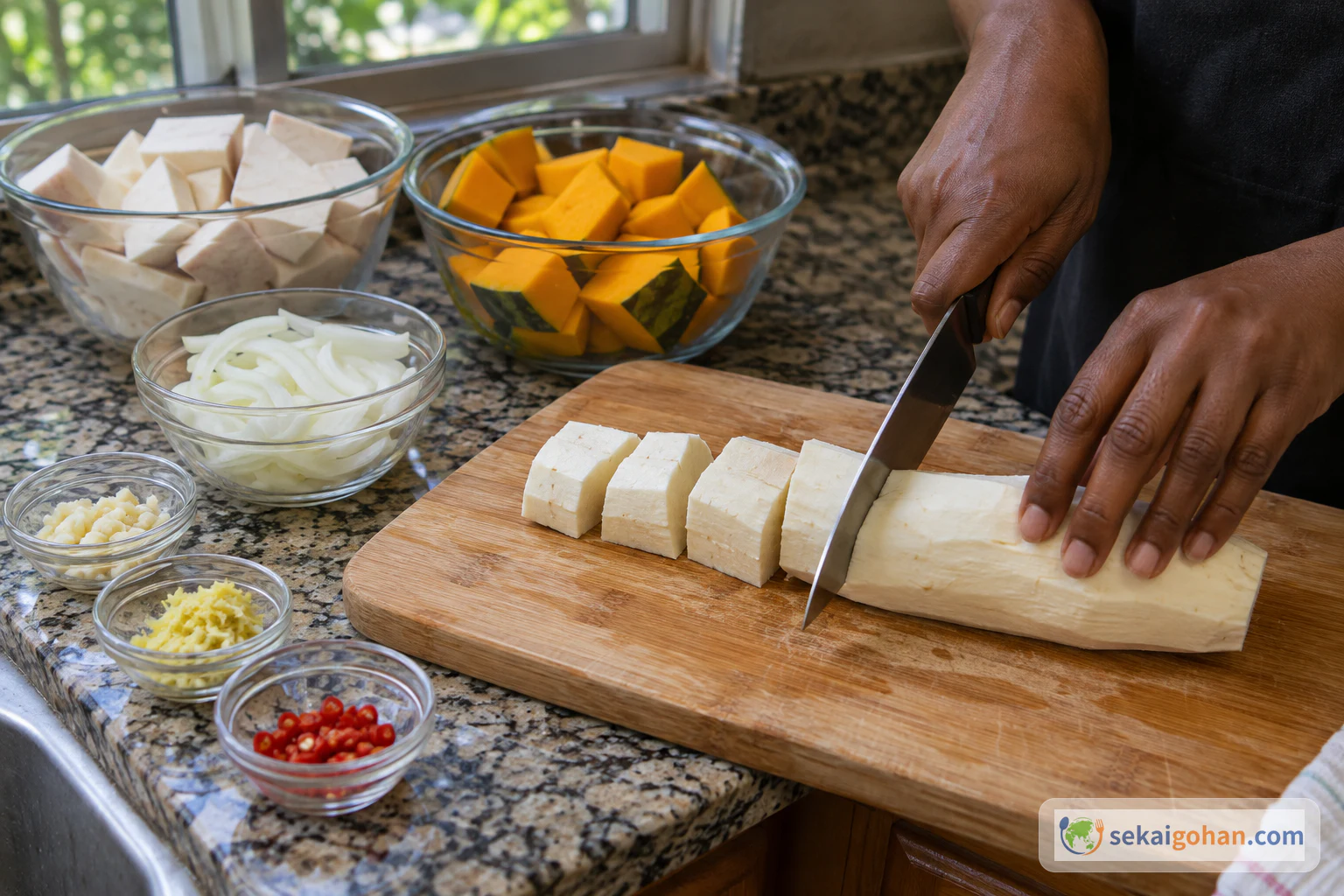
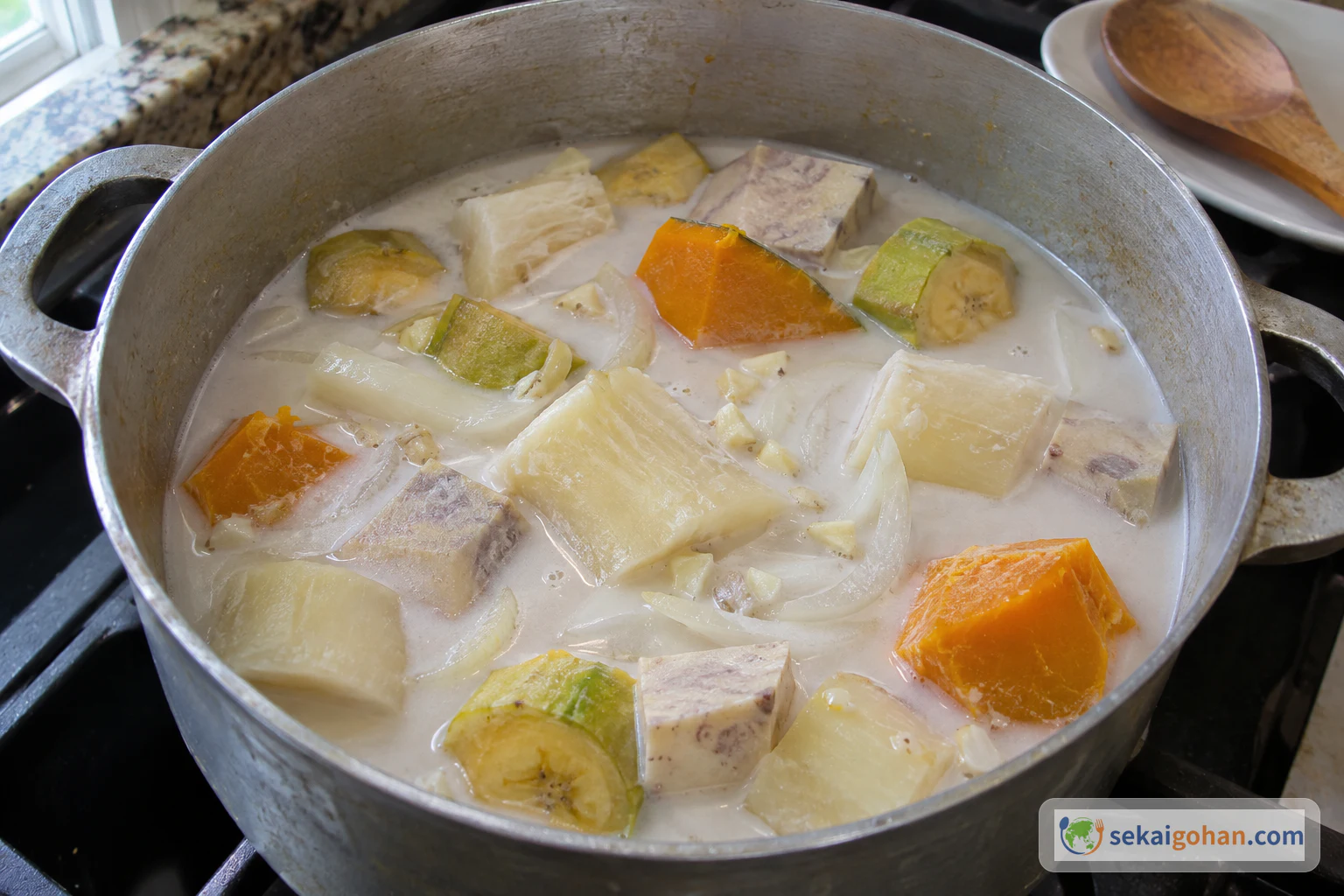
Cut the yuca, yam and pumpkin into large chunks. The pumpkin softens much faster than the yuca, and small pieces dissolve into the broth before the yuca is done.
Rondón contains fish, shellfish (conch, and crab in some versions), wheat (the dumplings) and coconut. If you leave out the conch, the pot has no shellfish. Without dumplings it has no wheat.
Equipment
- Large, heavy pot for the stew
- Second pot or a pressure cooker for parboiling the pig tail
- Small pot for the conch
- Heavy knife or cleaver for opening the coconuts
- Grater or blender for the coconut flesh
- Clean cloth or fine strainer and a large bowl
- Mallet or meat pounder for the conch
- Cutting board, bowls and a ladle
- Plates, a platter or banana leaves for serving
Choosing and Substituting Outside the Islands
Latin American, Caribbean and Asian grocers usually have the hard-to-find items. Frozen cassava and frozen yam work well for yuca and ñame. True yam is its own tuber: Japanese nagaimo and taro are different plants and cook differently. Green plantains are sold as cooking bananas. If you cannot find them, firm unripe green bananas will do, though they are softer and break down sooner. Kabocha is a good stand-in for island pumpkin.
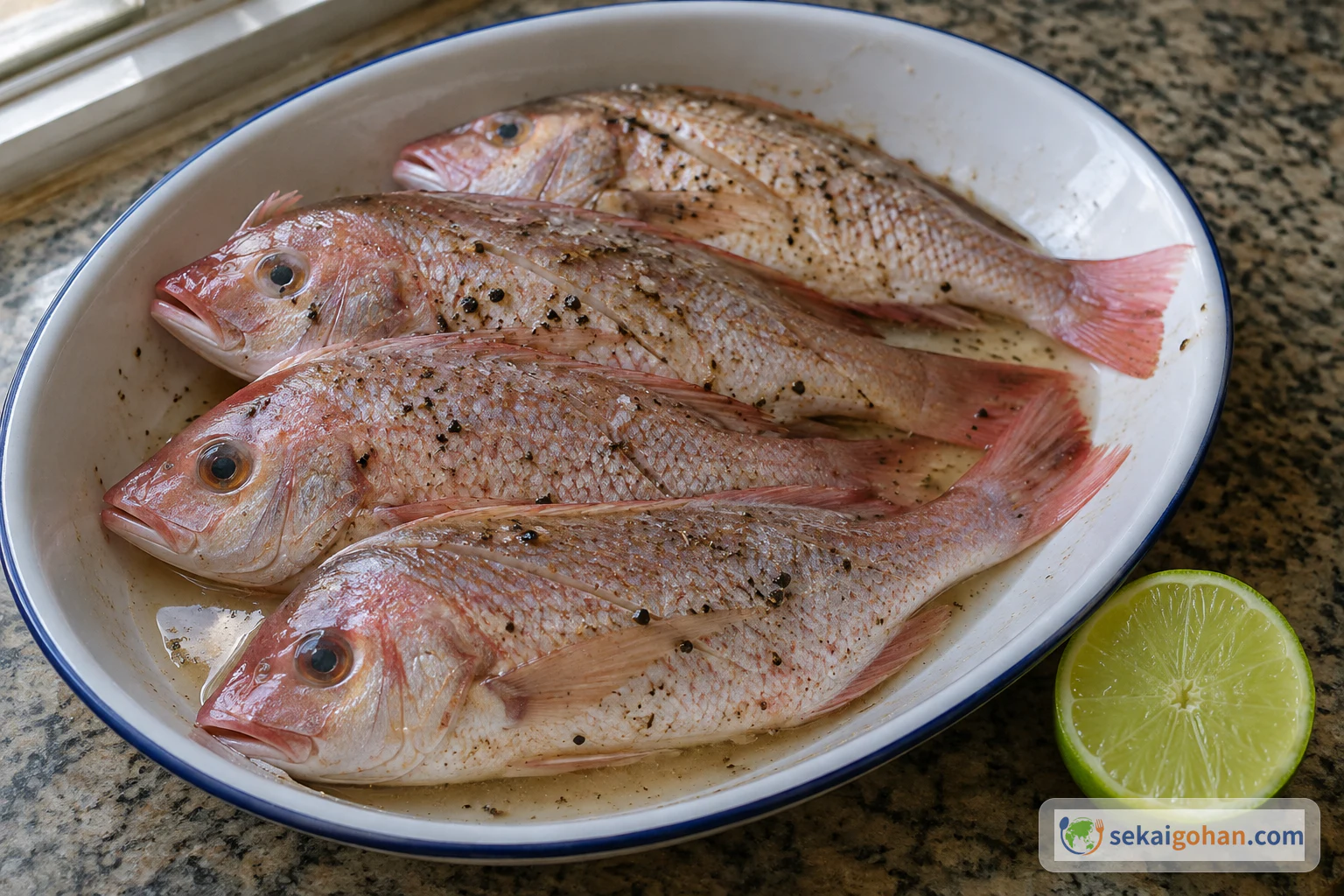
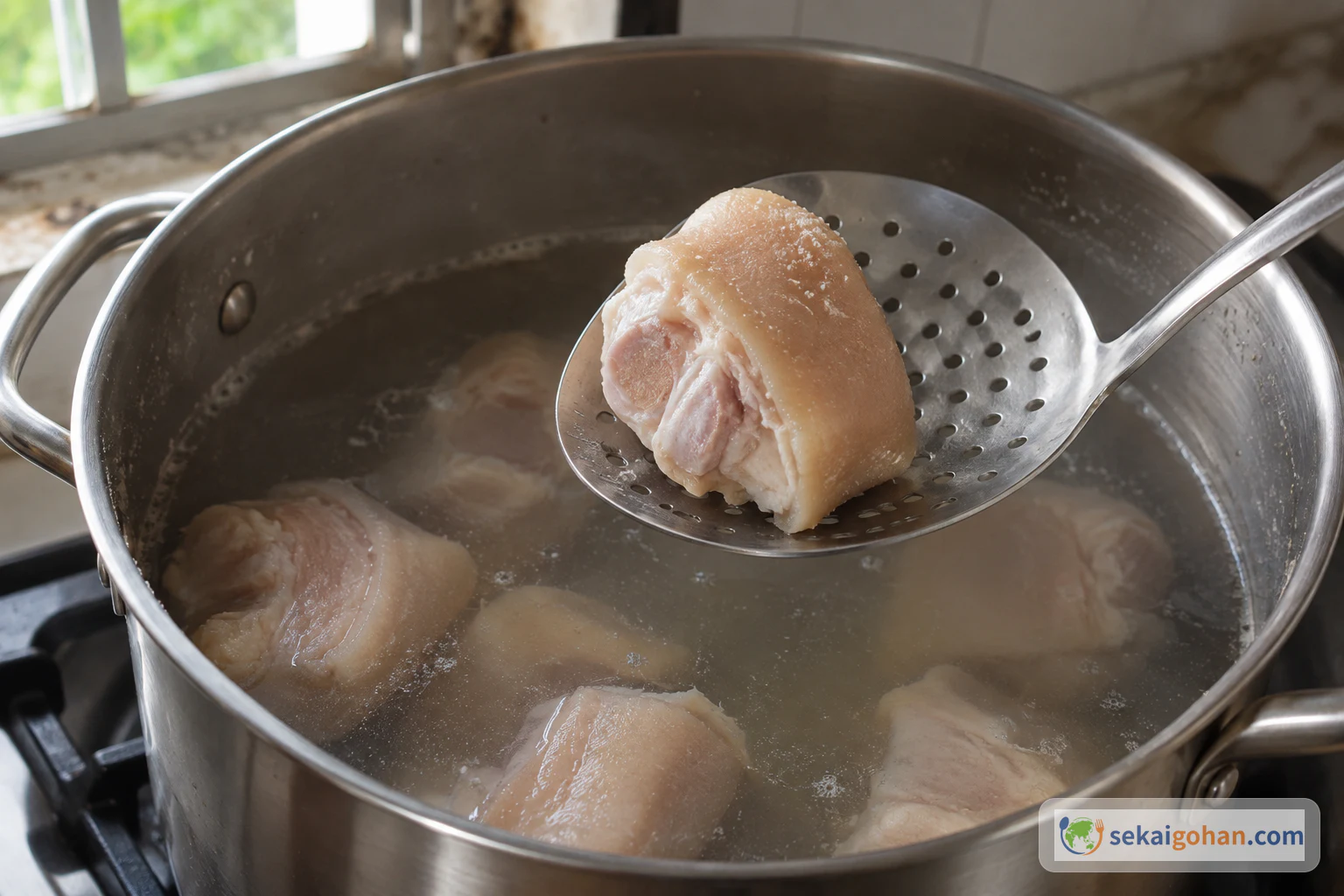
For the fish, use small whole white-fleshed fish such as snapper, sea bream or rockfish. Salted pig tail is the hardest item to find abroad. Salted pork belly or salt pork can stand in, but the broth tastes different and the salt level changes, so parboil it the same way. Whelk can replace conch, but the texture differs. Use fresh oregano if you can. If you only have dried, use less, because it is stronger.
Canned coconut milk is different from milk you press yourself. It is thicker and tastes different. Thin it with water until it looks like milk you could drink, and expect a heavier broth. Fresh-pressed milk gives the clean, light coconut taste of the island pot. That is the one thing worth the effort if you can manage it. The roots, plantain and fish can all be swapped with less loss. A pressure cooker makes the pig tail parboil much shorter.
Method
Prep takes most of the time and the stove work is short. Prepare the vegetables first. Then press the coconut milk, season the fish, parboil the pig tail and conch, and shape the dumplings. Once everything is lined up by the stove, the pot moves fast: roots, then fish and meat, then dumplings, with no long wait anywhere.
Serve the pig tail, fish and conch only when they are fully cooked: the pig tail soft and hot all the way through, the fish opaque to the bone, the conch cooked through. Rondón is never served raw or underdone.
When It Goes Wrong
| What you see | Why | What to do |
|---|---|---|
| The broth is too salty | The pig tail (or salt pork) was not parboiled long enough | Add more coconut milk, or water if it is canned, and leave out any extra salt. Next time, taste the meat after parboiling and repeat the boil if needed |
| The dumplings are heavy or falling apart | They went in too early, or the dough was too soft | Add them only in the last 5 minutes, and make the dough firm enough to hold its shape |
| The yuca is still hard when the fish is done | The chunks were cut too big, or the fish went in too soon | Lift the fish out onto a plate and keep cooking the roots alone, then put the fish back. Next time, wait until the roots begin to soften before adding the fish |
| The pumpkin melts into the broth | The pieces were too small | Cut it larger than the yuca. The broth will still taste good, just thicker and more orange |
| The broth is heavy and greasy | Canned coconut milk went in undiluted | Thin the broth with hot water a little at a time until it is creamy, not thick |
Serving and Variations
At the table
On the islands, rondón is served the way it is lifted from the pot. Everyone gets fish, a piece of pig tail, chunks of root, plantain and a few dumplings on a plate or banana leaf, with broth poured over the top. It is a full meal by itself and needs nothing else beside it. Put the pot or a pitcher of broth on the table so people can add more as the roots soak it up. Set out lime halves for anyone who wants it sharper.
Variations
- Breadfruit. Add chunks of breadfruit with the roots. They give a soft, bread-like starch that soaks up the coconut broth.
- Achiote. A little achiote (annatto) turns the broth golden-orange. The colour changes far more than the taste.
- Plátano bacao instead of pumpkin. Plátano bacao replaces the pumpkin, so the stew loses some sweetness and orange colour.
- Crab or extra conch. Island households add crab or more shellfish for a stronger taste of the sea. Remember they add shellfish allergens.
Frequently asked questions
Is rondón spicy?
No. One small chili in a whole pot of coconut milk gives a gentle warmth, and the coconut softens it further. Use half a chili for less heat, or serve sliced chili at the table for people who want more.
How do I make the older salt-fish version?
Use corned fish, salted and sun-dried, instead of fresh fish. Soak it overnight in fresh water, changing the water several times, so most of the salt comes out before it goes into the pot. Season the broth very lightly, because the fish and the pig tail both add salt.
Do I have to add the dumplings?
Not every island cook includes them. Without dumplings the stew is a lighter coconut broth with roots, fish and meat, and it is wheat-free. With them, the pot is more filling and the dumplings soak up the broth.
What should I ask if I order rondón on the islands?
Each house and restaurant fills the pot differently, and it can include crab, conch, wheat dumplings and coconut. If you have an allergy, ask what is in it before you order.