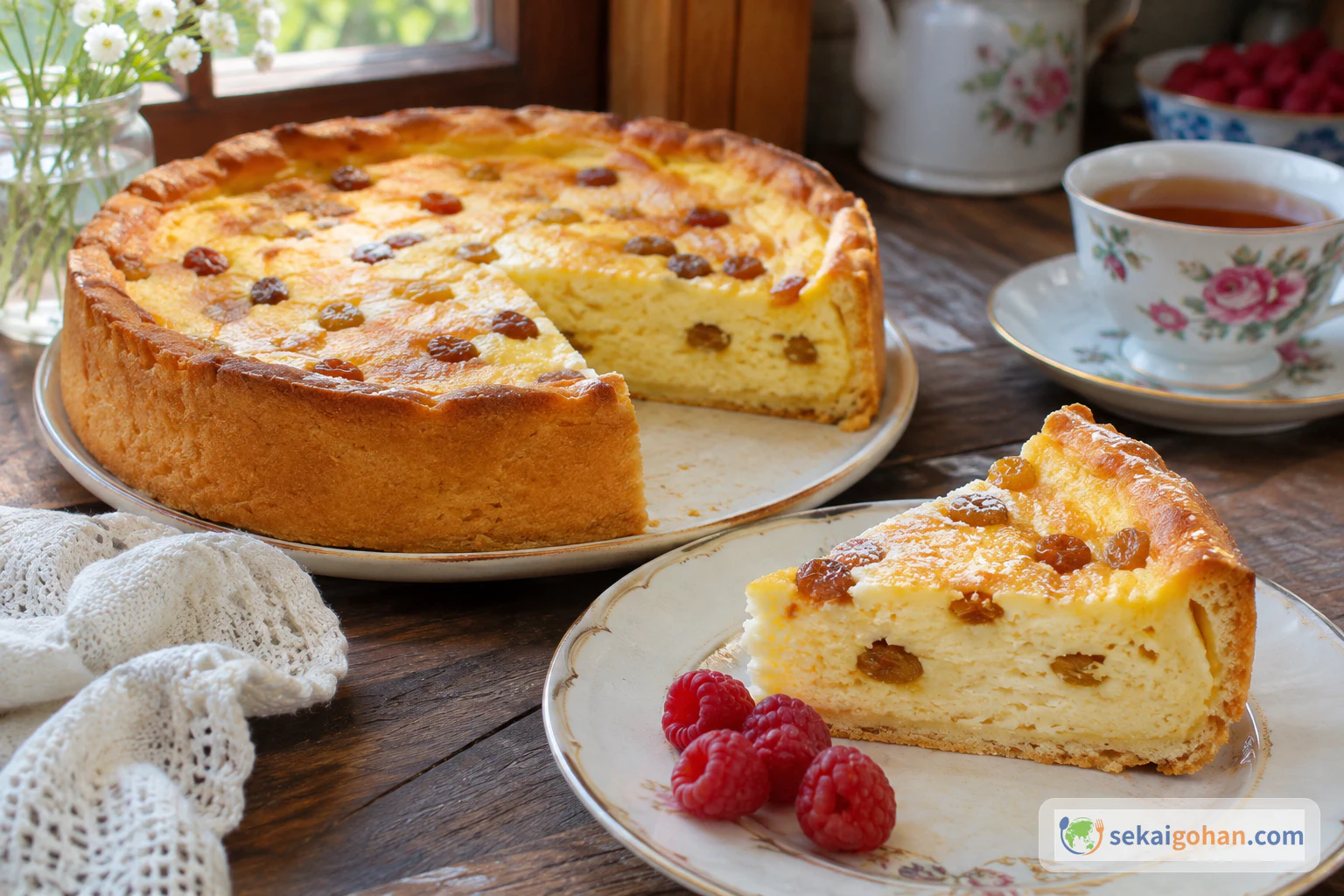
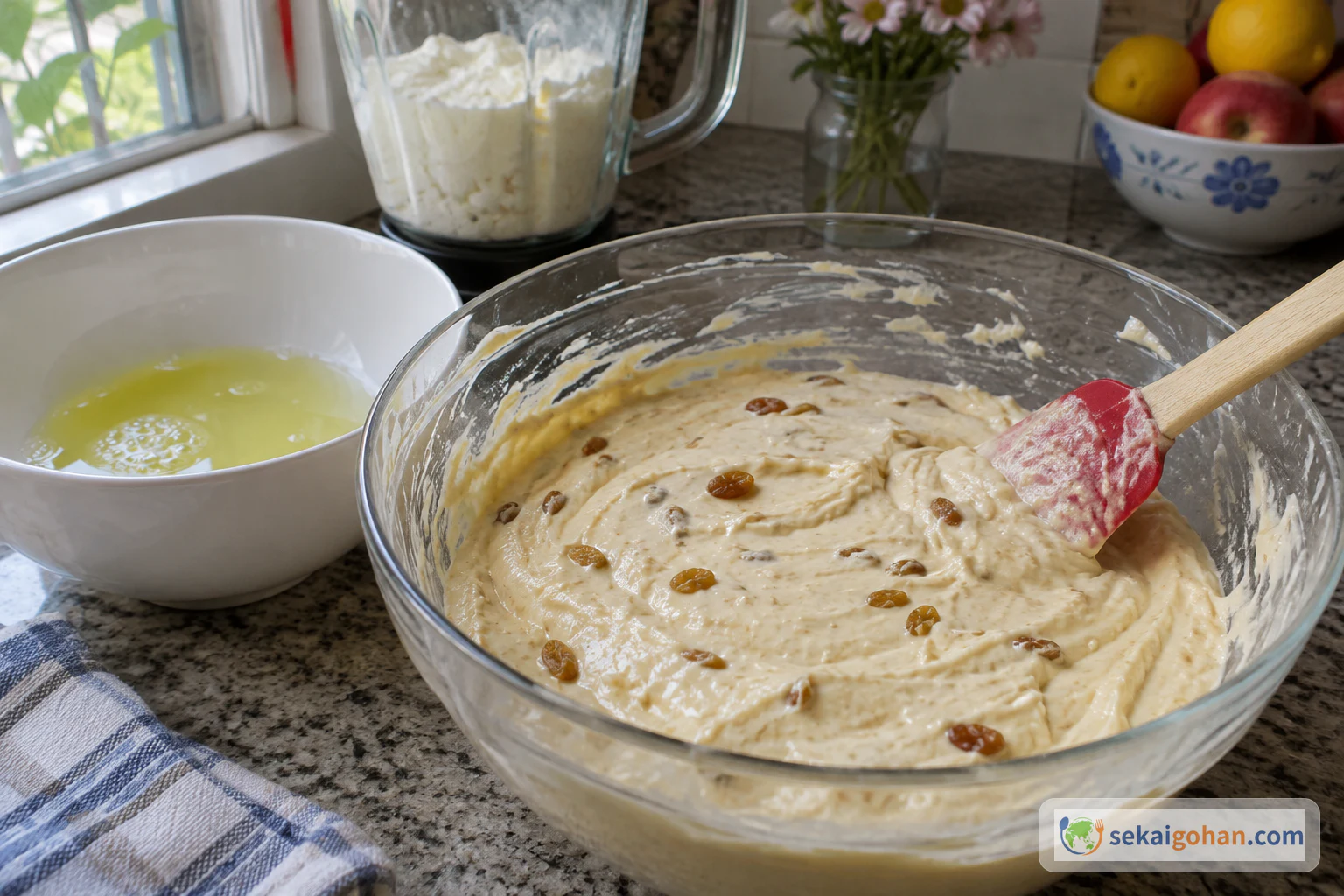
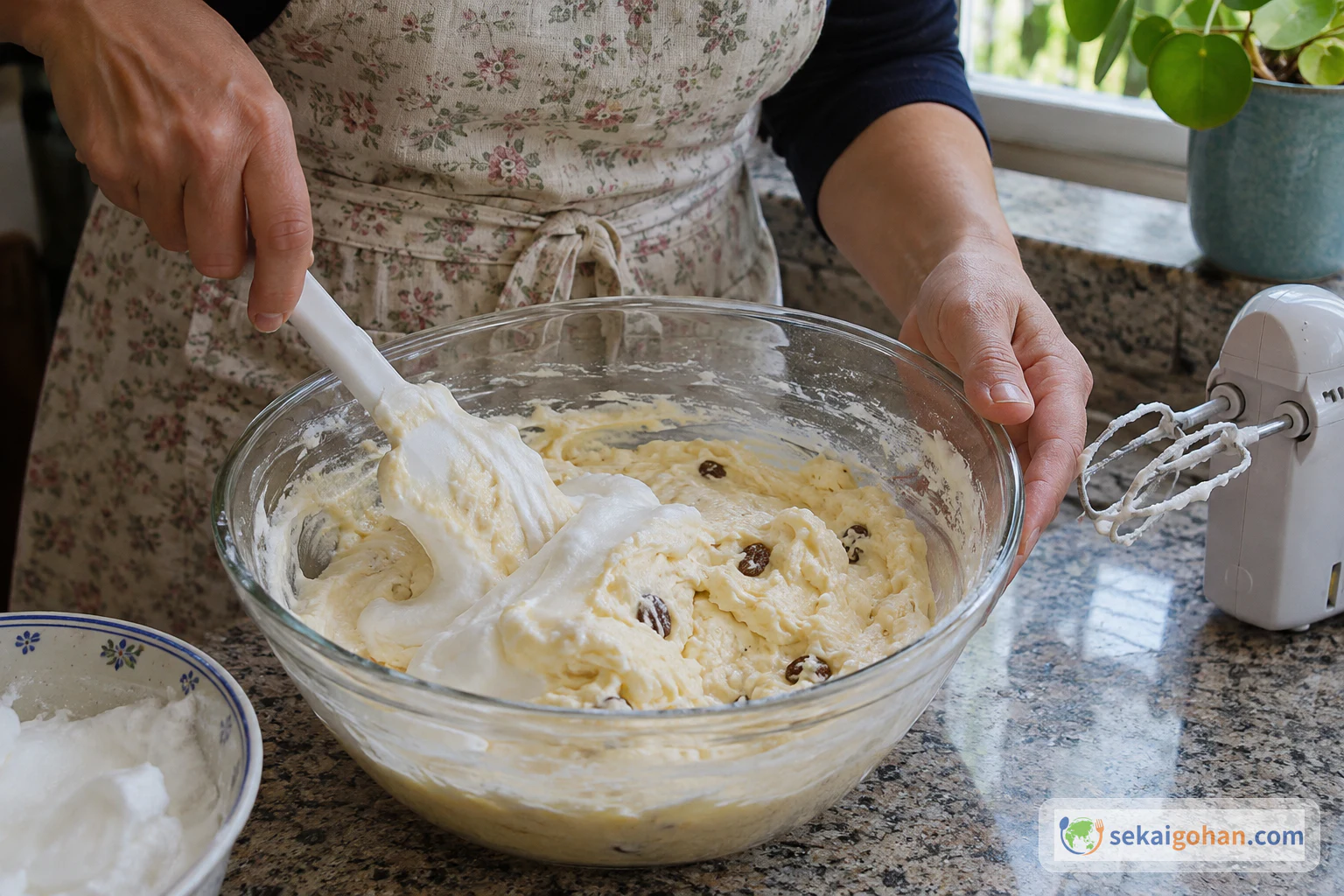
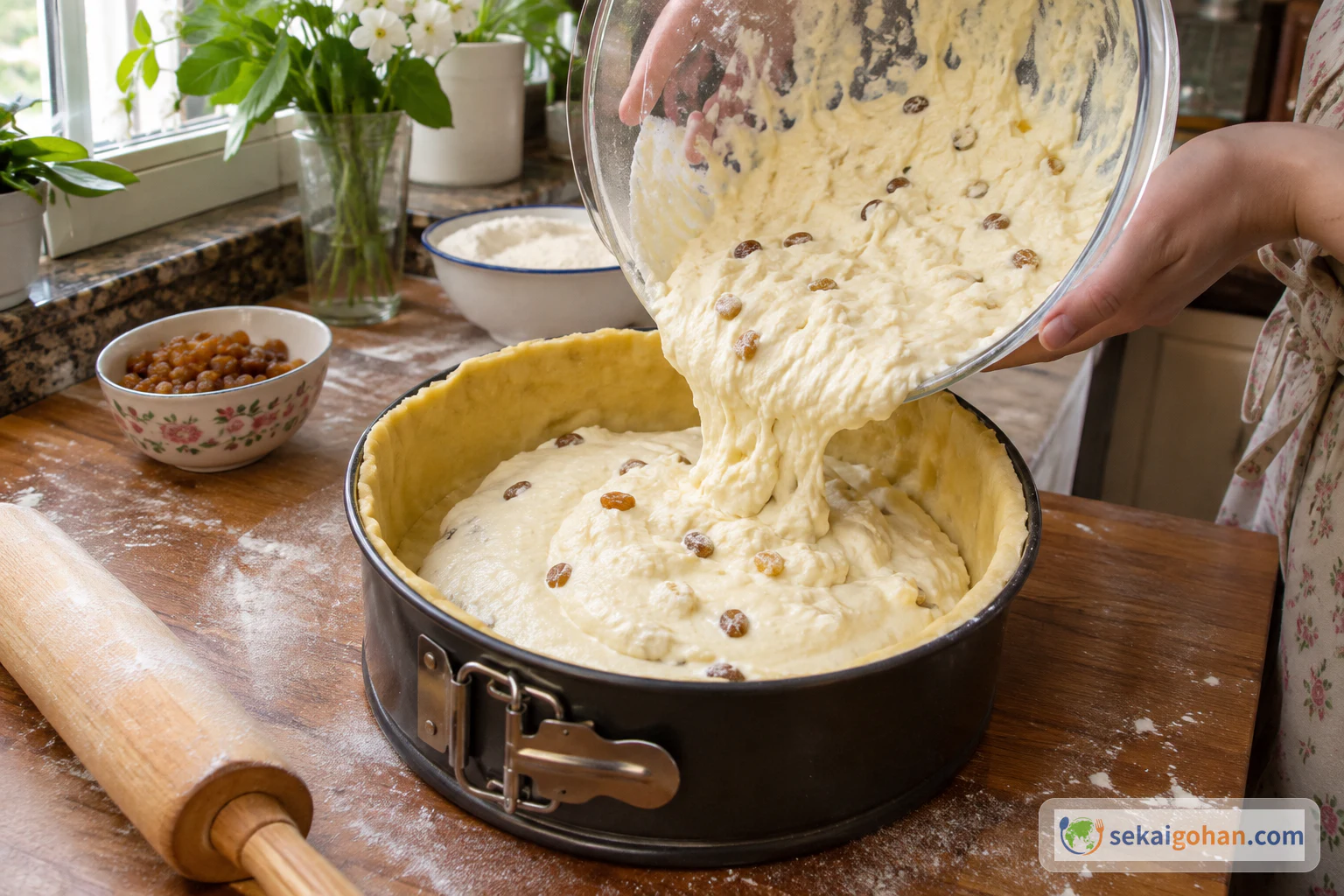
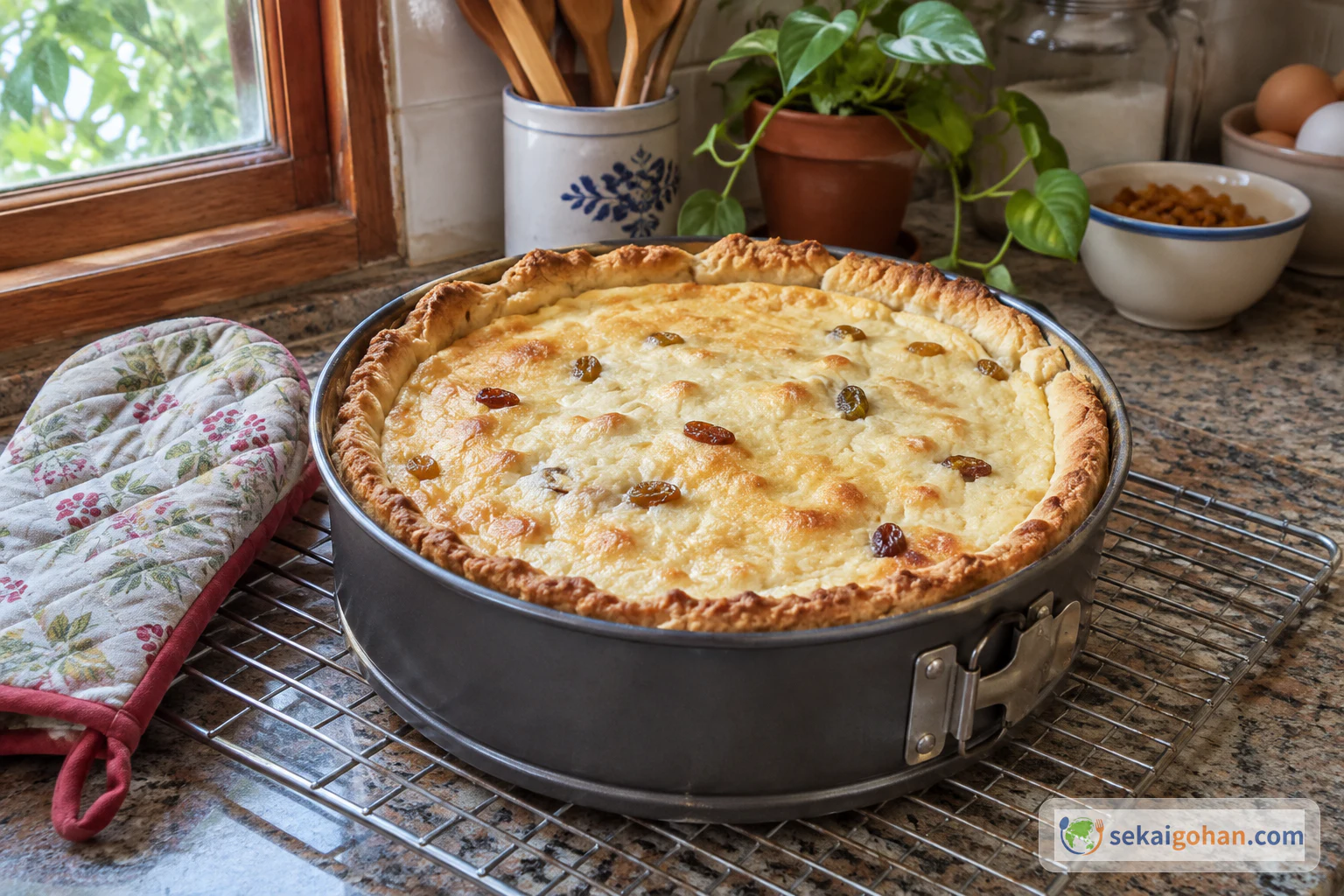
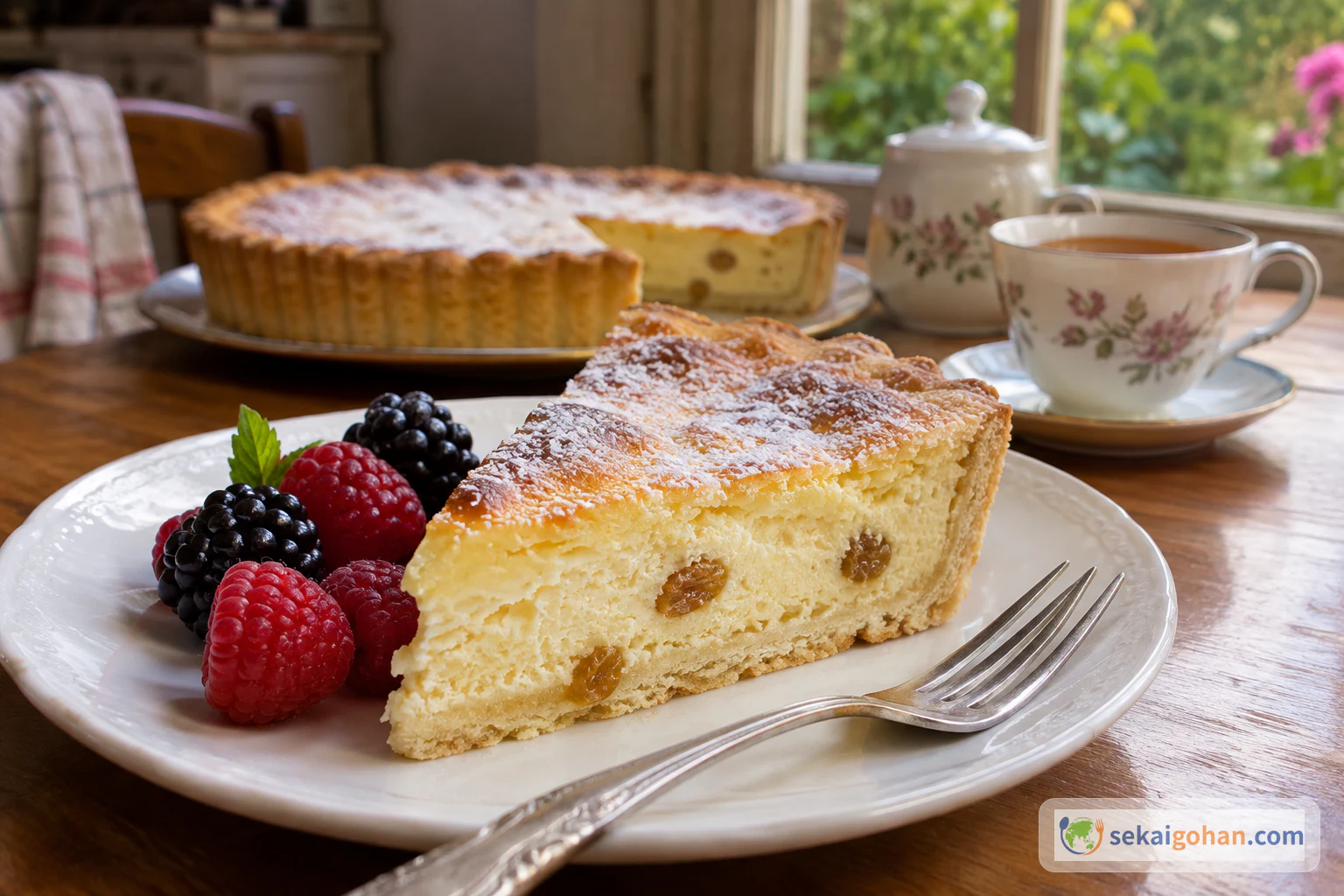
Along the lakeside Costanera in Frutillar, the tea houses put kuchen on the table with cups of tea and coffee. This one has a crumbly butter crust and a pale filling of fresh cheese, egg and powdered sugar. Golden raisins are scattered all through it, and whipped egg white keeps it light. It tastes mild and milky with a gentle sweetness, and the raisins give each bite a bit of tart fruit. In southern Chile it belongs to teatime, and a bowl of fresh raspberries or blackberries usually comes with it.
A German Word on a Chilean Tea Table
The name comes first. Chileans call pies and tarts küchen, the German word for cake, because German bakeries were the ones selling them. That goes back to the years after 1850, when the Chilean government settled German immigrants in the southern provinces. Most of the early settlers were artisans and carpenters. The recipes came with the women and children.
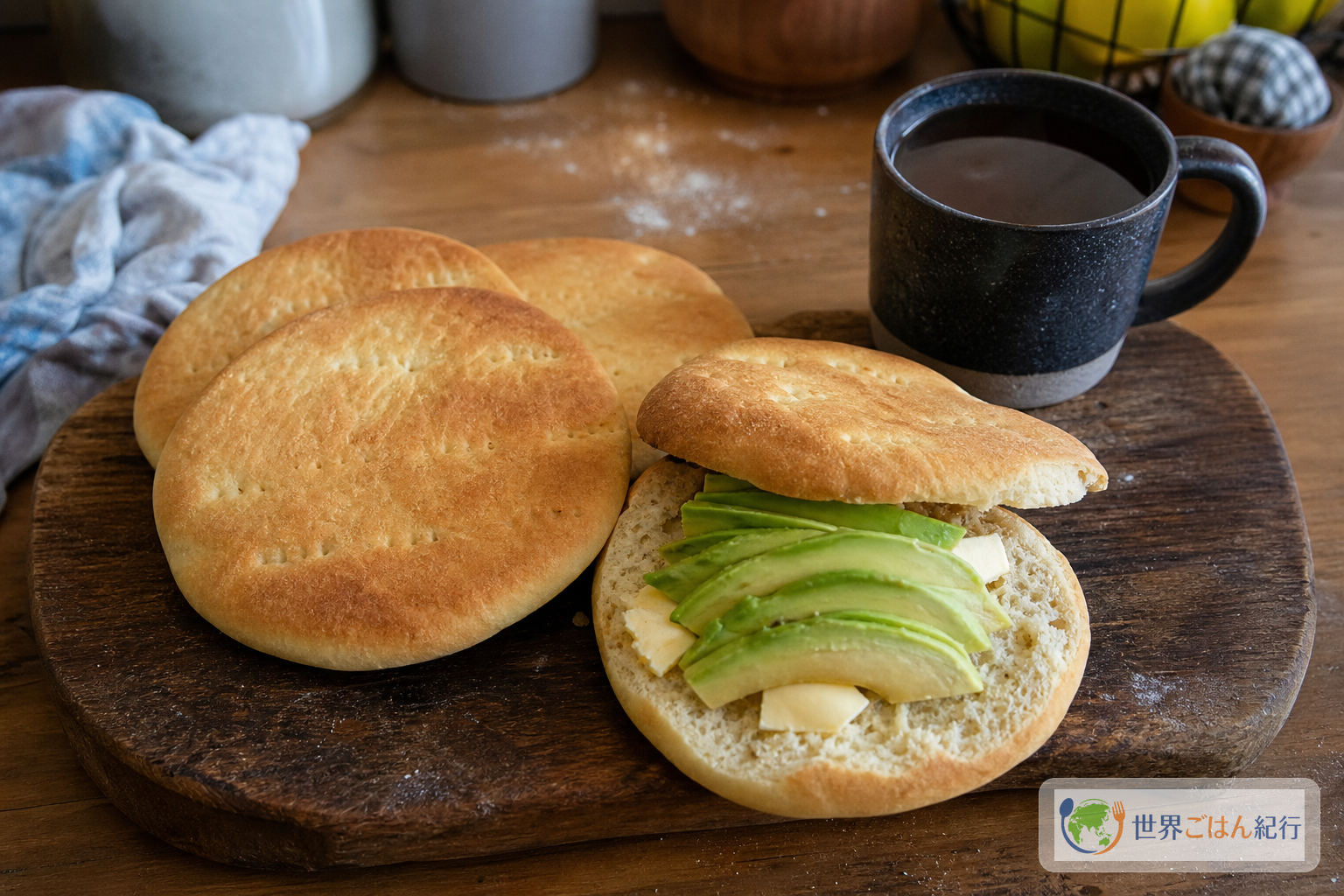
In southern Chile today, kuchen is usually a flat tart or cake with fruit on top. Murta, raspberry, blackberry, strawberry, cherry and plum all go on it. It is a fixture of once, the Chilean teatime, where it shares the table with breads like hallulla. Around Frutillar, the tea houses along the shore have made kuchen part of a visit to the lake. Kuchen de quesillo trades the fruit topping for a fresh cheese filling and keeps the fruit on the side. How widely Chileans use the name "kuchen de quesillo" is not settled, but the tart follows the same kuchen tradition. More dishes from the same country are on our Chile page.
The word "quesillo" means different things in different countries. Elsewhere in Latin America it can be a different cheese entirely, and in places like Venezuela it is a caramel custard dessert. In Chile, quesillo is a soft, mildly salty fresh cow's-milk cheese, sold chilled in small tubs. That Chilean cheese is the one that goes into this tart.
Ingredients
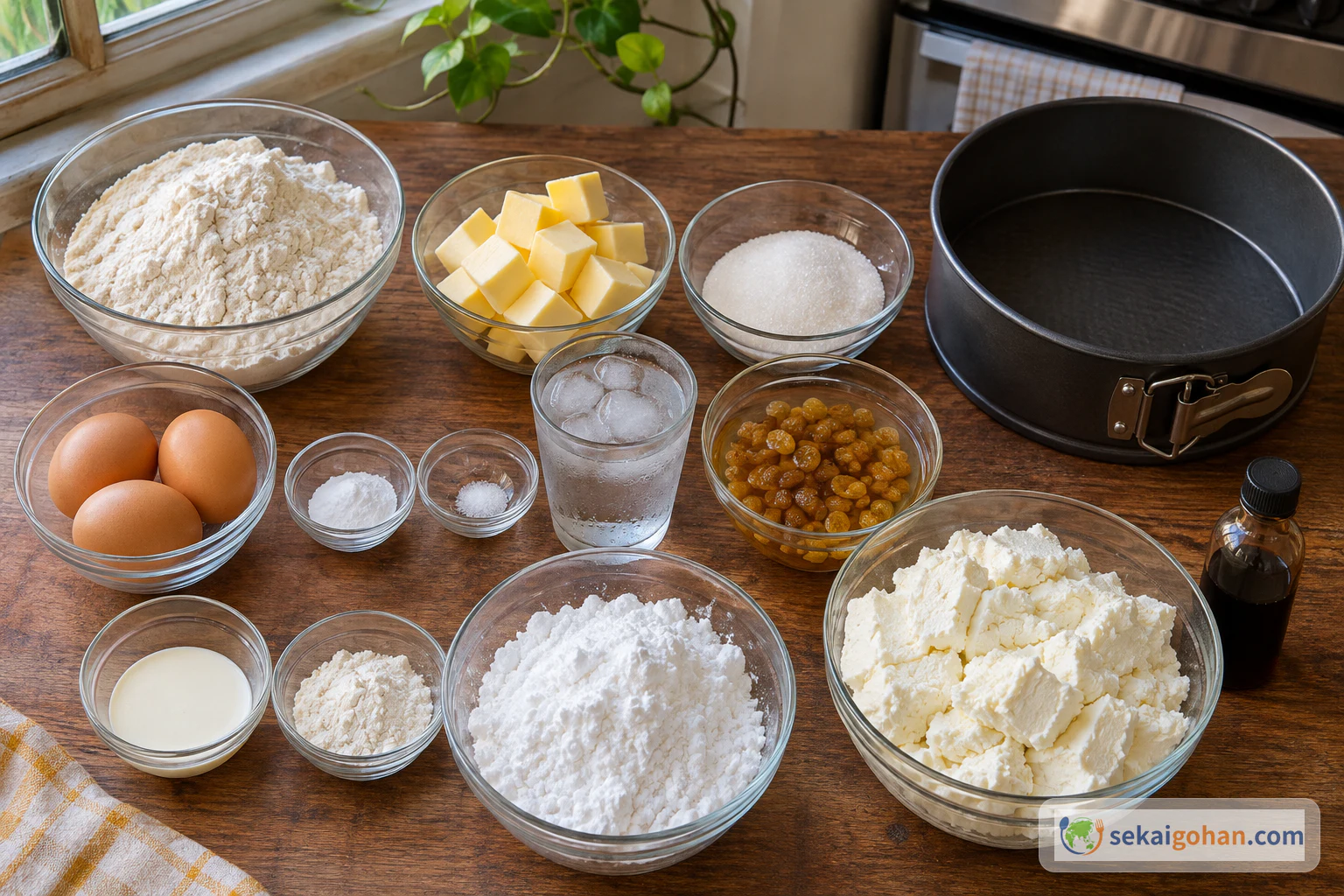
This makes one 9-inch (23 cm) springform tart, or two tart plates.
This tart contains wheat, eggs and milk (butter, cream and cheese). If you soak the raisins in rum, the tart contains alcohol. For children, soak them in hot water.
Equipment
- 9-inch (23 cm) springform pan, or two tart plates
- Food processor
- Blender
- Hand mixer or whisk
- Mixing bowls, including one clean, grease-free bowl for the egg whites
- Rubber spatula
- Rolling pin
- Plastic wrap
- Aluminum foil
- Thin skewer
- Wire rack
Choosing the Cheese and Other Swaps
The cheese is what makes or breaks this tart. Chilean quesillo is fresh, soft and only mildly salty, and the quesillo sold in tubs is made with gelatin. Outside Chile it is hard to find. Queso fresco is the closest swap and goes in at the same amount. Panela, Neufchâtel and the German spreading cheese Schmierkäse also work. Every swap changes the filling a little, so check how wet and how salty your cheese is before you use it.
| Cheese | What changes |
|---|---|
| Queso fresco or panela | Closest to quesillo, with a mild, fresh, milky taste. Taste it first. If it is saltier than you like, the filling will be too |
| Neufchâtel | Smoother and a little tangier. The filling comes out denser and richer |
| Ricotta | Use 1½ cups ricotta with ½ cup heavy cream in place of the cheese. The filling is softer and the dairy flavor milder |
| Cream cheese | Much higher in fat. The filling turns heavy and rich, closer to a dense cheesecake |
| Cottage cheese | Holds a lot of water. Drain it well on paper towels and blend it fully smooth, or the filling will weep |
With any fresh cheese that looks wet in the tub, drain it on paper towels before blending. Extra water makes the filling loose and soggy no matter how well you fold in the egg whites.
For the crust, use ordinary all-purpose flour. In the filling, cornstarch can replace the 2 tbsp of flour one for one. Golden raisins look nicer against the pale cheese than dark ones, and they taste a little brighter.
Method
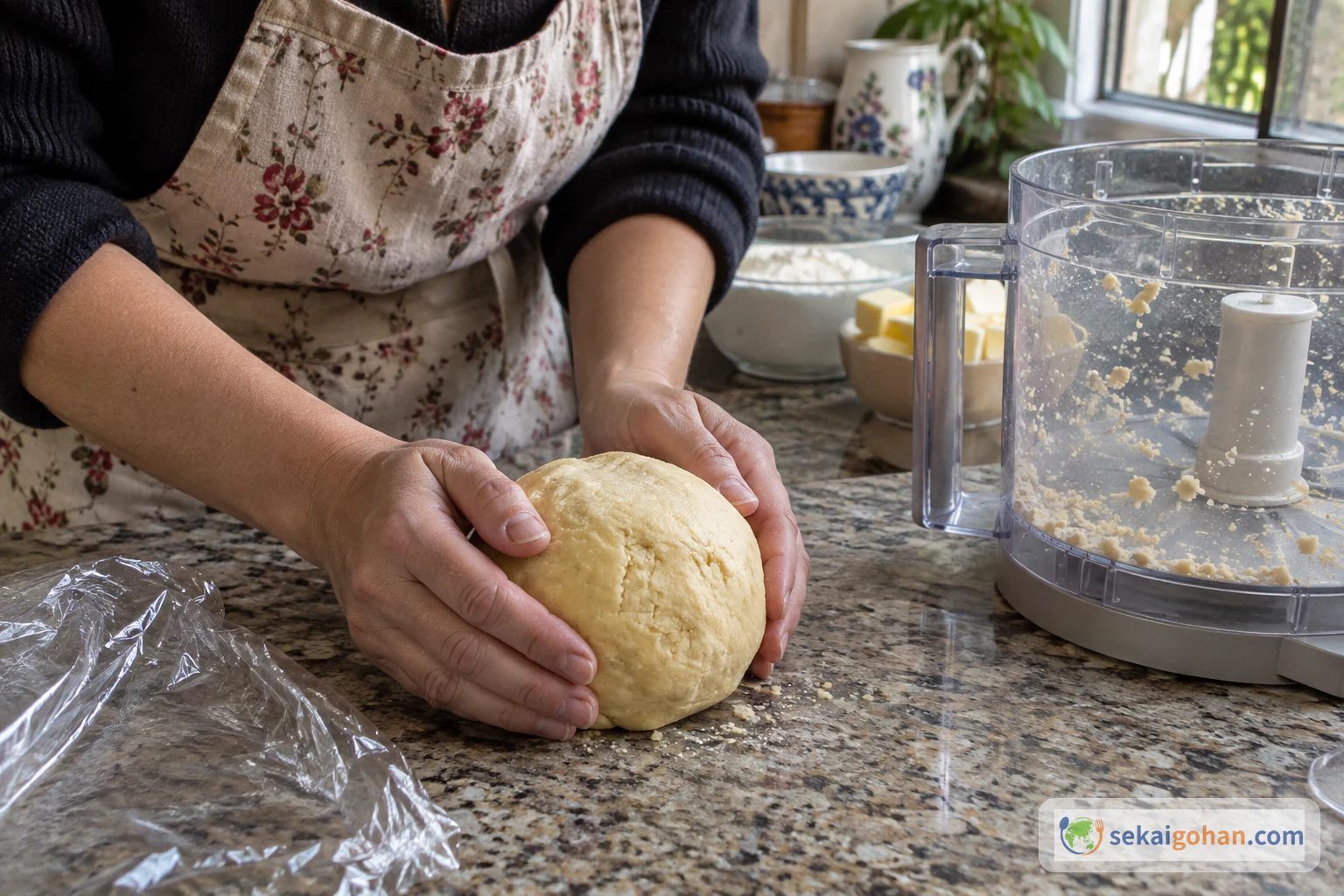
The crust comes first, because it needs at least 30 minutes in the refrigerator. That chilling time is when you soak the raisins and make the filling. Whip and fold in the egg whites only once the crust is chilled, then line the pan and get the tart into the oven while the filling is still airy. The bake is mostly hands-off, apart from checking the top from the 40-minute mark.
When It Goes Wrong
| What you see | Why | What to do |
|---|---|---|
| The crust dough stays dry and crumbly | Not enough water to bind it | Add ice water a little at a time and pulse between additions. Too much water makes a sticky, tough crust |
| The cheese won't blend smooth | The cheese is firm or dry | Add more heavy cream a little at a time until the blender turns freely |
| The baked filling is heavy and dense | The egg whites were underbeaten or stirred flat | Whip them to stiff peaks and fold them in gently. Get the tart into the oven soon after folding |
| The filling is wet or weeping | The swap cheese held too much water | Next time, drain the cheese on paper towels before blending |
| The top browns long before the center is done | The surface is taking too much heat | Lay foil loosely over the top and keep baking until the skewer comes out clean |
Serving and Variations
Kuchen de quesillo is a teatime tart, made for once with tea or coffee, a basket of bread and a bowl of fresh raspberries or blackberries. It works warm, when the filling is at its softest, and chilled, when it cuts cleaner and tastes more of fresh milk. Because it is good cold, you can bake it ahead. Once it has cooled, cover it and keep it in the refrigerator until you serve it.
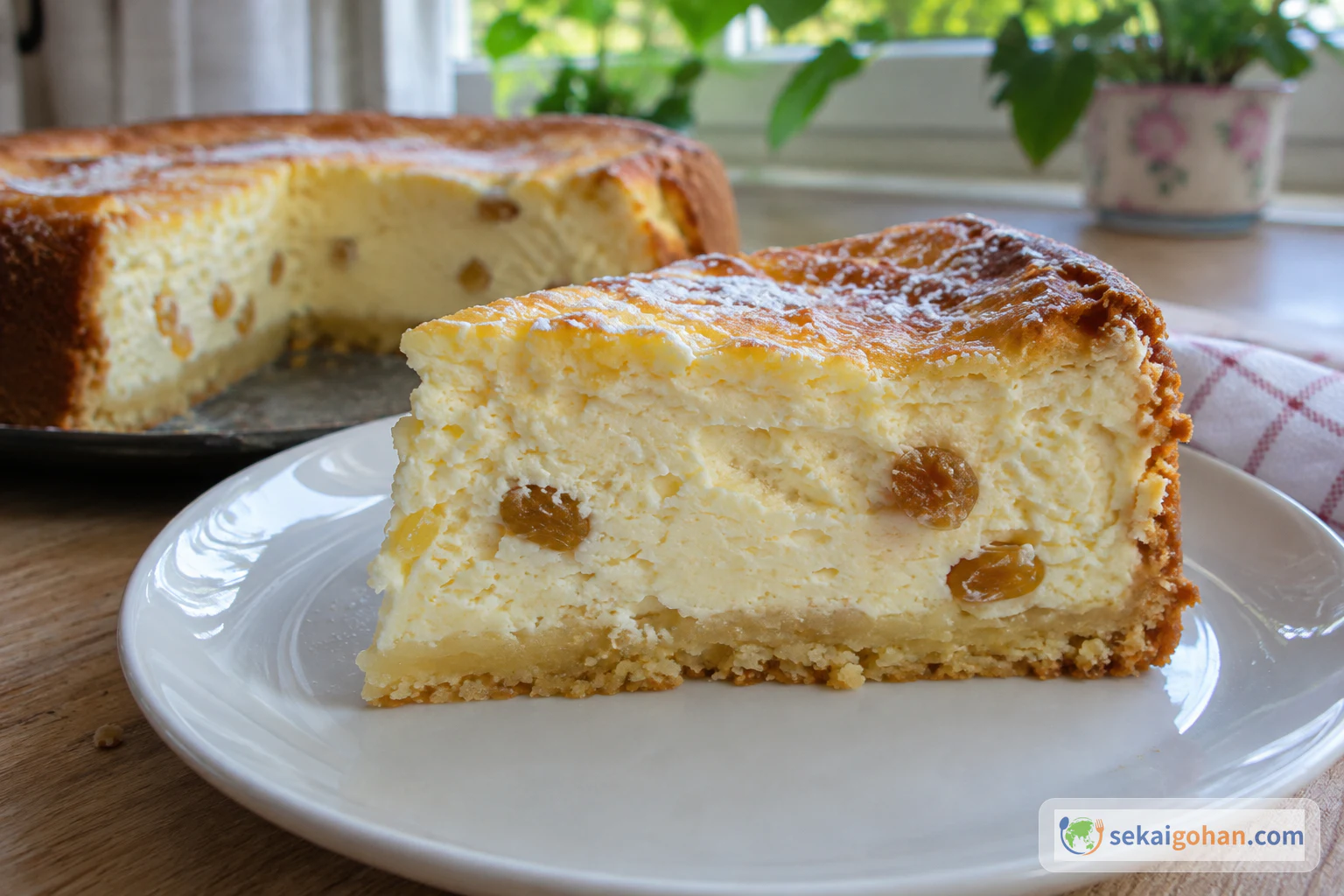
Frutillar-style ricotta kuchen
Around Frutillar there is a ricotta kuchen made with condensed milk and blueberries. The dough is pressed only partway up the sides, and the filling is soft and custardy. That kuchen is chilled before serving and can be made the day before. It uses different proportions and a hotter, longer bake, so make it from its own formula rather than mixing it into this one.
Fruit on top
The everyday southern kuchen is a flat tart covered in fruit, such as murta, raspberry, strawberry, cherry or plum. Serving those fruits fresh beside a slice brings this tart closer to that style. The sharper the fruit, the sweeter and milkier the cheese tastes next to it.
Ricotta and cream filling
Ricotta with heavy cream, used in the amounts in the substitutions table, gives a softer, milder filling. It is the swap to choose when you can't find queso fresco or panela.
Frequently asked questions
Do the raisins have to be soaked in rum?
No. Hot water plumps them just as well and keeps the tart alcohol-free for children. Rum adds a warm, boozy note to the raisins. Drain them well either way, so their liquid doesn't thin the filling.
Can I use cornstarch instead of flour in the filling?
Yes. Use the same 2 tbsp. Both thicken the filling as it bakes, so it sets instead of running. Keep using all-purpose flour for the crust.
Can I make it in two tart plates instead of a springform pan?
Yes. Divide the dough and filling between the two plates. Shallower tarts may bake faster, so check them with the skewer earlier. They are done when the skewer comes out clean from the center.
Is this the same as German cheesecake?
They are related. The kuchen tradition reached southern Chile with German settlers, and this tart is one Chilean form of it. It is made with fresh cheese and raisins and served with berries at teatime.