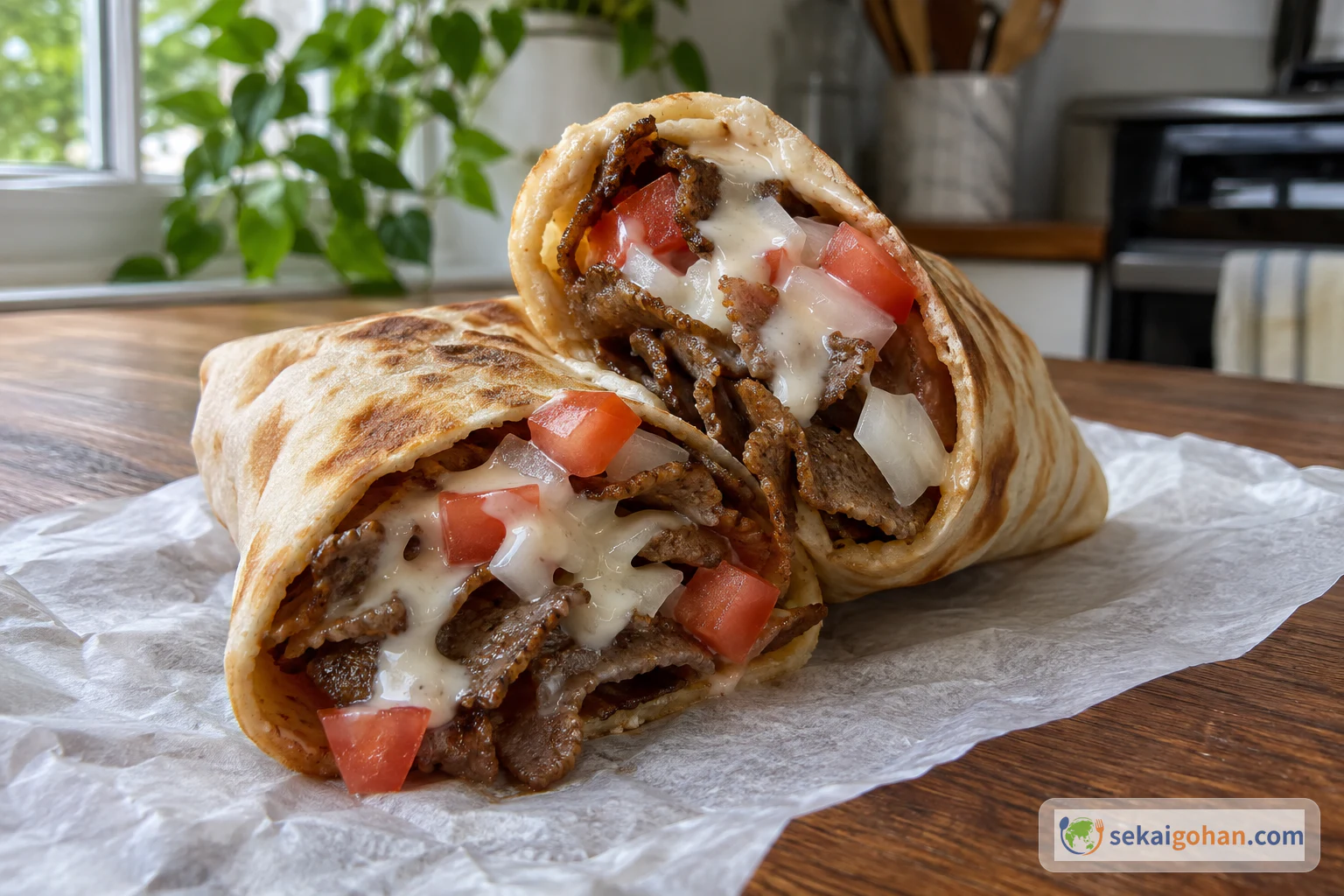
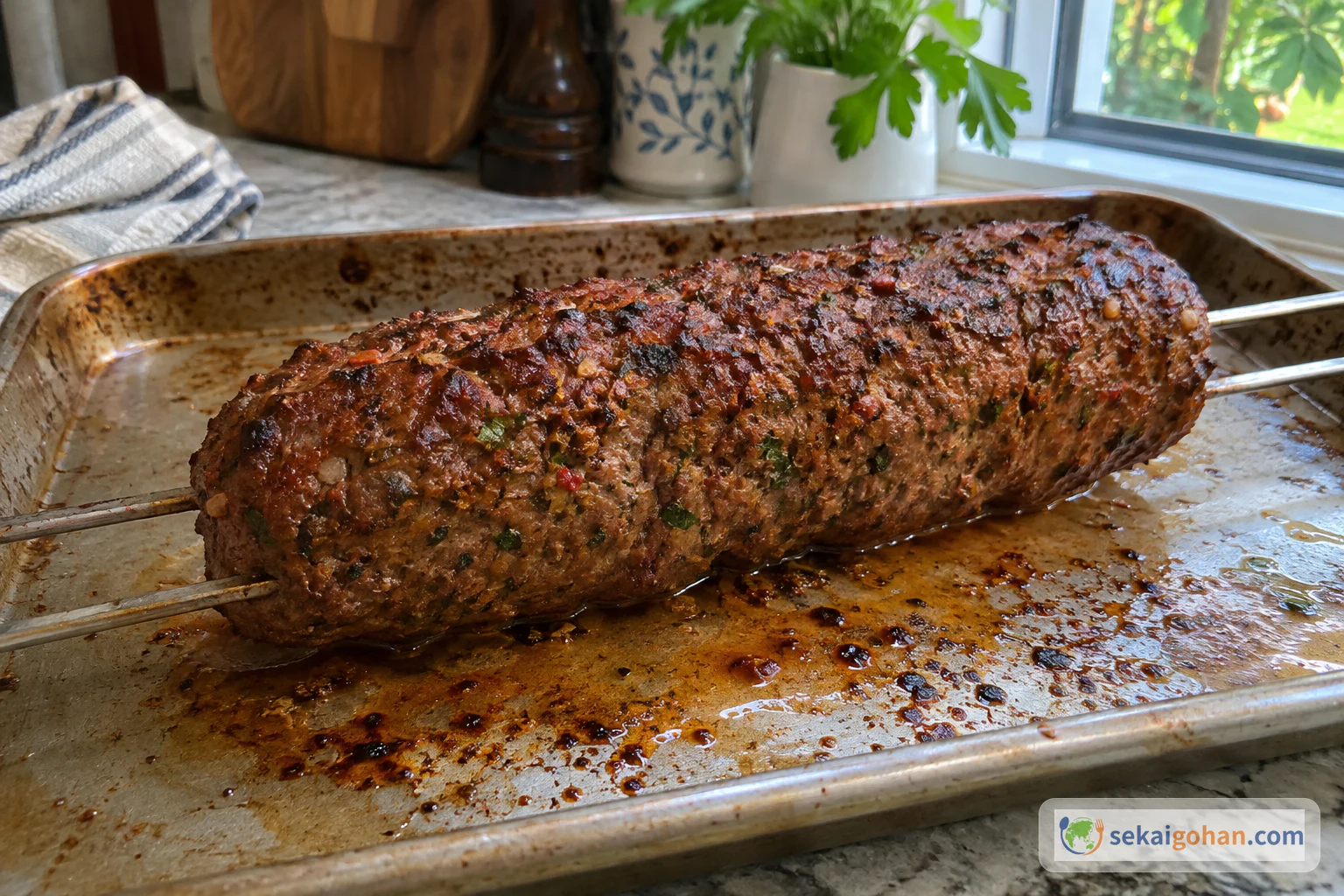
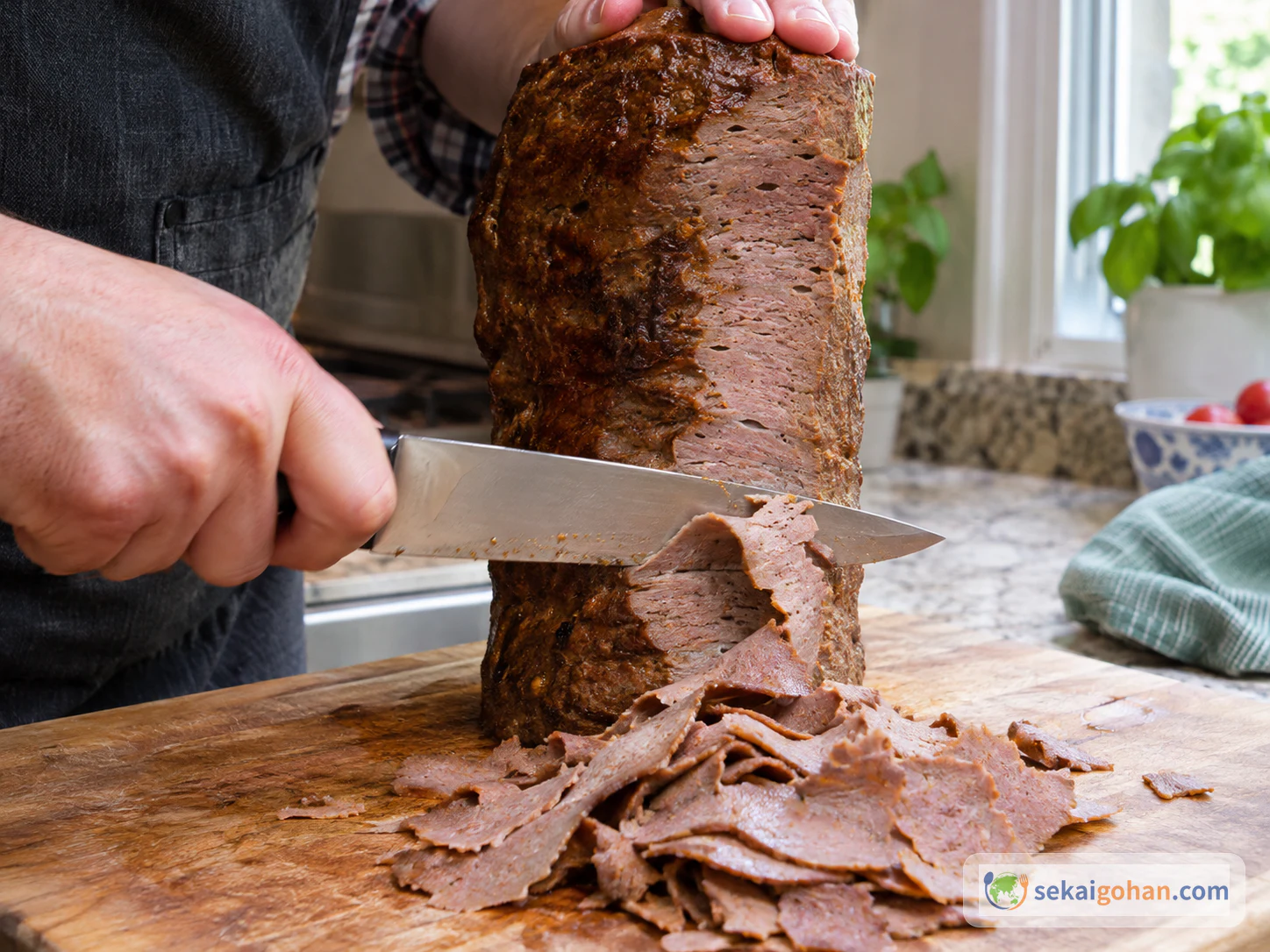
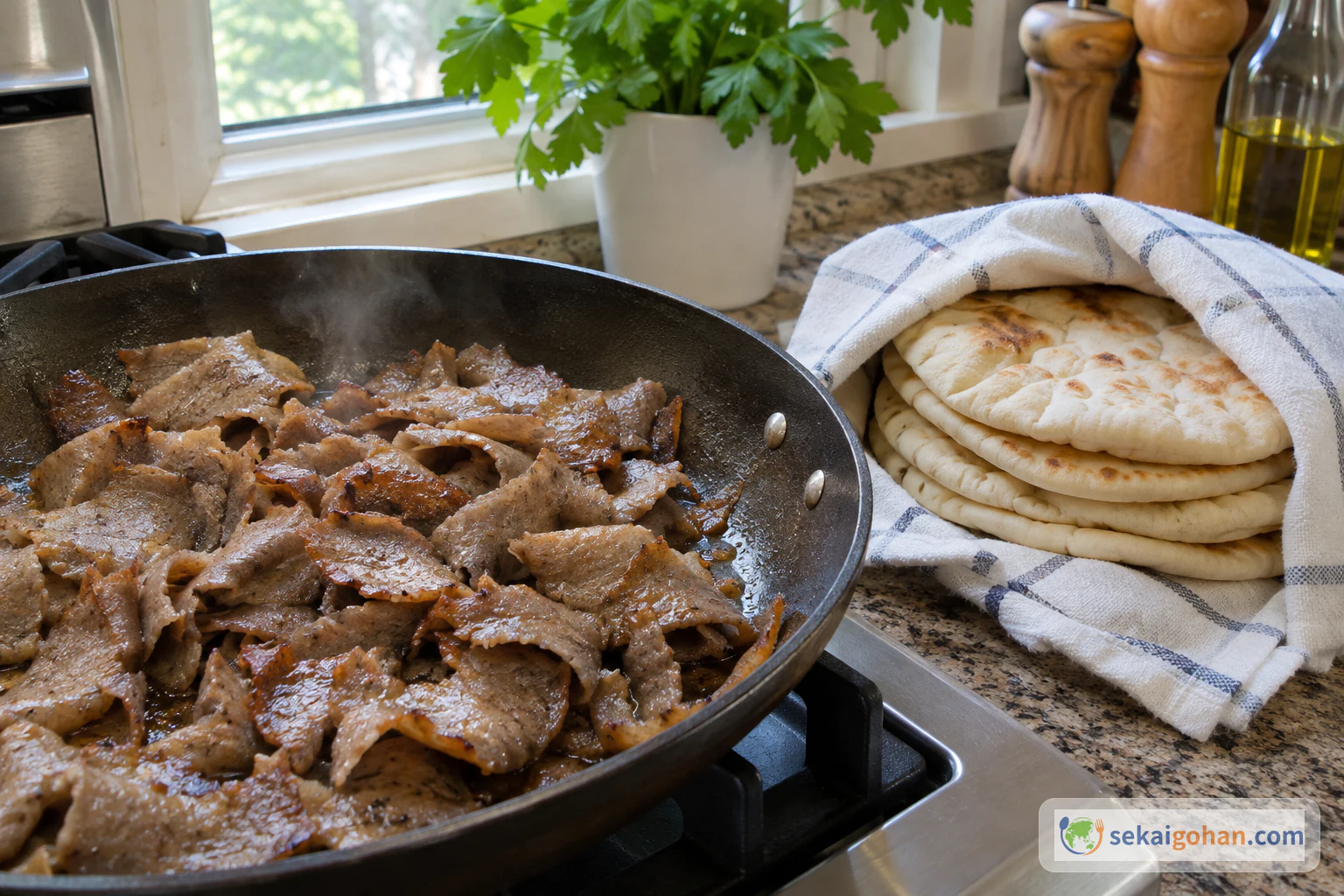
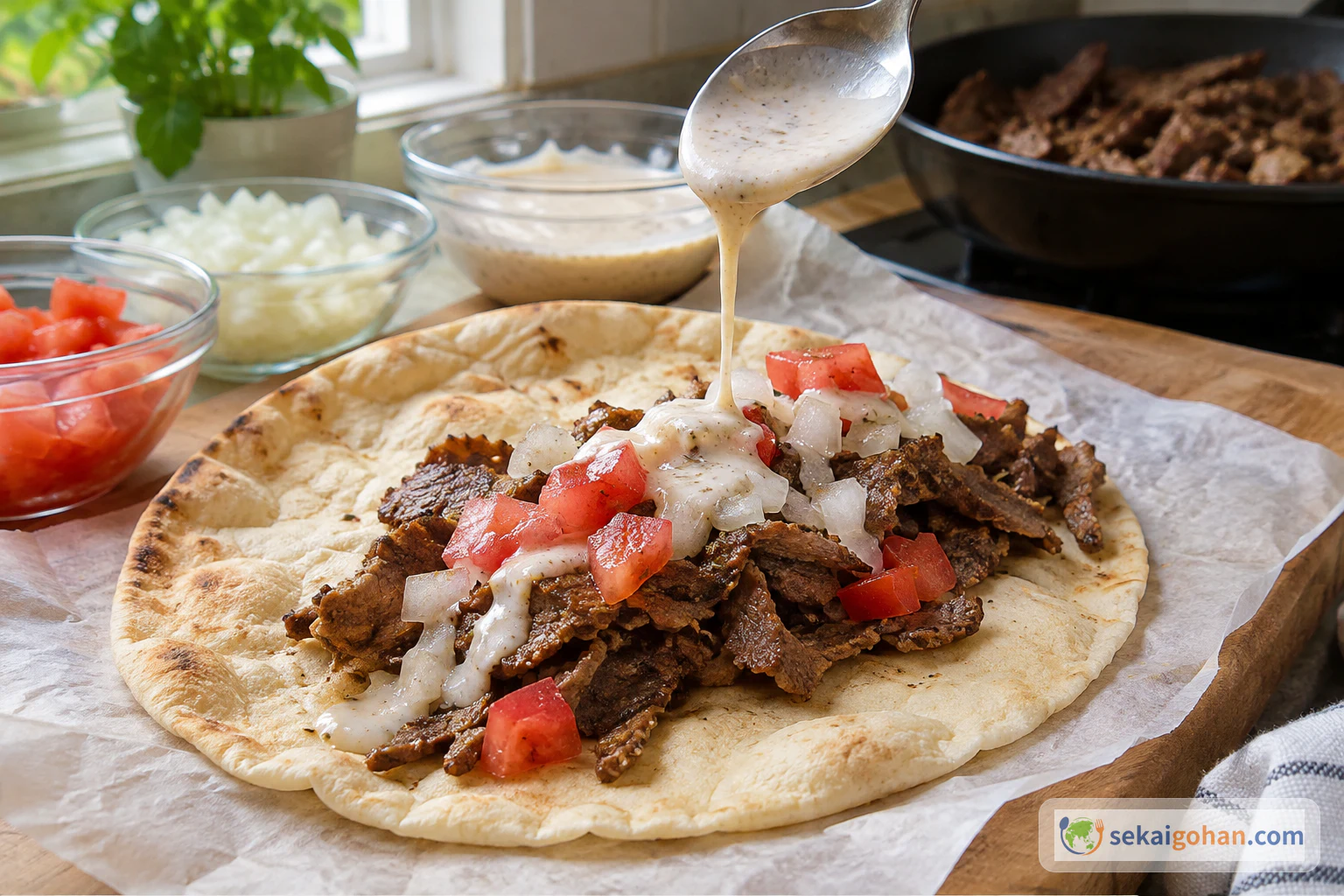
The loaf comes out of the oven dark brown and firm. It rests on two skewers over a pan of its own juices, and the kitchen smells of garlic, oregano and black pepper. You stand it on end, shave off slices so thin they curl, and pile them into a soft pita with chopped tomato and raw onion. Then the sauce goes on. It is pale and sweet, with a sharp vinegar edge, and it drips out of the wrap on the first bite. This is the Halifax donair, the shaved-beef pita of Nova Scotia's capital. The sweet milk sauce against peppery beef is what makes it a Halifax dish and sets it apart from every other wrap of shaved meat.
From Gyros to Beef and Sweet Sauce
The usual story starts with Greek gyros that did not sell in Halifax. The cooks behind it changed two things. They swapped the lamb for spiced ground beef, and they swapped the tzatziki for a sweet sauce. Peter Gamoulakos opened King of Donair on Quinpool Road in 1973, and the donair grew from there. He died in 1991. Members of his family still disagree about who else should share the credit for the recipe, and the question is not settled.
The dish kept its place in the city. In 2015 Halifax named the donair its official food, which puts this wrap alongside the other dishes on the Canadian table as something a city claims as its own. Halifax cooks make the meat as a loaf of ground beef. They knead it until it is dense, then bake it and shave it, so it never turns on a vertical spit the way döner or gyros meat does. The slices come out fine-grained and springy, closer to a sliced sausage than to stacked cuts of lamb. The sauce has no yogurt in it at all. It is evaporated milk, sugar, garlic and vinegar, and the vinegar makes the milk thicken.
Halifax has no single sauce. Some cooks use evaporated milk with sugar, some use sweetened condensed milk, and some mix the two. The condensed-milk camp gets a thicker, denser sauce and leaves out the sugar.
Ingredients
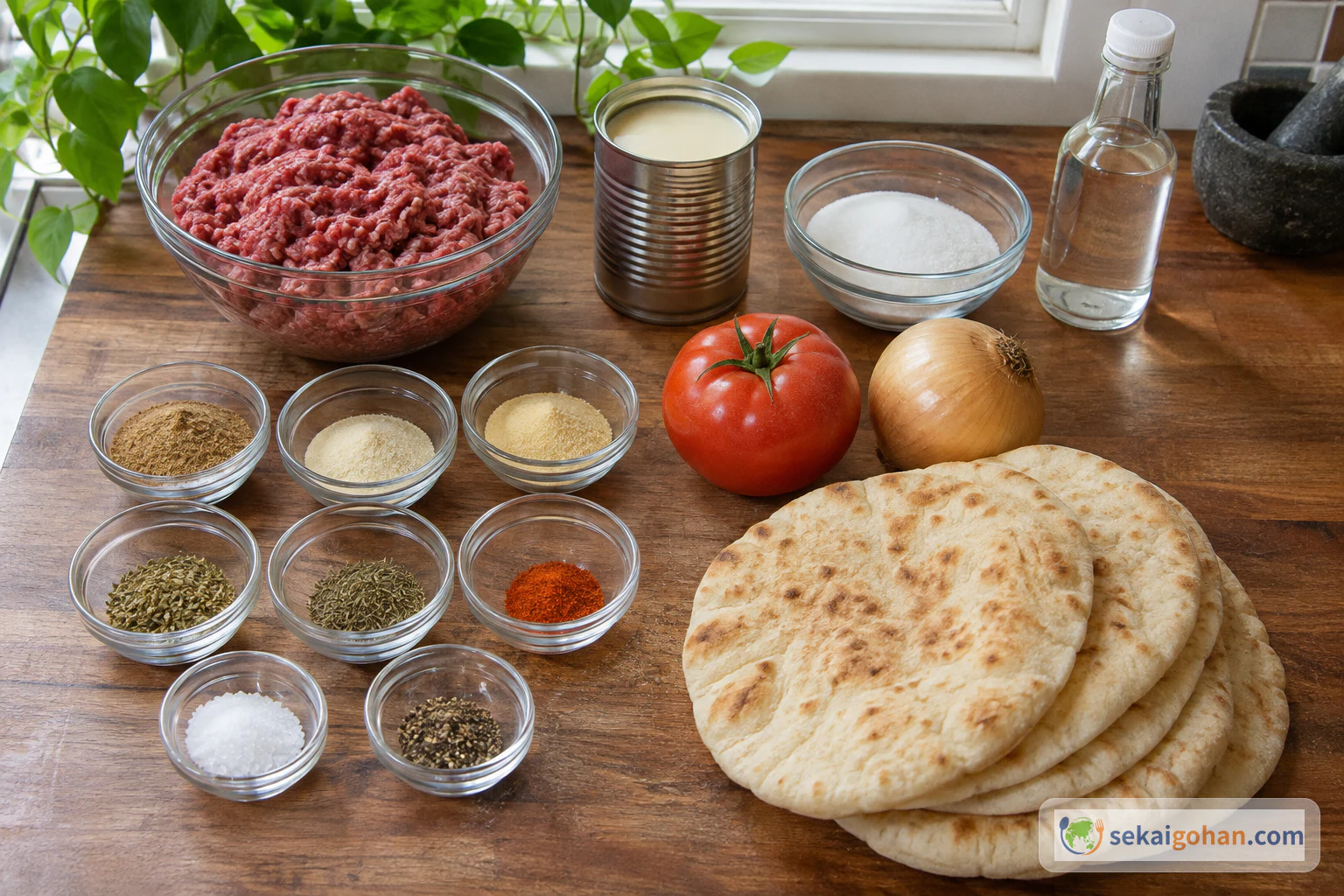
The pita contains wheat and the sauce contains milk. Check the pita label for other allergens and for shared-facility statements.
Equipment
- Stand mixer with a dough hook (optional; you can knead by hand)
- Mixing bowl and whisk for the sauce, with a lid or wrap
- Aluminum foil
- Rimmed baking sheet
- 2 metal skewers (optional)
- Instant-read cooking thermometer
- Cutting board and a long, sharp knife
- Large skillet
- Steamer or microwave for the pitas
Choosing and Substituting
You can buy everything for this at a supermarket. The choices that matter are small ones. Buy ground beef with some fat in the blend. Very lean beef bakes into a dry loaf that frays when you shave it. Keep it all beef. Lamb takes the dish back toward gyros, and swapping out lamb is how the donair began. Use finely ground black pepper rather than coarse, because a full tablespoon of coarse pepper gives you hard bits of heat. Finely ground pepper spreads evenly through the paste. Cayenne gives a clean heat. If you use a different chili powder, the heat and flavor will change.
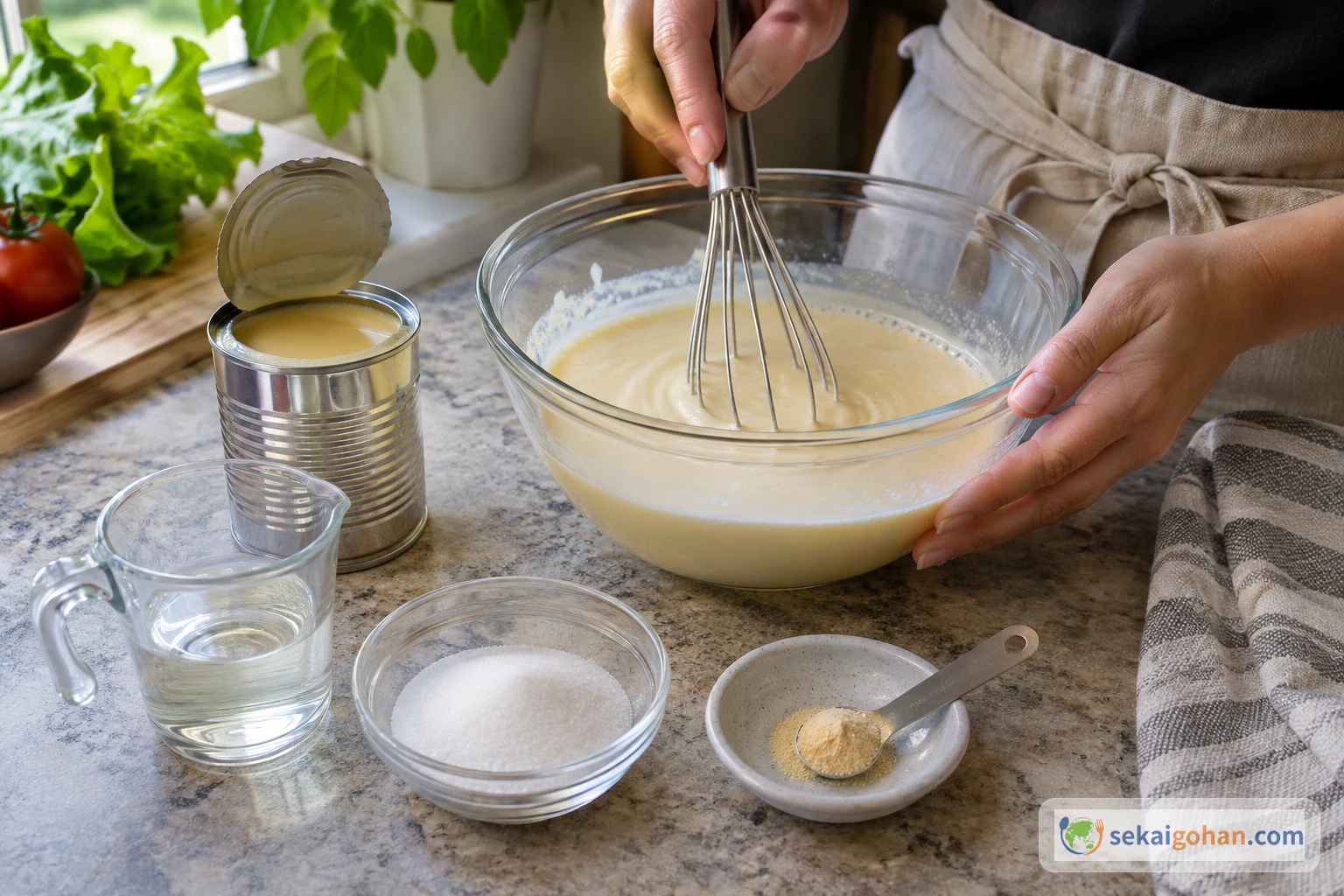
For the sauce, evaporated milk cans come in different sizes from country to country. If yours is not a 10-oz can, scale the sugar, garlic powder and vinegar by the same ratio as the milk so the balance stays right. Sweetened condensed milk works in place of evaporated milk. Leave out the sugar and keep the garlic powder and vinegar the same. The sauce comes out a little thicker. Buy large, soft pitas that bend without cracking, because thin, dry ones split when you roll a full donair.
Pour the vinegar into the milk a little at a time while you whisk. The milk thickens as the vinegar goes in. If you add it gradually, you get a sauce that coats a spoon instead of a thin, broken one.
Method
Make the sauce first so it can chill and blend while you work on the meat. The meat needs real kneading, then shaping and a rest in the fridge. The rest can be as short as half an hour or as long as the next day. After that the oven does most of the work, with about two hours of hands-off baking in two stages. Slicing, warming and rolling happen at the end, right before you eat.
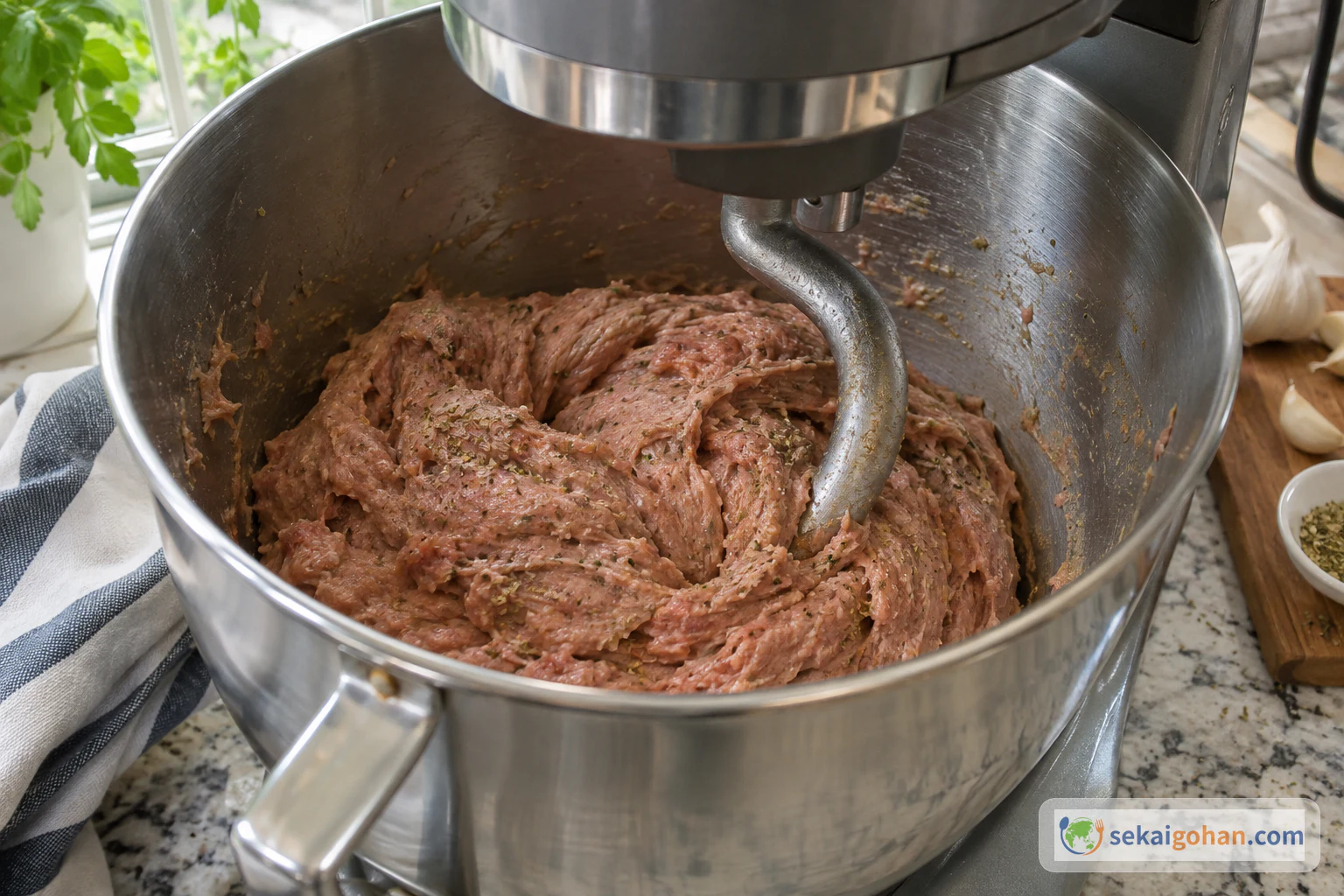
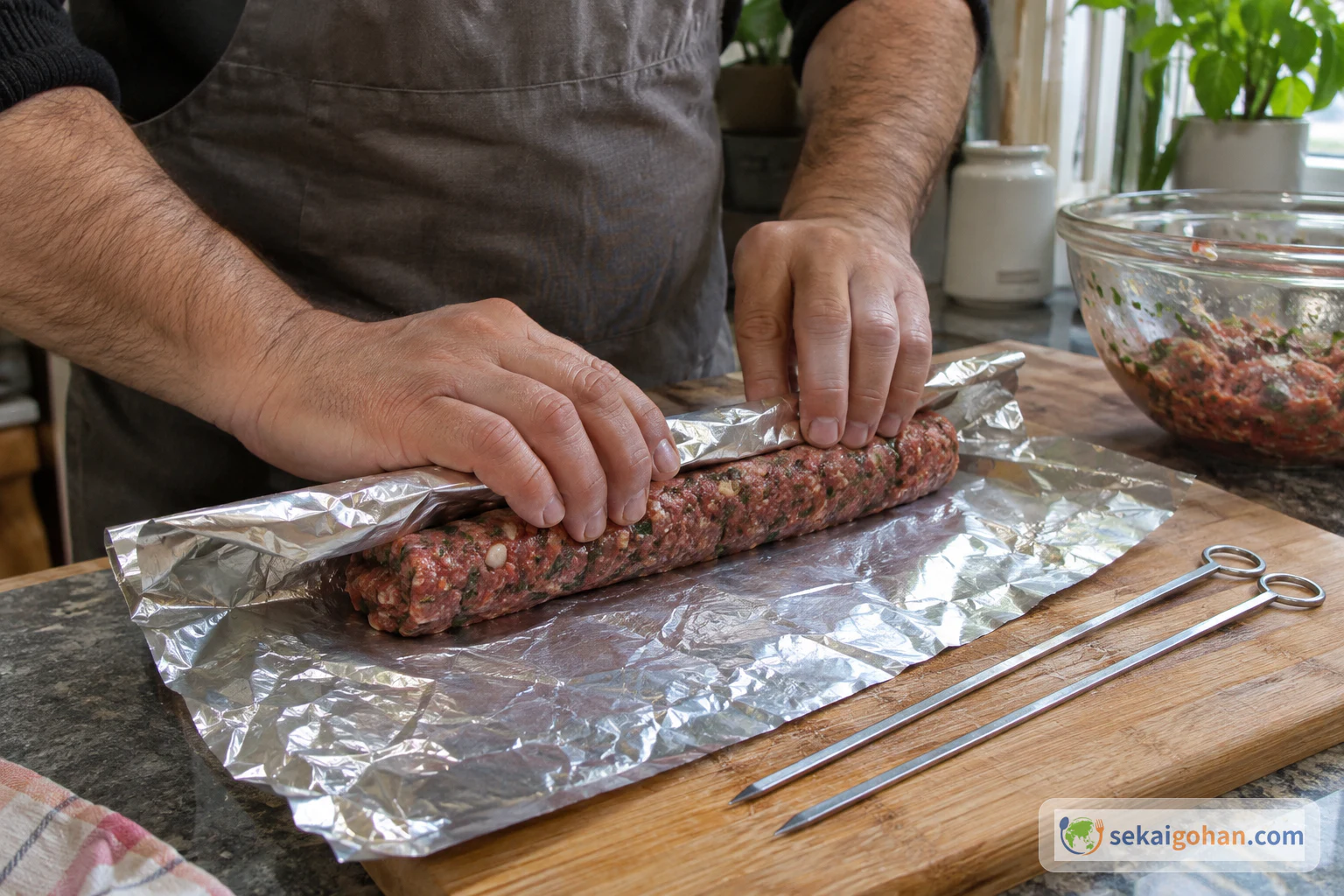
The kneading and the pressing decide everything. Beef kneaded into a sticky paste bakes into a loaf you can shave into thin, whole slices. Beef that is only mixed bakes into meatloaf and crumbles under the knife. Pressing out the air while you shape keeps the loaf from cracking in the oven.
Ground beef must reach 160°F (71°C) in the center. Check it with a thermometer after the second bake, and check again whenever you reheat sliced meat. Do not eat the meat raw or underdone. Handle the hot foil, skewers and pan juices with oven mitts, and keep your fingers clear of the blade when you shave the standing loaf.
When It Goes Wrong
| What you see | Why | What to do |
|---|---|---|
| Slices crumble as you shave them | The meat was mixed, not kneaded into a paste | Next time knead the full 5 minutes until sticky and cohesive. Use crumbled meat warmed in the skillet as filling |
| The loaf has cracks or holes | Air was trapped while shaping | Press and slap the paste firmly before wrapping, and wrap the foil tight |
| The sauce stays thin | The vinegar went in all at once | Whisk in the vinegar gradually next time. Chilling also firms it |
| The center reads below 160°F (71°C) | The log is thicker than usual, or the oven runs cool | Return it to the oven and keep baking until the center reaches 160°F (71°C) |
| The pita tears when you roll it | The bread is cold or dry | Steam or microwave it until soft and keep it under a towel until you fill it |
Serving and Variations
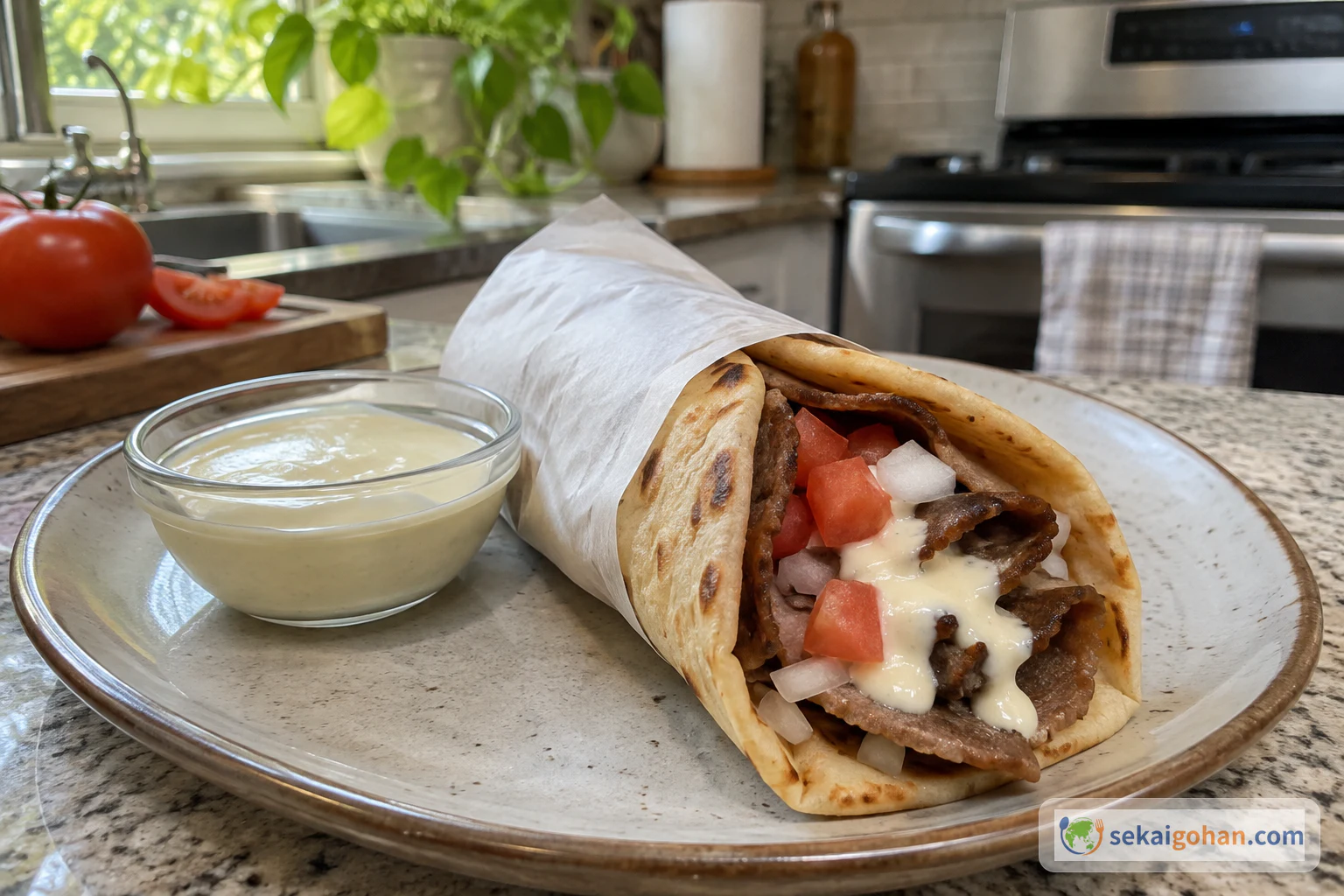
A donair is a meal you eat in your hands. Wrap the bottom half in parchment and set a small bowl of extra sauce on the side for dipping, because everyone wants more than the wrap holds. Put out more chopped tomato and onion so people can build their own.
Sauce variations
- Condensed-milk sauce. Use sweetened condensed milk in place of the evaporated milk and leave out the sugar. It comes out thicker and denser, and it clings to the meat.
- Mixed sauce. Use half evaporated milk and half condensed milk for a sauce between the two. Cut back the sugar, since the condensed milk is already sweet.
- Less sweet. Cut the sugar to your taste. The sauce turns sharper and lets the pepper in the beef come forward.
Leftover meat
Warm leftover slices in a skillet with a little oil. Check that they reach 160°F (71°C) in the center before you fill a pita.
Frequently Asked Questions
Do I need a stand mixer?
No. A stand mixer just makes the kneading easier. Working the meat firmly by hand gets you the same sticky paste. It takes more effort, and you have to keep going until no loose mince is left.
What do the skewers do?
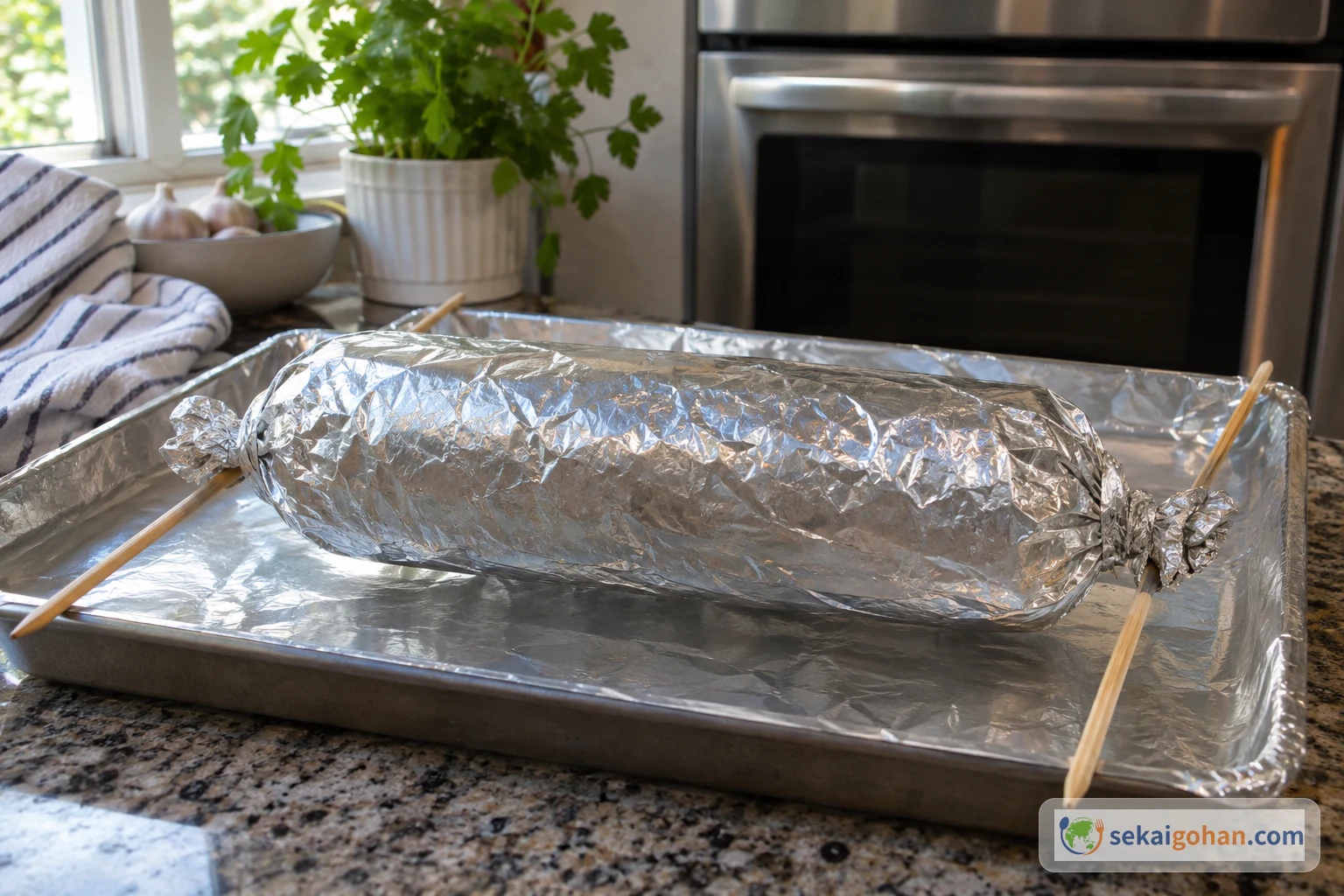
They hold the log above the baking sheet. That way the meat bakes evenly instead of sitting in its own juices, and you can lift the loaf out more easily. If you have none, bake the wrapped log flat on the lined sheet and brown it the same way after you take off the foil.
Can I shape the loaf the day before?
Yes. The shaped log can rest in the fridge for up to 24 hours before baking. A long chill gives you a firmer log and a dense loaf, so it is a good way to split the work across two days.
How many does this make?
The ingredients list 4 large pitas, so plan on 4 wraps. The recipe card this is based on also lists 8 servings, which does not match 4 pitas, so no exact yield beyond the 4 wraps is given.
Why does my sauce taste so sweet?
Sweet is right for this dish. The sugar is there to stand up to the pepper, cayenne and raw onion. If it is too sweet for you, use less sugar next time and keep the vinegar the same, so the sauce still thickens.