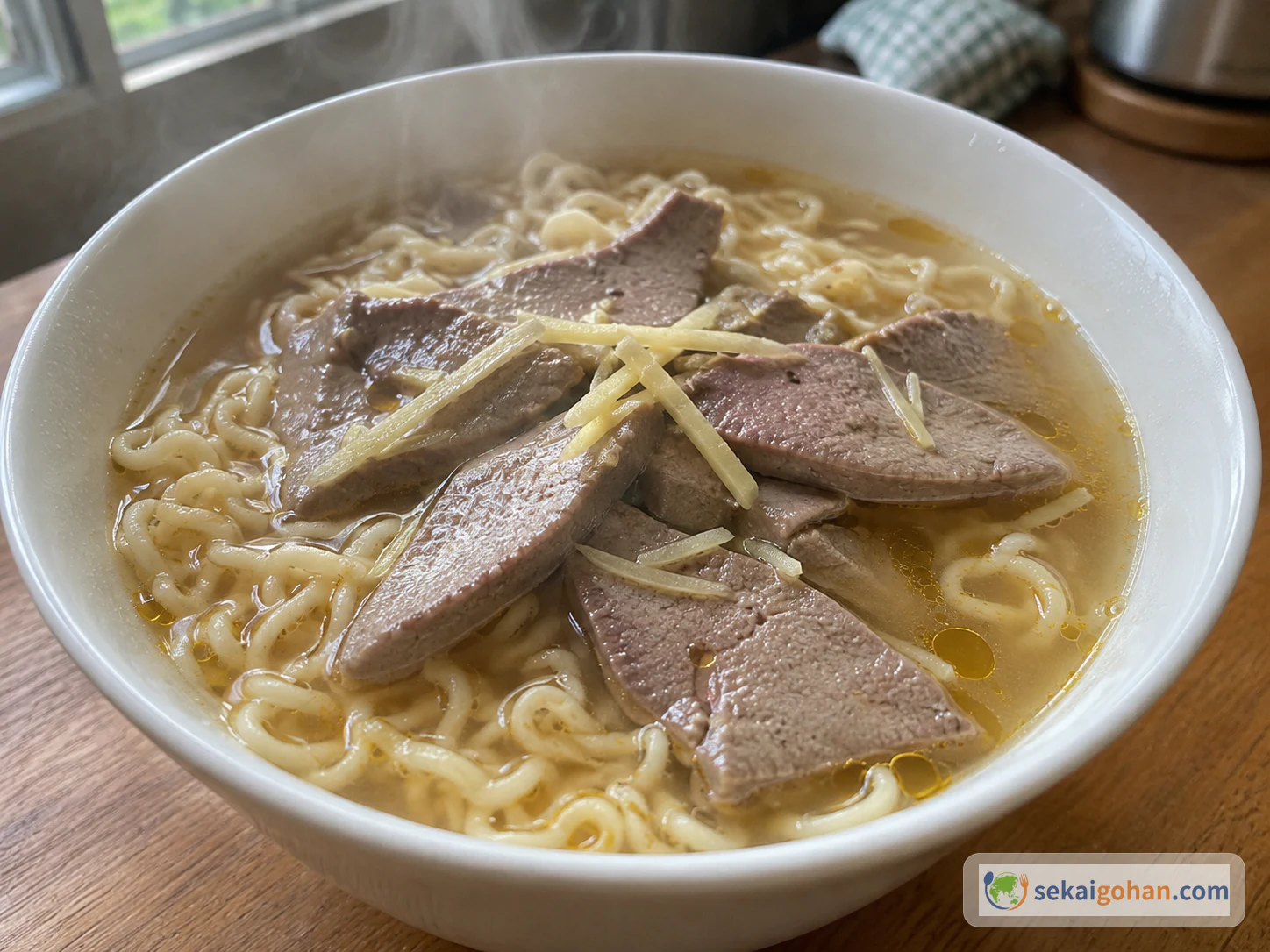
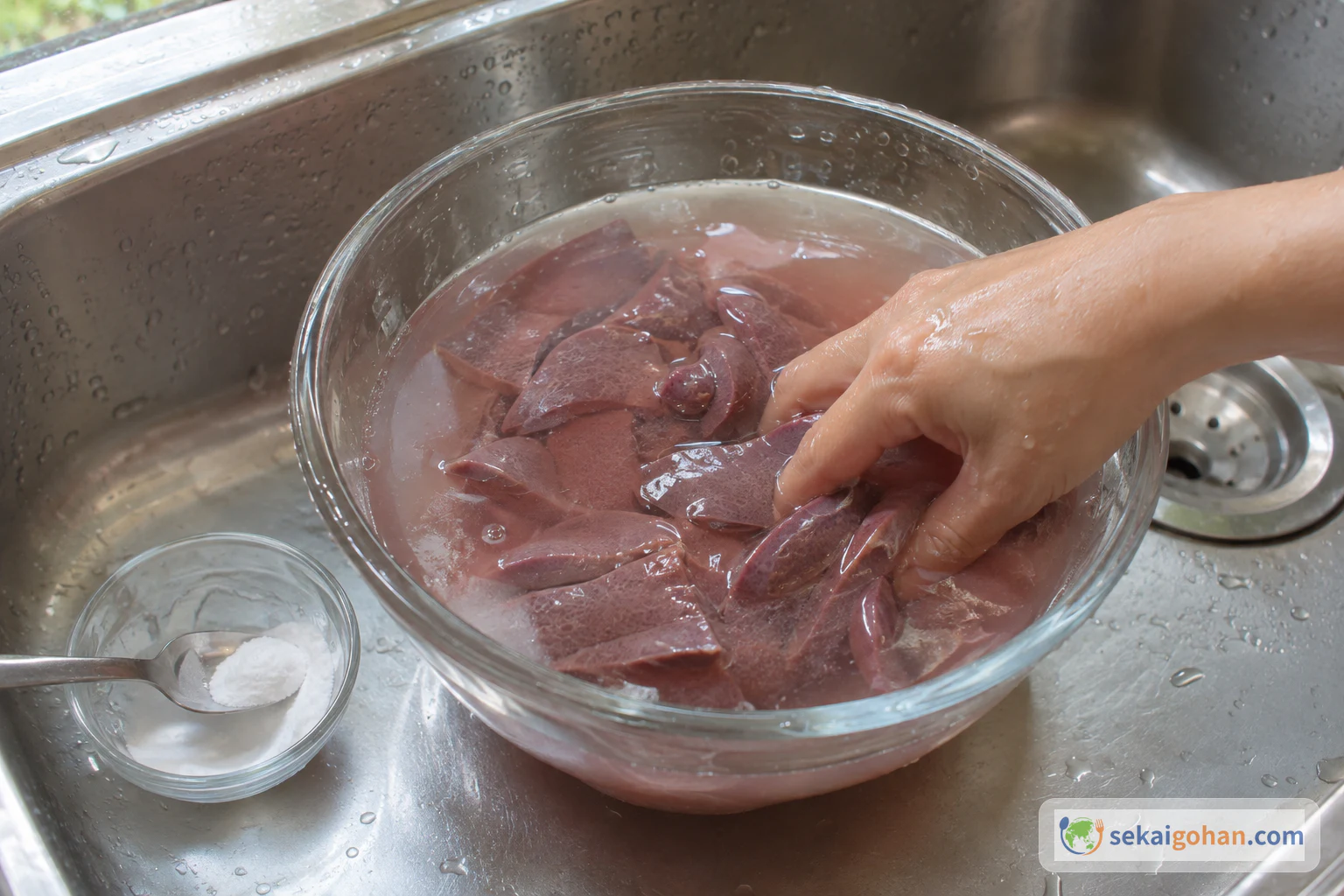
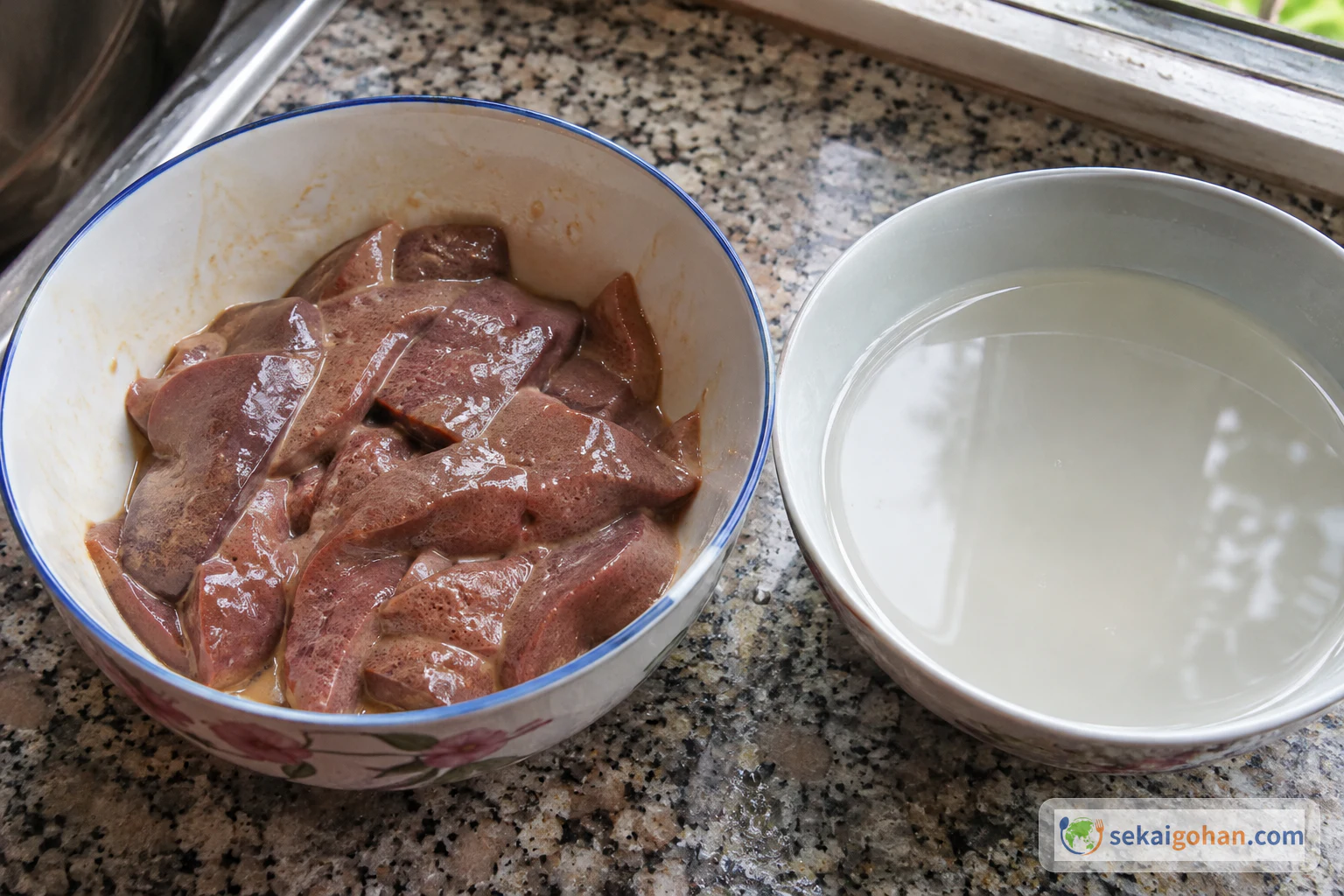
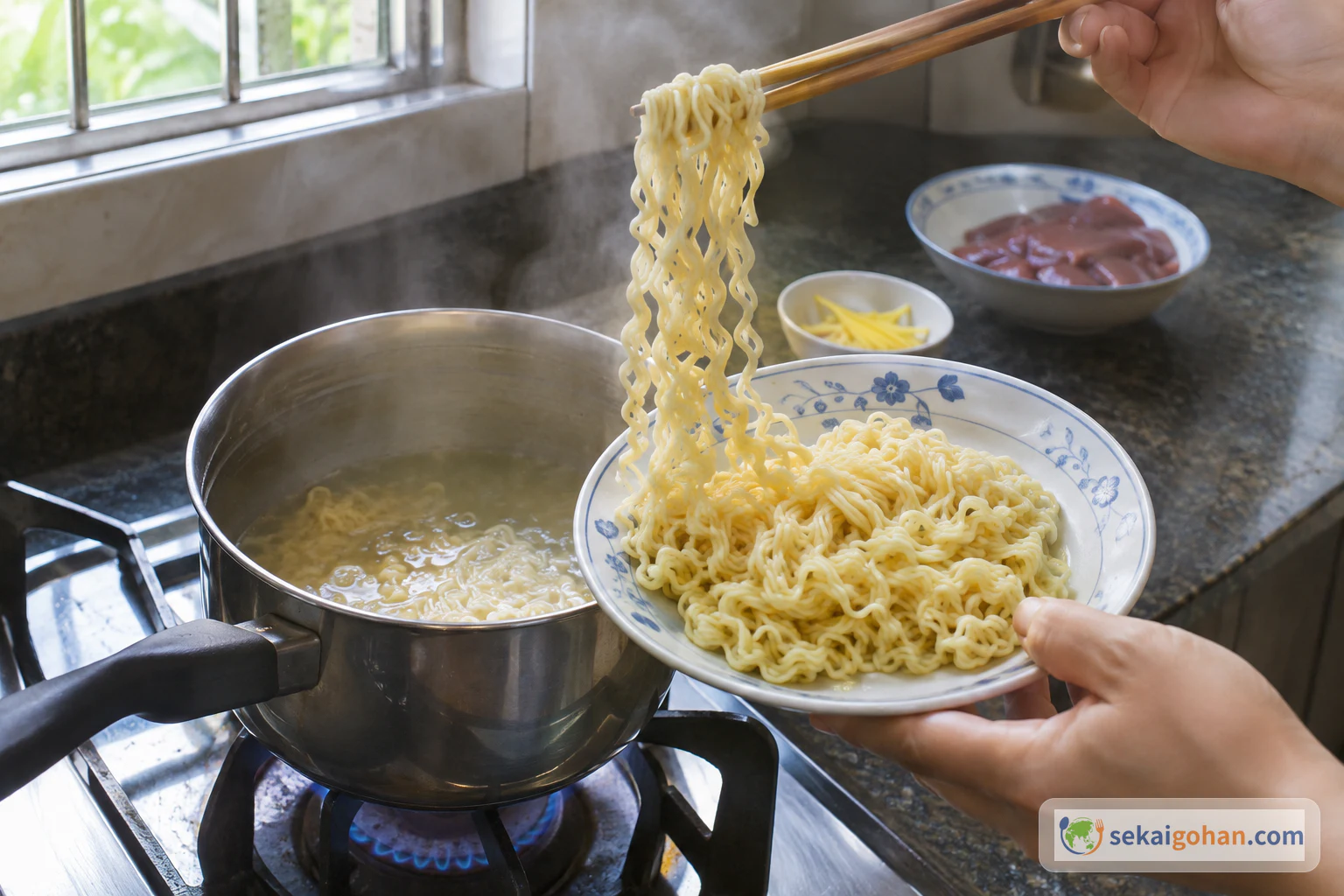
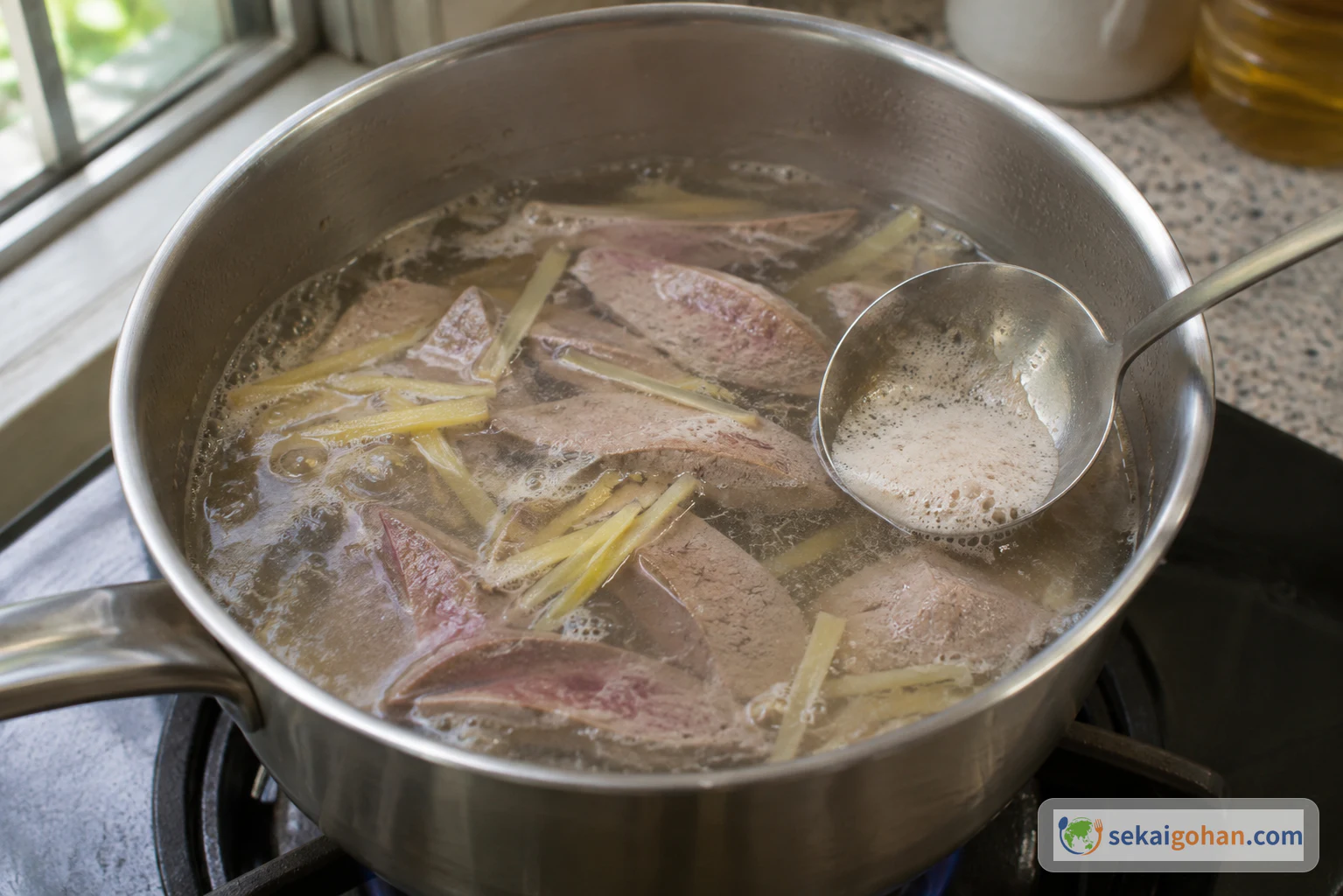
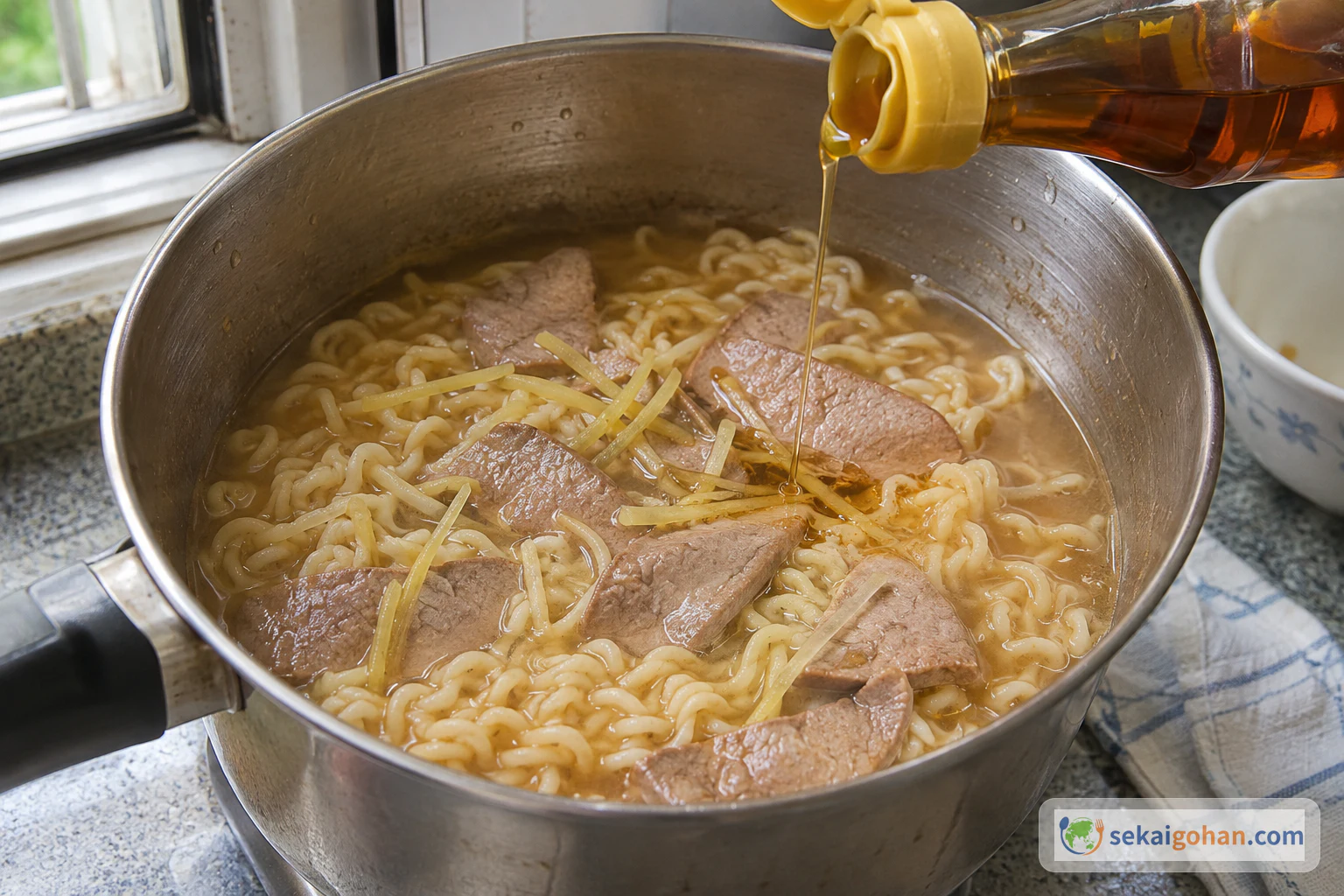
Thick slices of pork liver go into a small pan of water full of ginger shreds, and as they simmer their deep red surface turns grey-brown while the steam starts to smell sharp and warm. A packet of instant noodles waits beside the stove, already half-cooked. Pork liver noodles, 豬潤麵 in Cantonese, belong to Hong Kong: a ginger broth with liver simmered in it and instant noodles finished in the same pan. The liver is soft and clean-tasting, the ginger cuts through its richness, and a few drops of sesame oil on top bring the whole bowl together.
A Café Bowl from Hong Kong
In Hong Kong this is café food, the kind of bowl ordered at a cha chaan teng (Hong Kong café) counter. The shop most often named for it is Wai Kee in Sham Shui Po, where the signature order is pork liver and beef noodles. People who go praise the liver for being fresh and clean on the palate and the broth for its depth. When and where the dish first appeared is not settled, and the bowl has stayed simple: liver, ginger, broth, noodles.
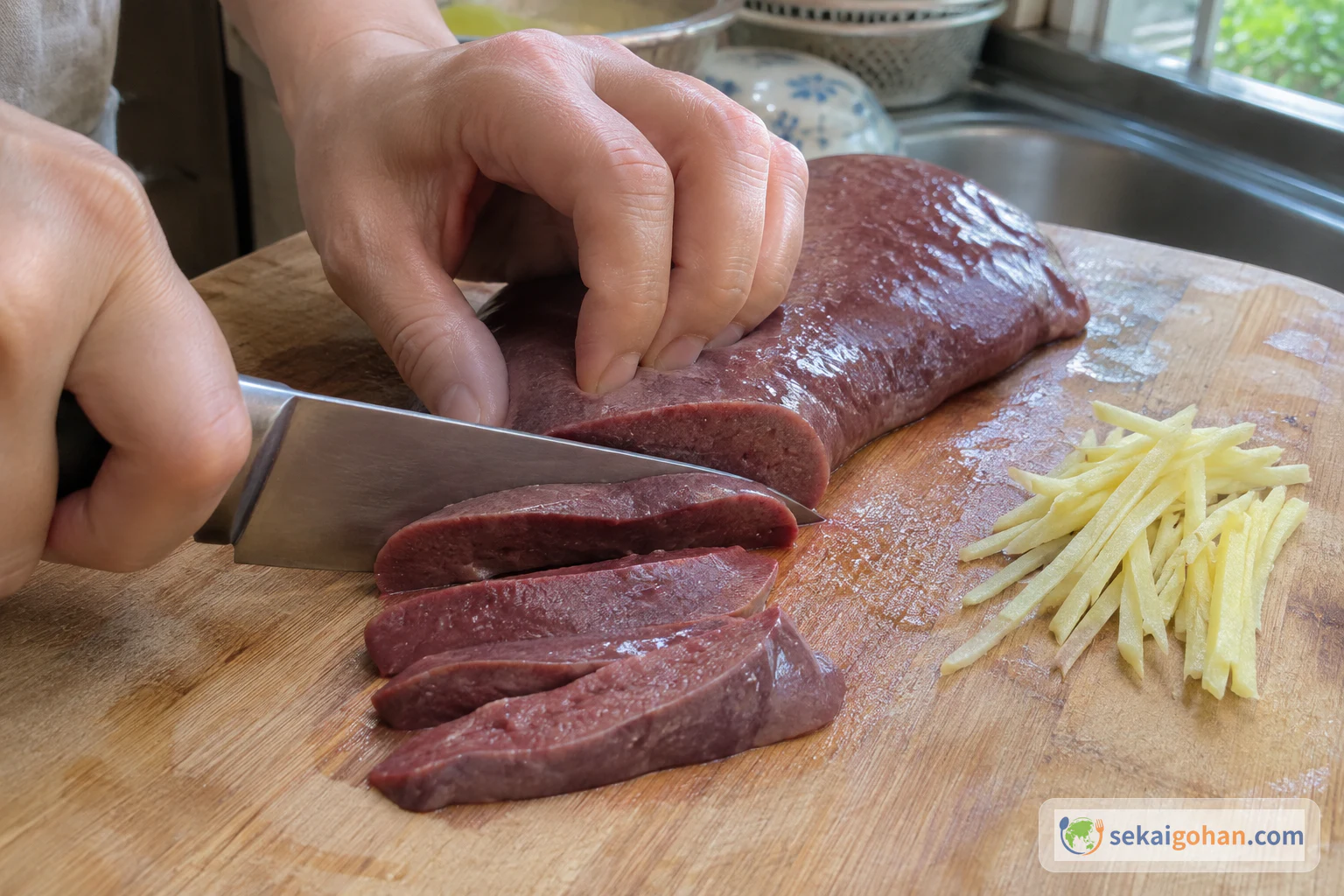
What surprises most people is the noodle. It is an instant noodle block, and here it is cooked briefly, set aside and then returned to the ginger broth with its seasoning powder. The liver carries the dish. It is cut as thick as a finger, which keeps it tender through simmering, and it goes through a soak and a marinade before it ever touches heat.
If your picture of Chinese noodles is wok-fried chow mein, sauced lo mein or the chilli-oil heat of dan dan noodles, this bowl sits somewhere else entirely: clear broth, ginger instead of chilli, and offal as the star. It is one of the Hong Kong dishes in our China collection, and it is firmly a dish of Hong Kong, not of the whole country.
You will see 豬潤麵, 豬膶麵 and 豬肝麵 on menus and recipe cards. The first two use the Cantonese word for liver used in Hong Kong (roughly zyu jeon min); the third uses the standard Chinese character for liver. All three mean the same bowl.
Ingredients (serves 1)
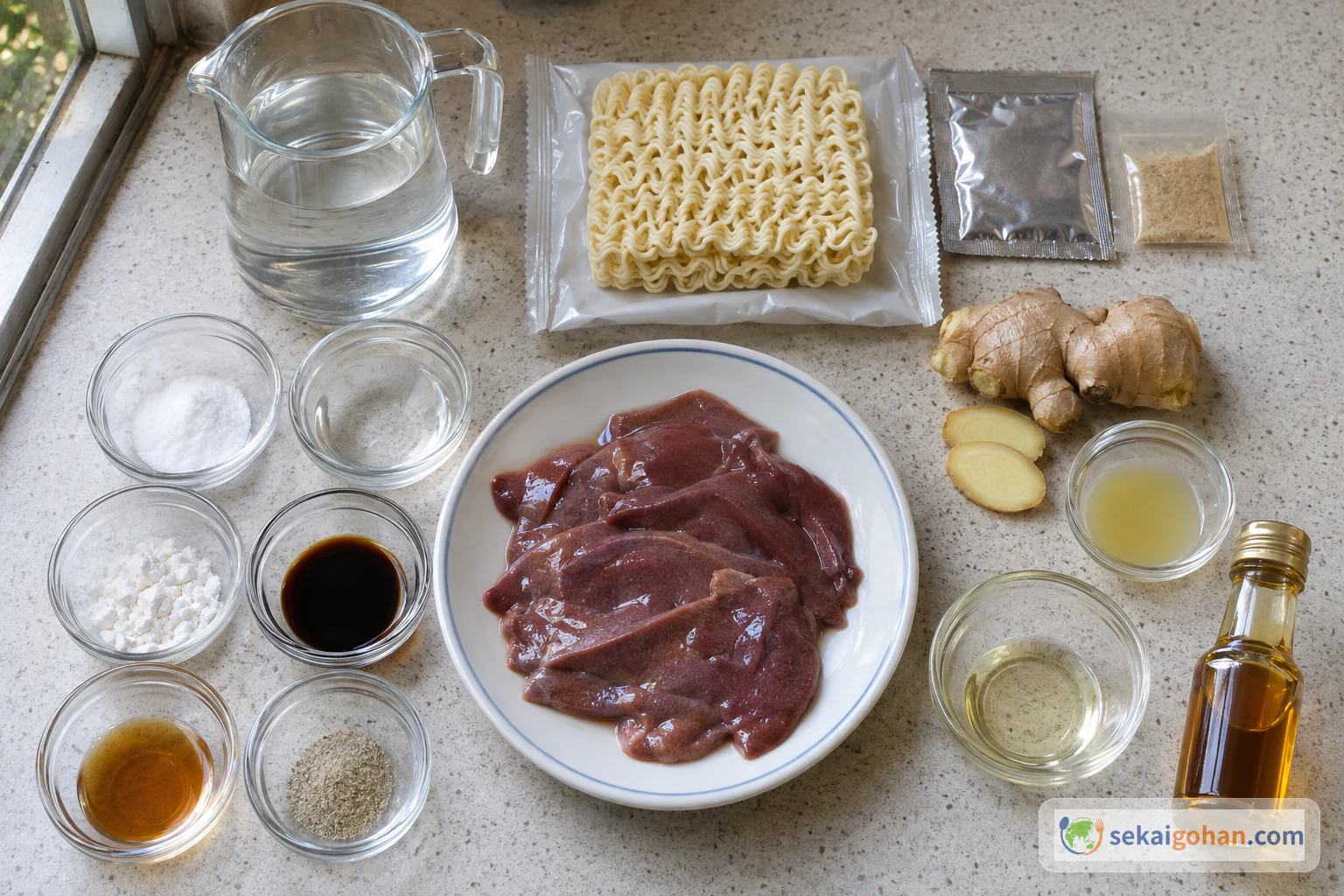
Instant noodles, their seasoning powder and soy sauce contain wheat and soy; check the labels on your pack. Sesame oil is a sesame allergen. Shaoxing wine contains alcohol, which only partly cooks off in the marinade.
Equipment
- Knife and cutting board
- Grater for the ginger juice
- 2 mixing bowls for the soaks and the marinade
- Small pot for the noodles
- Saucepan for the broth
- Ladle or small spoon for skimming
- Kitchen paper
- Cooking thermometer
Choosing and Substituting
The liver decides the bowl. Buy fresh pork liver sold for cooking. Before slicing, trim off the white membrane and any thick blood vessels and rinse it under running water.
Demae Itcho is sold well beyond Hong Kong, including in Japan. The brand is the same, though the packs on the shelf may differ from country to country, so taste the broth once the powder is in.
Use cornstarch for the marinade. Potato starch, called katakuriko in Japanese, is a different starch and gives a different coating; reach for it only if cornstarch is out of reach. Chinese light soy sauce is its own product and differs from Japanese usukuchi; regular soy sauce works and shifts the seasoning a little. Sake can stand in for Shaoxing wine, with a lighter aroma. Japanese grain vinegar or any plain white vinegar works for the vinegar soak, with a slightly different taste.
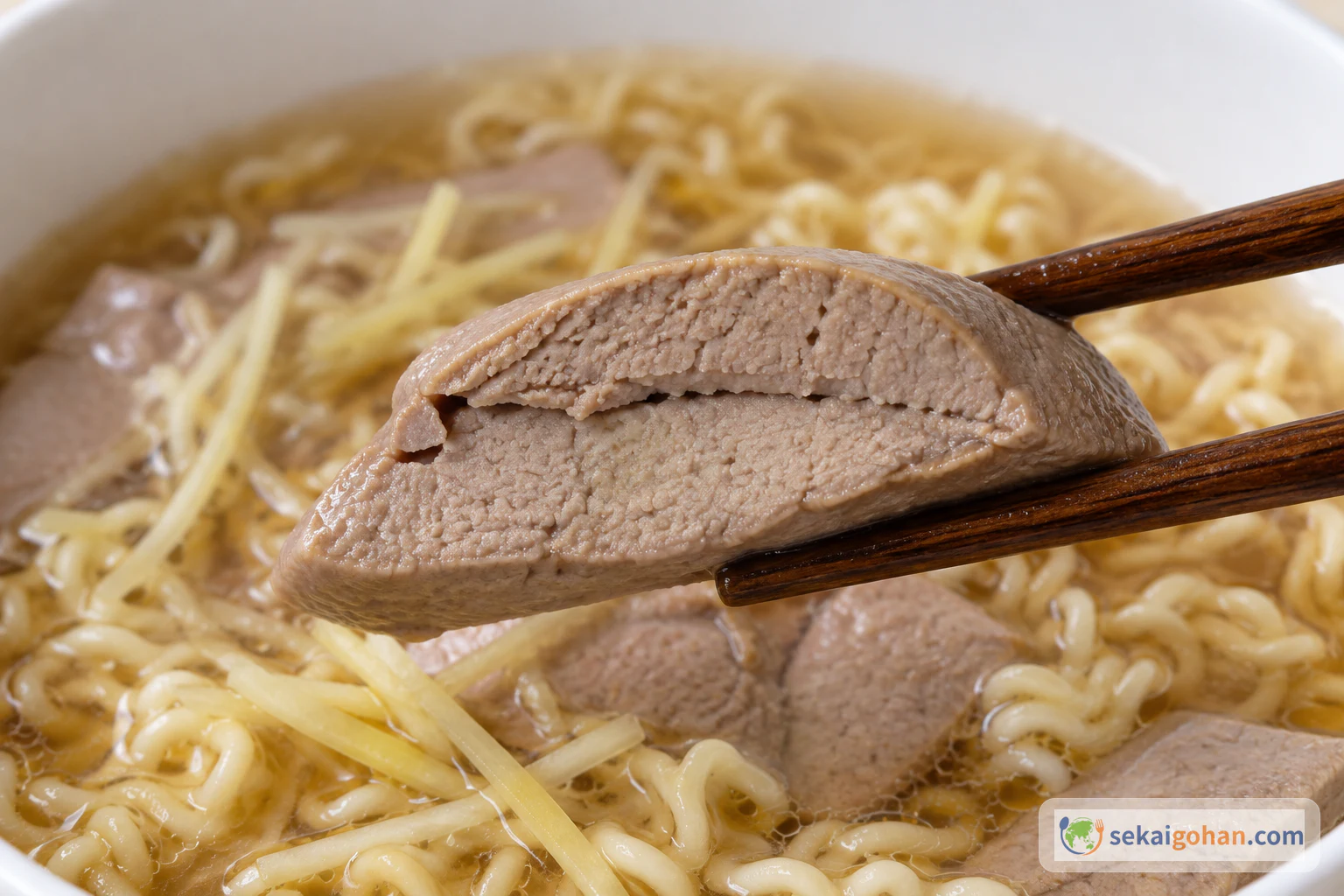
About ⅜ inch (1 cm) is the target and the ceiling. Thick slices stay tender in simmering broth; thin ones turn hard and dry. Thicker than that, and the centre takes too long to cook through.
Method
The work is front-loaded. Slice, then let the liver sit in baking soda water for about 30 minutes; that soak is the hands-off stretch, and a good time to shred the ginger and set out the noodles. After that come a short vinegar soak and a quick marinade, and the stove work takes only a few minutes from start to finish. Have the bowl ready before the liver goes in.
When It Goes Wrong
| What you see | Why | What to do |
|---|---|---|
| Liver is hard and dry | Slices too thin; under about 3/16 inch (0.5 cm) they dry out | Cut finger-thick, about ⅜ inch (1 cm) |
| Red in the centre of a slice | Slices too thick, or not simmered long enough | Keep simmering and check the thickest slice again; cap the thickness at ⅜ inch (1 cm) next time |
| Strong liver smell in the broth | Soak cut short, slices not rubbed and rinsed, or membrane and vessels left on | Give the full soak, rub, rinse 3 to 4 times, and trim before slicing |
| Soft, mushy noodles | Noodles fully cooked in the first boil | Pull them at about 1½ minutes; they finish in the broth |
| Foam floating in the bowl | Not skimmed during the simmer | Skim while the liver cooks, before the seasoning goes in |
Serving and Variations
This is a single bowl made to order and eaten straight away, while the broth is still steaming and the noodles still spring back. It works as a quick lunch on its own, the way it is ordered at a café counter.
Other ways to make it
- Fried egg on top. A fried egg laid over the noodles is a common addition; the soft yolk runs into the broth and makes it richer.
- Pork liver and beef noodles. The Wai Kee way adds beef to the bowl, so the clean liver sits against a meatier broth.
- Shop-style bowl. Some shops blanch the liver quickly and pour the broth over noodles in the bowl. At home, cook the liver in the broth until it passes the check in step 6, then build the bowl the same way: noodles first, liver on top, broth poured over.
Frequently Asked Questions
Is a little pink in the middle all right?
No. Pork liver can carry hepatitis E virus, so it must be cooked until no red is left and the centre has held 165°F (74°C). Liver that is pink inside goes back into the pan.
Can I slice the liver thin so it cooks faster?
Thin slices cook faster but turn hard and dry in the broth. Finger-thick slices stay soft and still cook through within the size limit of ⅜ inch (1 cm).
What does the baking soda soak do?
It draws blood out of the liver, which helps cut the strong liver smell. Rubbing the slices partway through and rinsing several times afterwards finish the job before the vinegar soak.
Can I use other instant noodles?
Yes. Demae Itcho is the standard, but any plain instant noodle with a seasoning sachet works the same way. Half-cook the noodles, and taste the broth once the powder is in, since saltiness varies by brand.