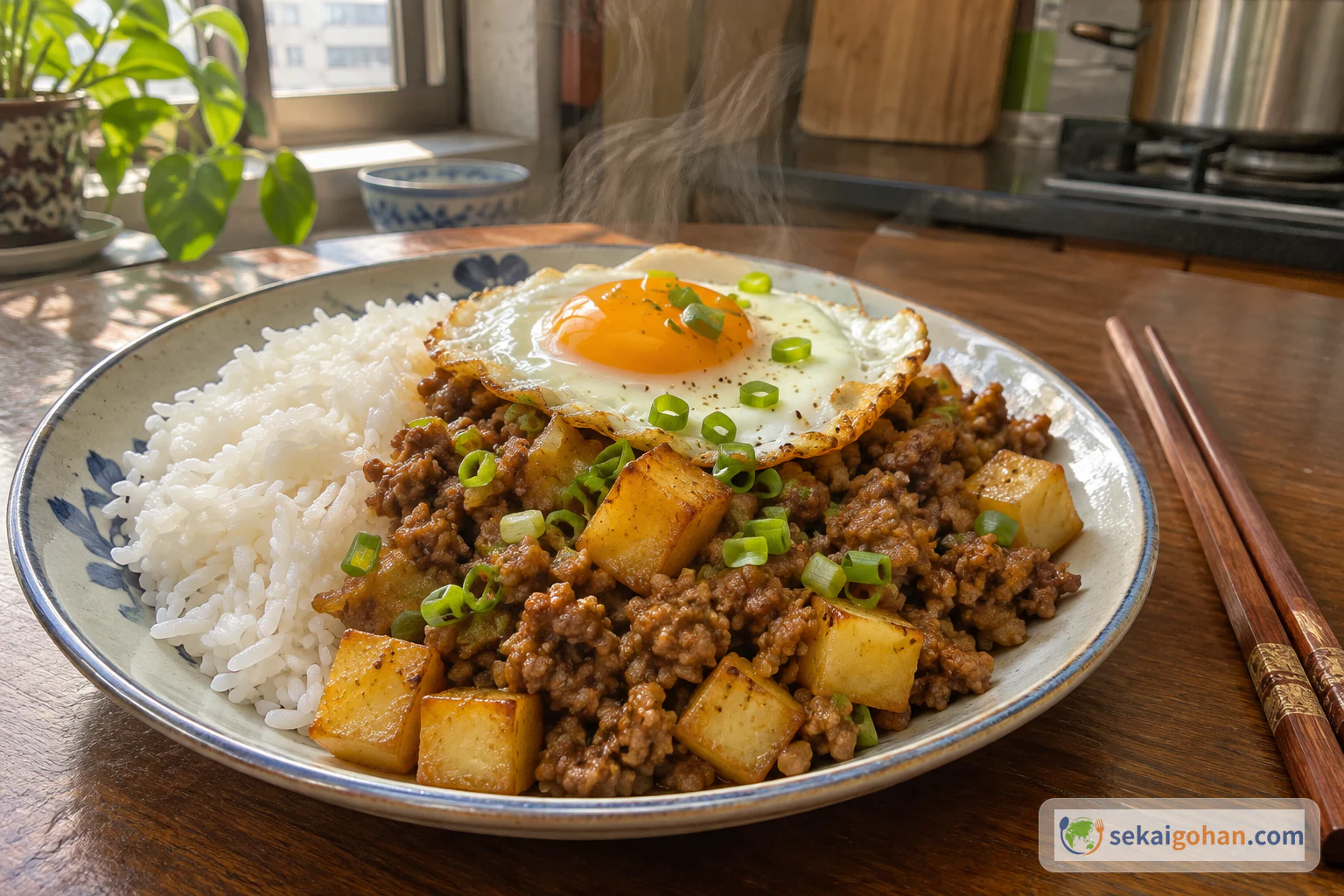
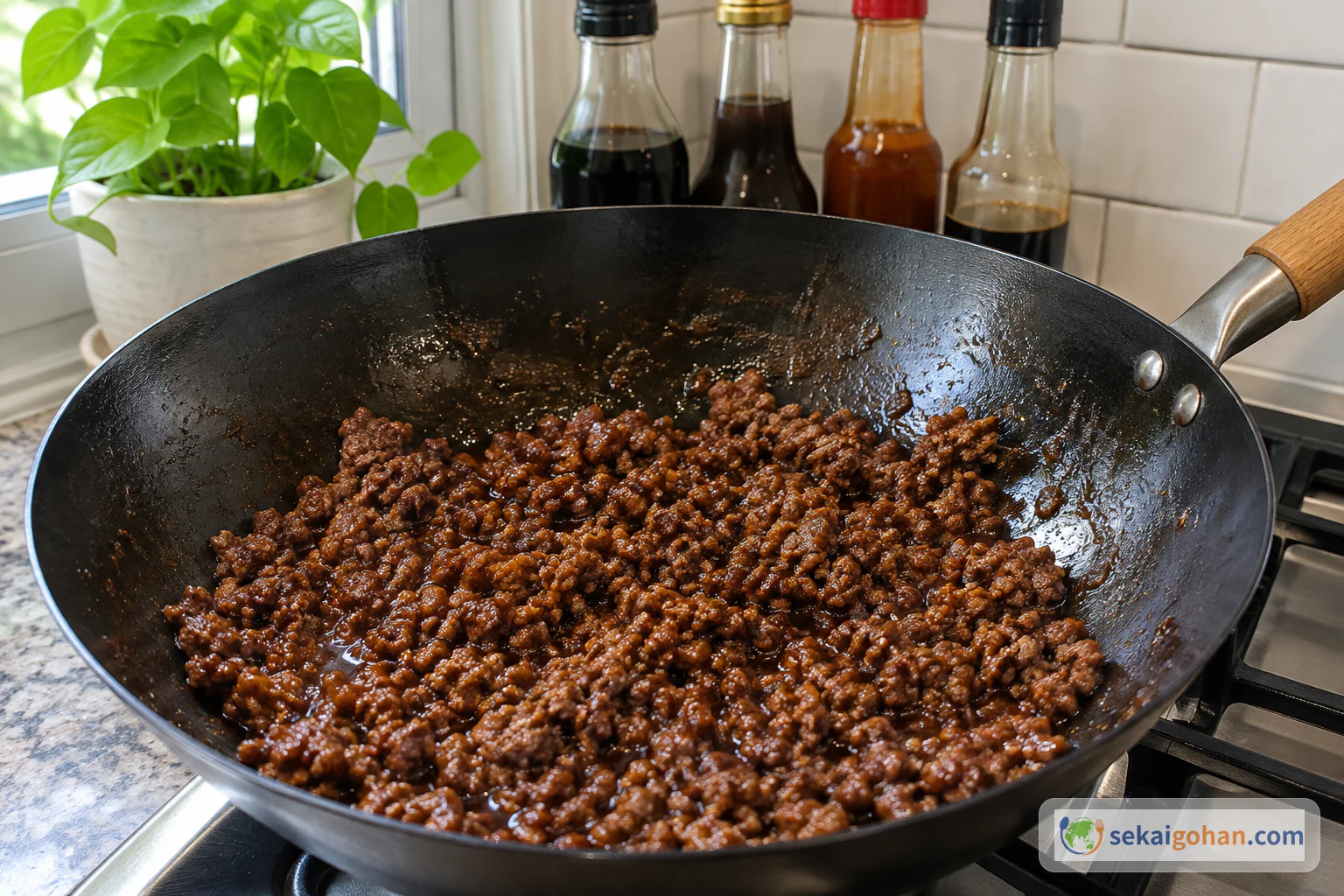
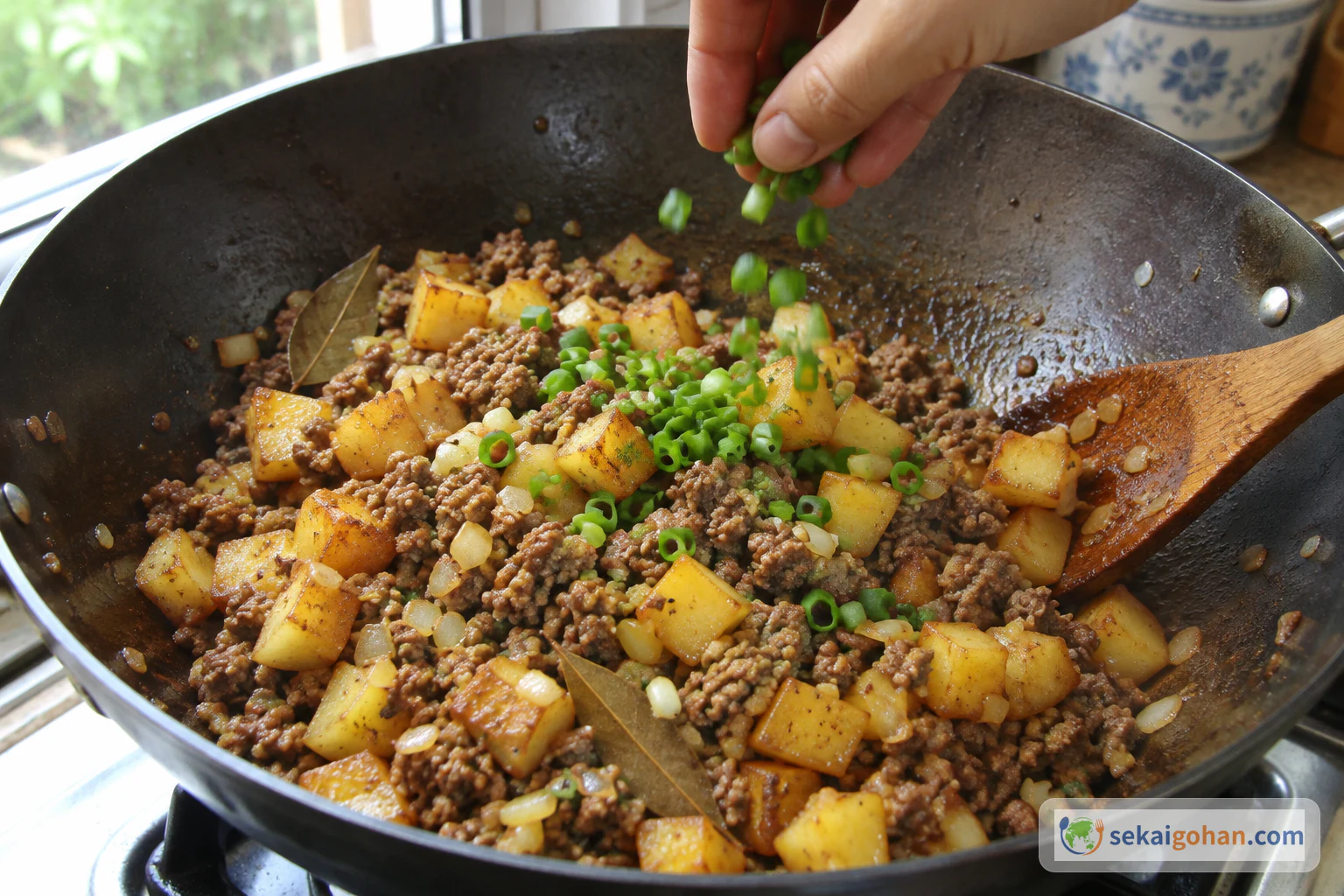
The moment that matters comes right at the end. The wok is off the heat, and the minced beef and pork are glossy and deep brown from two soy sauces and a splash of Worcestershire. Then the golden potato cubes go in, still crisp at the edges, and get folded through with a few strokes. Minchee is the home hash of Macau. It is salty with a faint molasses sweetness and a warm hint of cumin and bay. People eat it spooned next to plain white rice, usually with a fried egg on top whose yolk runs into everything.
Macau's everyday hash
Macau is a Special Administrative Region of China, and its Macanese cooking draws on Cantonese, Portuguese, South American, Malay, African and Indian kitchens all at once. Minchee shows that mix in a single wok. Cantonese soy sauces season the meat next to an English bottled sauce, bay leaves and a pinch of cumin, and it is eaten Chinese-style, over rice. Many people count it among Macau's national dishes, and it is a home-cooked dish.
A name borrowed from English
The name is usually traced to the English word "minced", and in Chinese characters it is written 免治, a borrowing of that sound. Where the dish began is not settled. One account places its start in Hong Kong's English-speaking community, and another points to Goa. Some also connect it to kheema, the minced-meat dishes of India, but that link has never been firmly shown.
You will see it written minchee or minchi. With a fried egg on top it becomes minchee chow dan (免治炒蛋), which is how many people order and eat it.
Every household's own wok
Each cook in Macau has their own version. Traditionally the meat is chopped by hand with a cleaver, and many say two cleavers working together give the best texture. Store-bought ground meat is fully accepted today. Cooks use a mix of beef and pork, or one meat alone. The potatoes are fried separately and mixed in at the last moment, so every spoonful has soft meat and a crisp cube.
Minchee belongs with the other sweet-salty meat dishes eaten over rice, like Taiwan's lu rou fan or a plate of char siu. The wok part cooks in minutes, though, and the result is a hash rather than a braise.
One explanation for the fried egg is a Catholic one: the yellow yolk and white surround are said to echo the colours of the Holy See. Treat it as a good table story more than as history. The egg is on the plate because it tastes right there.
Ingredients (serves 4)
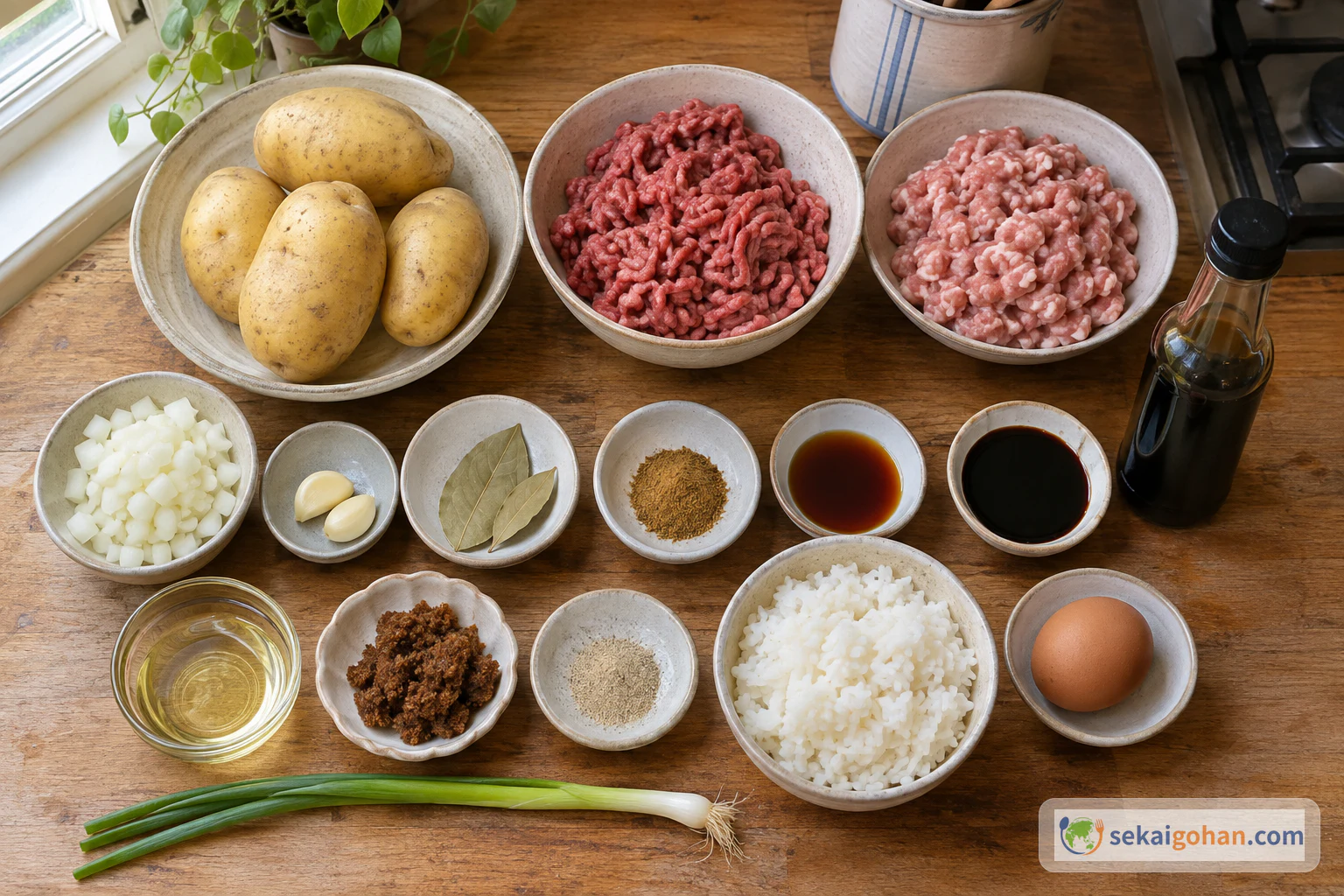
The seasoning amounts are a starting point. Taste at the end and adjust until the meat is salty with just a hint of sweetness.
This dish contains soy (both soy sauces) and egg if you add the fried egg. Check the labels on the soy sauces and the Worcestershire sauce for other allergens.
Equipment
- A large wok or deep skillet
- An air fryer, or a heavy pan for frying the potatoes in about 1 inch (2.5 cm) of oil
- Paper towels for drying and draining the potatoes
- A cutting board and a sharp knife, or a cleaver if you chop the meat yourself
- A spatula for breaking up the meat
Choosing and substituting
Dark soy sauce is the one bottle worth a trip to an Asian grocer or an online order. It is thicker and darker than ordinary soy sauce and gives minchee its deep brown and its gentle sweetness. Using ordinary soy sauce in its place makes a paler hash, and the saltiness hits differently. Light soy sauce, Worcestershire sauce, bay leaves, cumin and white pepper are all easy to find in a supermarket.
| Swap | What it changes |
|---|---|
| Beef only or pork only, instead of the mix | Works fine; all-beef tastes meatier and leaner, all-pork softer and sweeter |
| Very lean ground meat | The hash turns firmer and less tender |
| Molasses instead of dark brown sugar | Keeps the same molasses note |
| Black pepper instead of white | Works, but the heat is rounder and less sharp |
| Chicken or turkey mince | A lighter dish with less fat to carry the sauces |
Russet or Yukon Gold potatoes fry up with a crisp shell and a fluffy middle, which is the contrast this dish depends on. Waxy potatoes hold their shape but stay dense inside.
Method
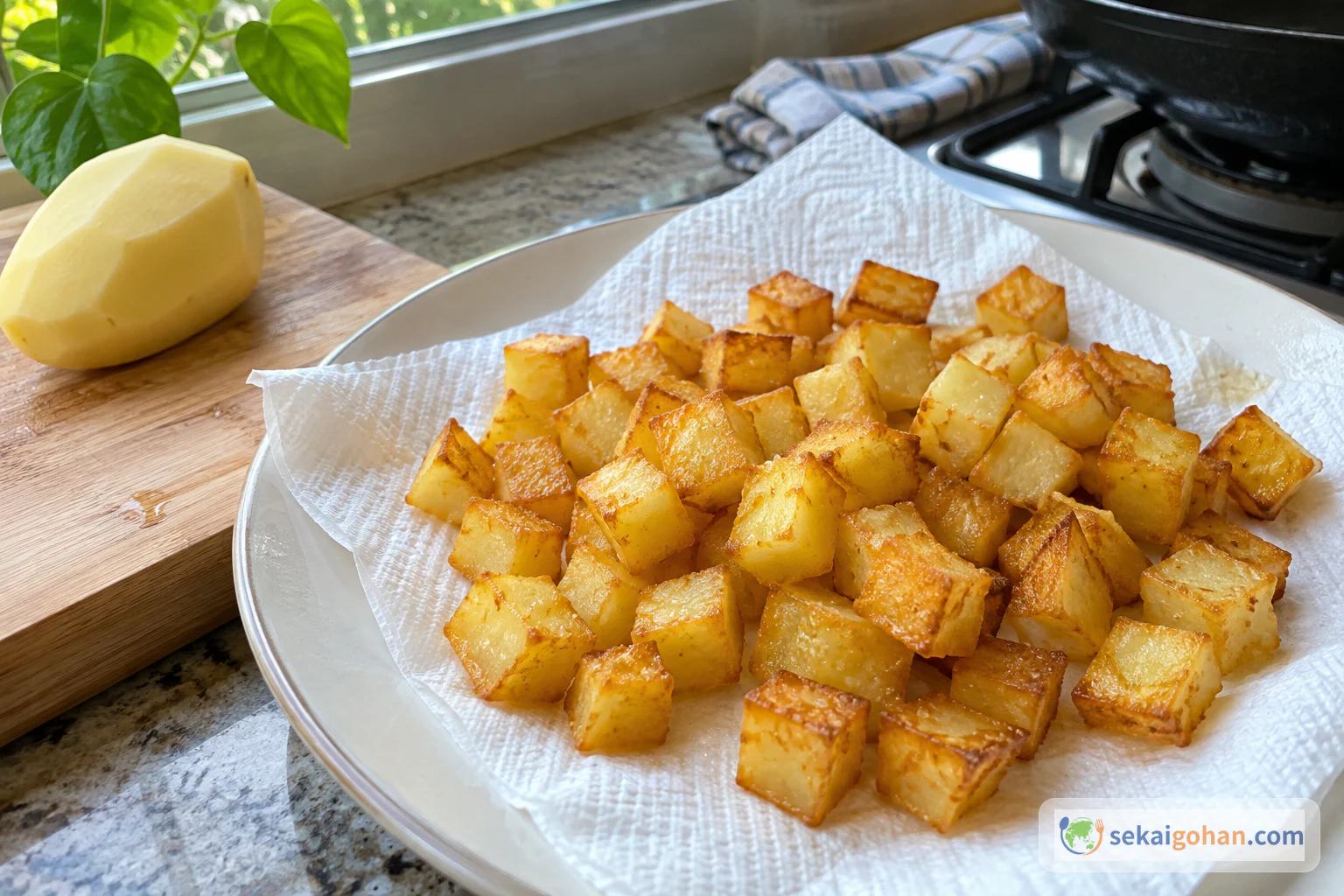
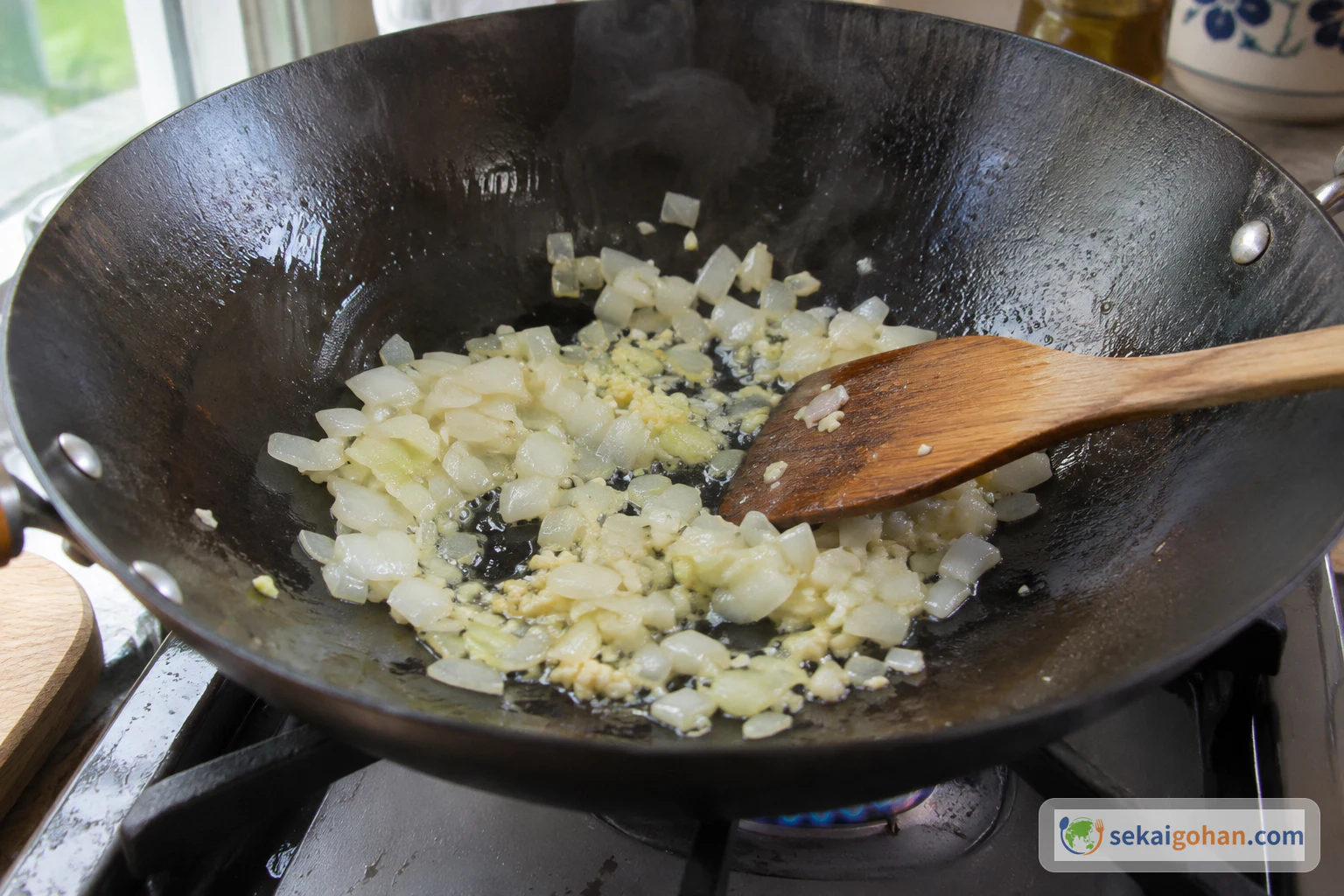
Do the potatoes first. They cook in the air fryer or oil while you chop the onion and garlic, and they wait on paper towels until the end. The wok part is quick, so have every seasoning measured before you turn on the heat.
Dry the potato cubes completely before they go near hot oil, because water makes it spit. Lower them in gently, a few at a time, and keep children and pets away from the stove while you fry.
Potatoes cooked separately and added off the heat stay crisp outside and fluffy inside. Cooked in the sauce, they soak it up and turn soft, and the dish loses its contrast.
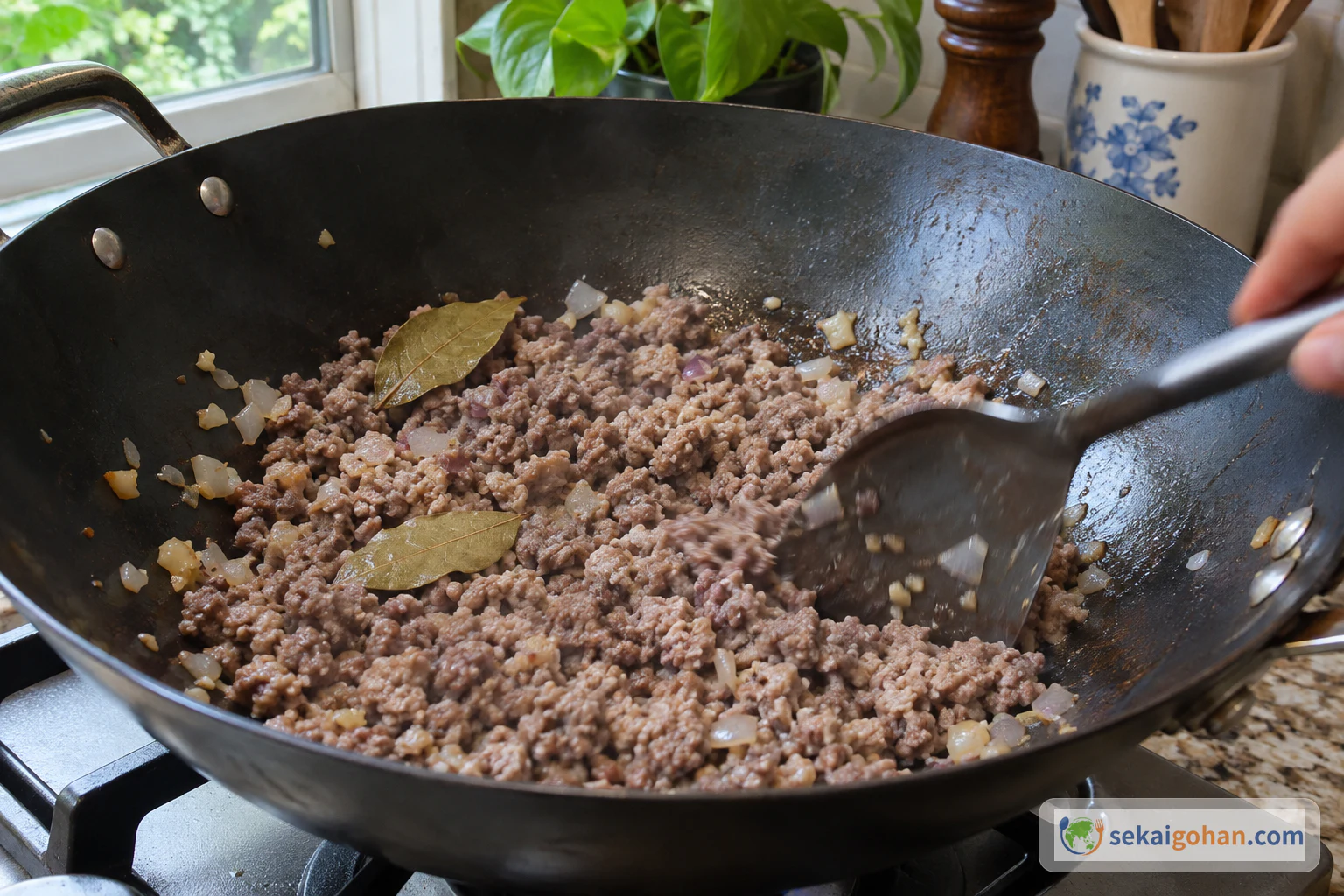
A hot wok and a steady hand with the spatula keep the meat frying in its fat. A cool pan lets it stew in its own juices, and the sauces never cling.
When it goes wrong
| What you see | Why | What to do |
|---|---|---|
| Potatoes go soft in the hash | They went in wet, too early, or over heat | Dry them well, fry until golden, and fold them in off the heat just before serving |
| Meat is grey and sitting in liquid | The wok was not hot enough | Turn the heat up and keep stirring until the liquid cooks off before adding the sauces |
| Meat is dry and tough | The ground meat was very lean | Use the beef and pork mix, or a less lean grind |
| Garlic tastes bitter | The heat was too high in step 2 | Keep the onion and garlic pale, and start over with fresh ones if they smell acrid |
| Too salty | Soy sauces vary in strength | Next time add part of the light soy, taste, then add the rest; serve today's batch with more plain rice |
| Pale, flat color | Dark soy sauce was left out or swapped | Use dark soy sauce for the color |
Serving and variations
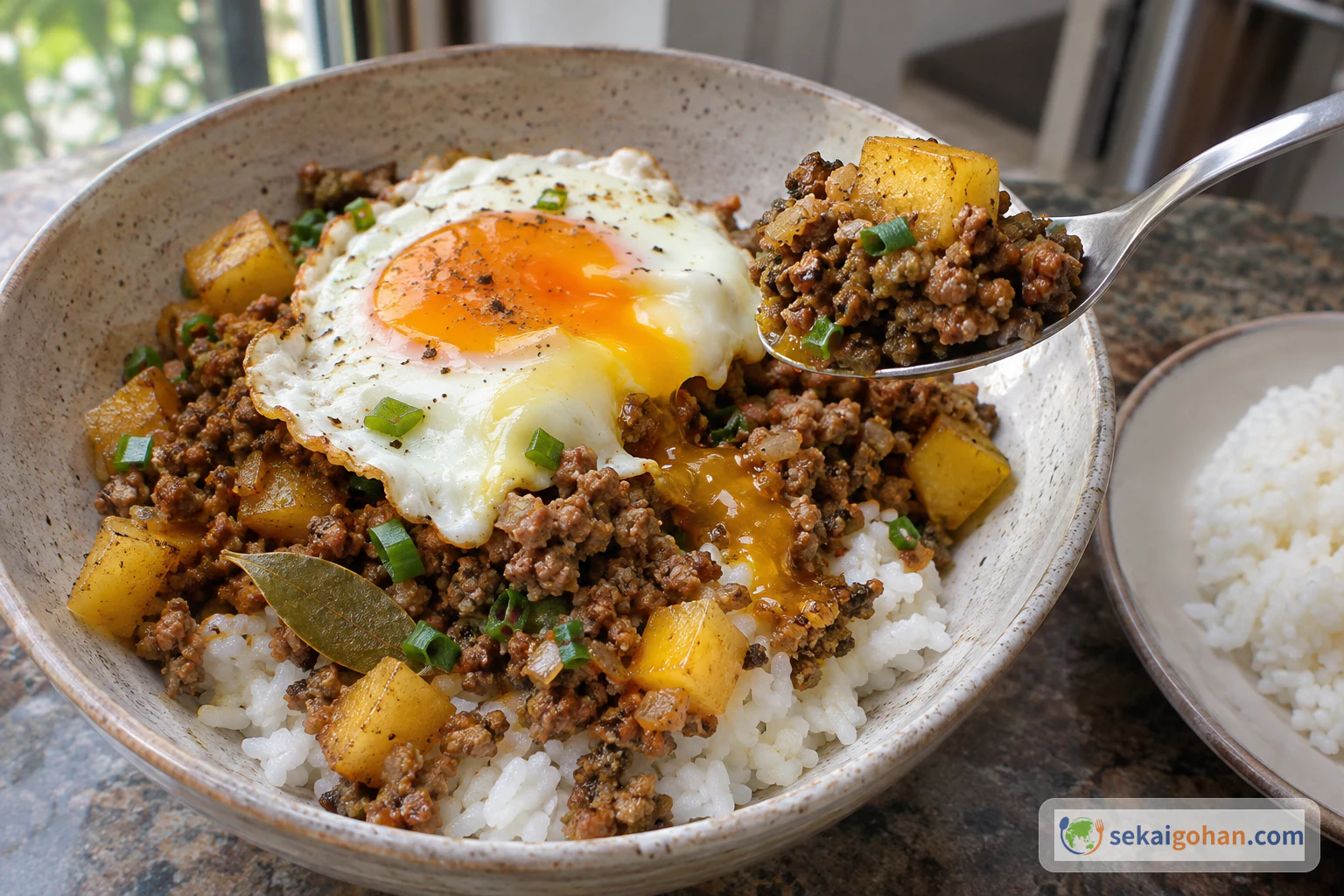
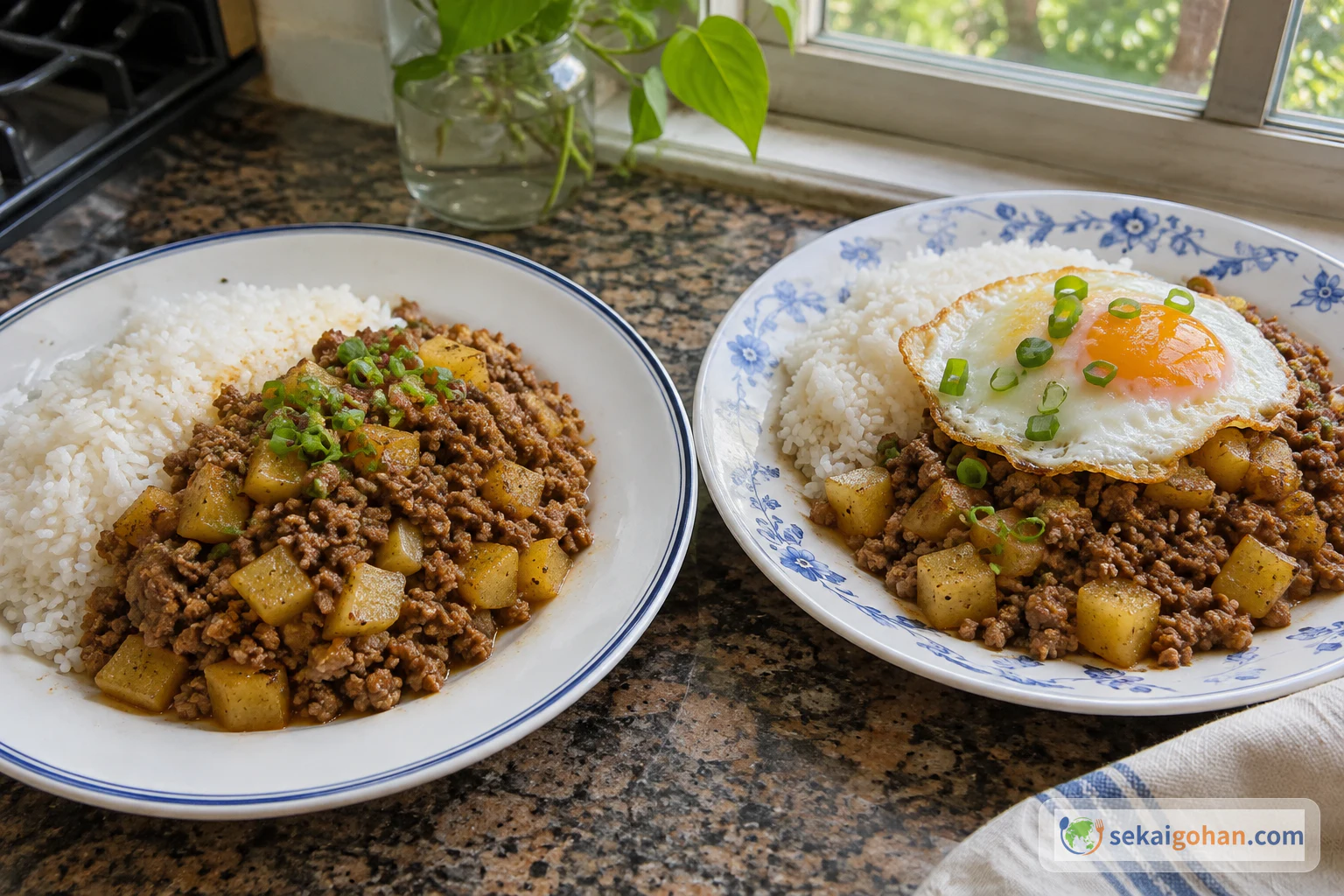
Minchee goes on the table with plenty of plain white rice and, for most people, one fried egg per plate. It is an everyday home dish, cooked fast. The meat sits beside or on top of the rice and gets mixed in as you eat. A runny yolk is the classic finish. If you want another dish alongside, Chinese fried rice suits a bigger spread, but minchee and rice make a full meal on their own.
For young children, pregnant people, older adults and anyone with weakened immunity, fry the egg until the yolk is set. Always cook the minced meat until no pink remains.
Variations
- Beef only. This one is leaner and more meaty. Some cooks brown the garlic in the oil, then lift it out before the meat goes in, so only a light garlic note remains.
- Chicken, fish or shrimp. Each makes a lighter, milder hash. Keep the same seasonings.
- Bitter melon or wood ear mushrooms. Bitter melon adds a clean bitterness against the sweet soy. Wood ear adds a springy crunch.
- Tomato and ketchup. Some Macau households stir these in, which makes the hash tangier and saucier.
Frequently asked questions
Do I really need the cumin and bay leaves?
Keep them. There is only a little of each, so neither one stands out. Together they give a warm, rounded note under the soy, and without them the hash tastes more like a plain soy stir-fry.
Air fryer or deep-frying for the potatoes?
Both give crisp cubes. The air fryer uses less oil and needs less attention, while frying in about 1 inch (2.5 cm) of oil gives a deeper golden crust. Air fryers vary, so judge by an even golden color more than by the clock.
Can I make it ahead, and what about leftovers?
Cook the potatoes and the meat ahead, keep them apart, and reheat the meat until steaming hot all the way through before folding in the potatoes. For leftovers, cool them, then refrigerate promptly in a covered container. Reheat until steaming hot throughout. The potatoes will be softer the second day.