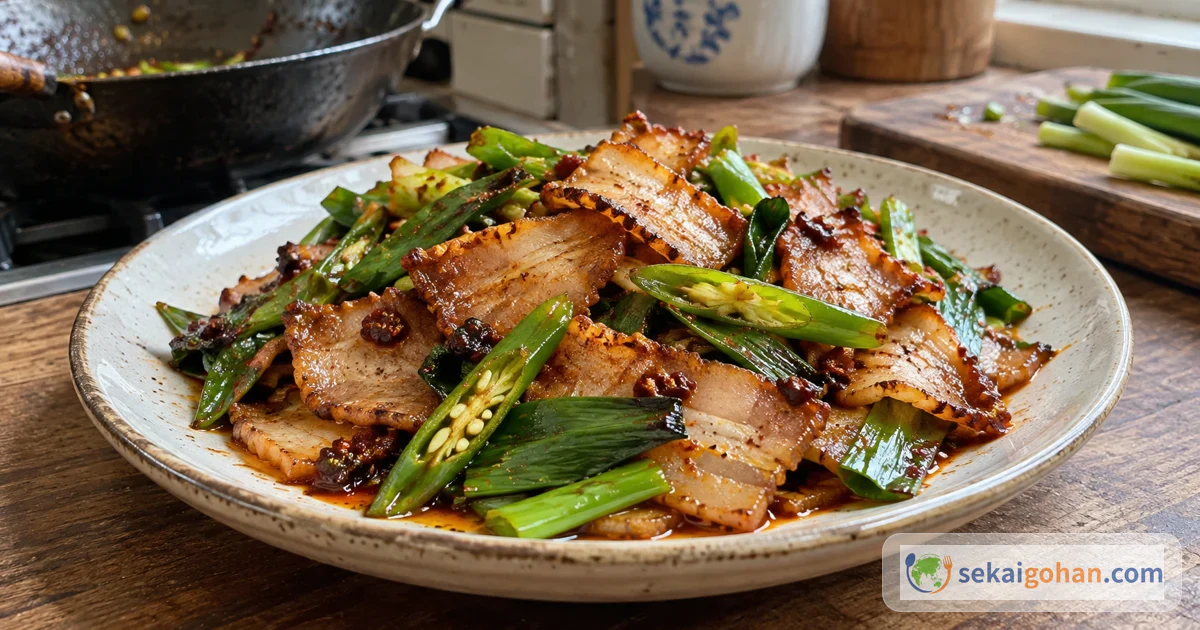
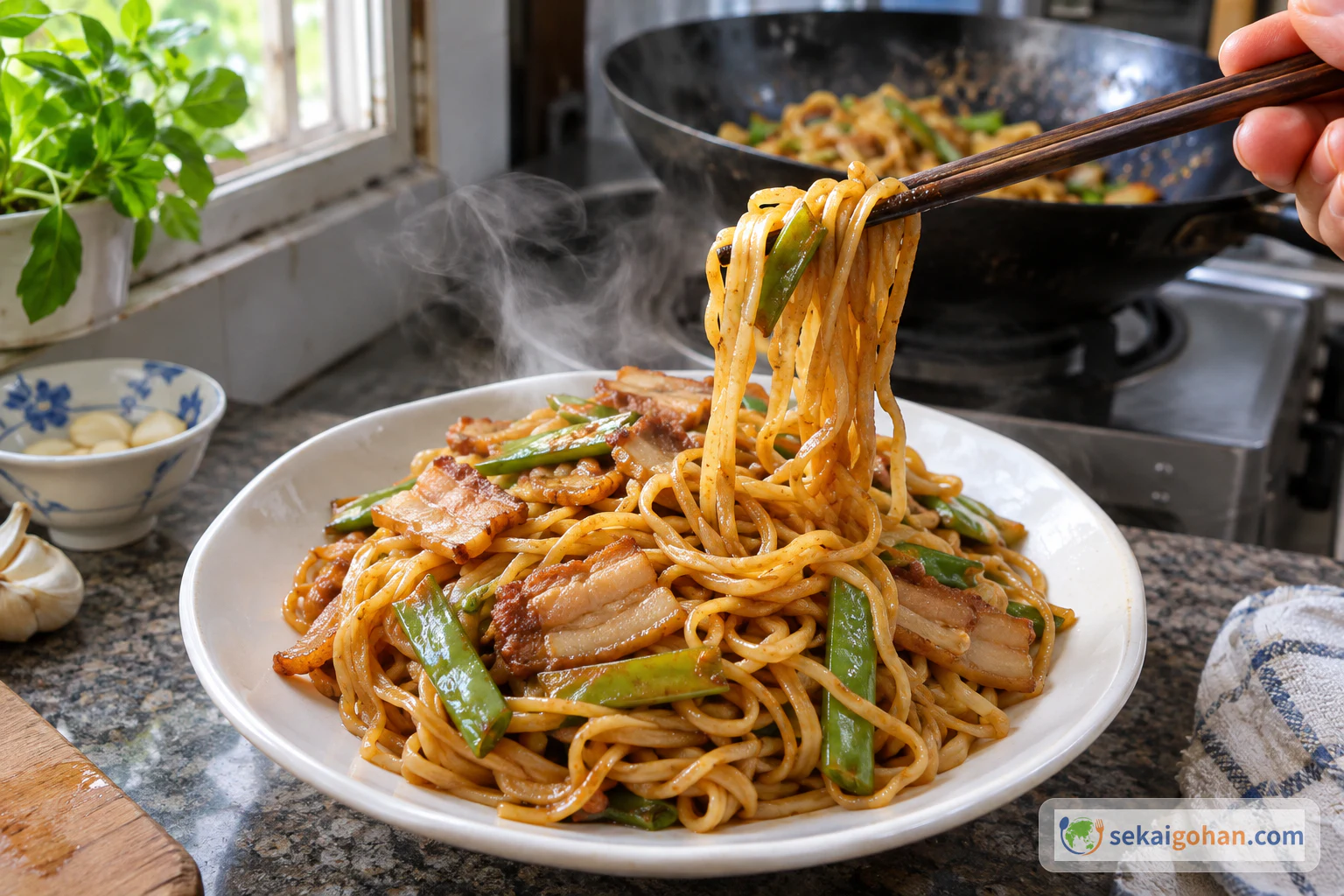
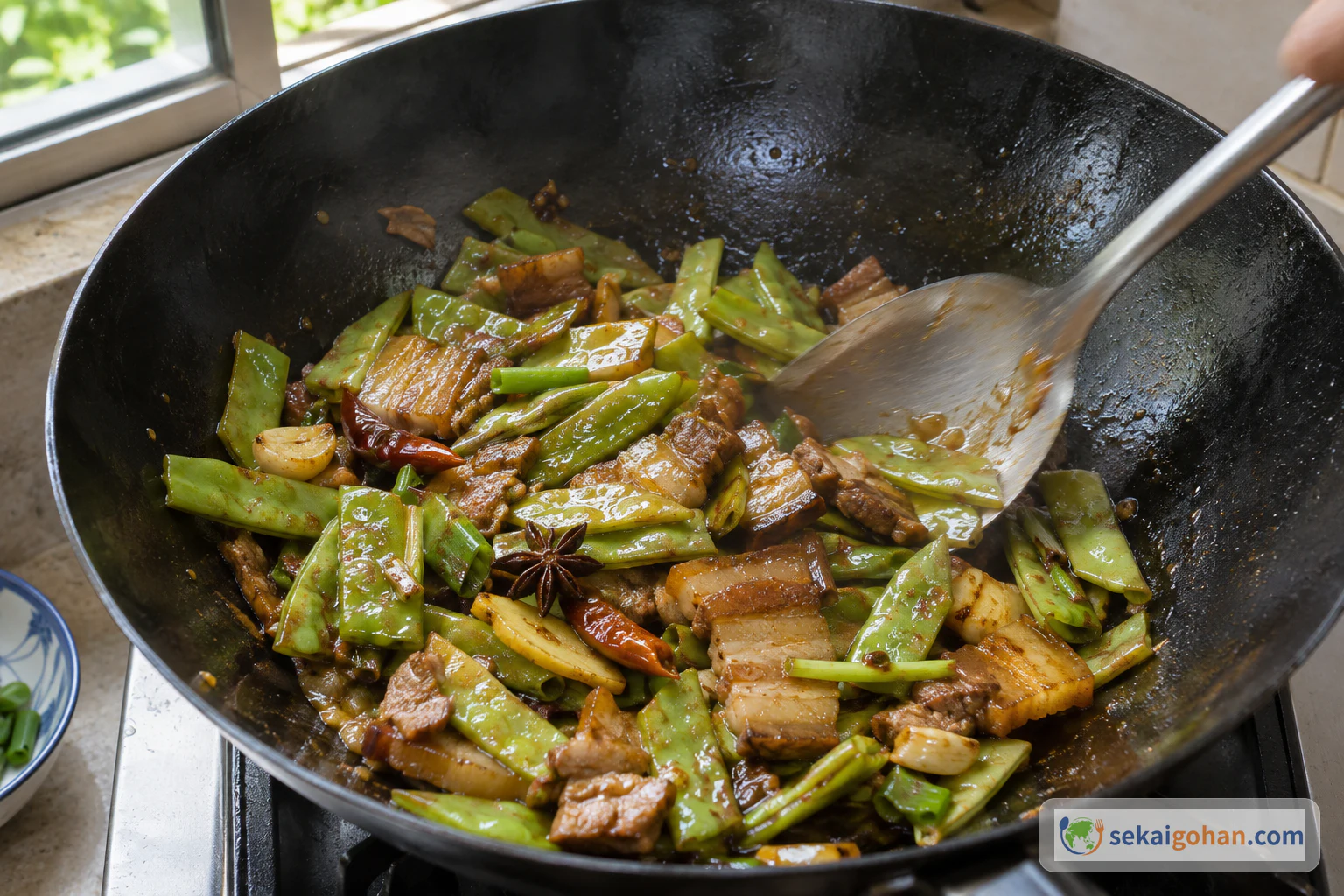
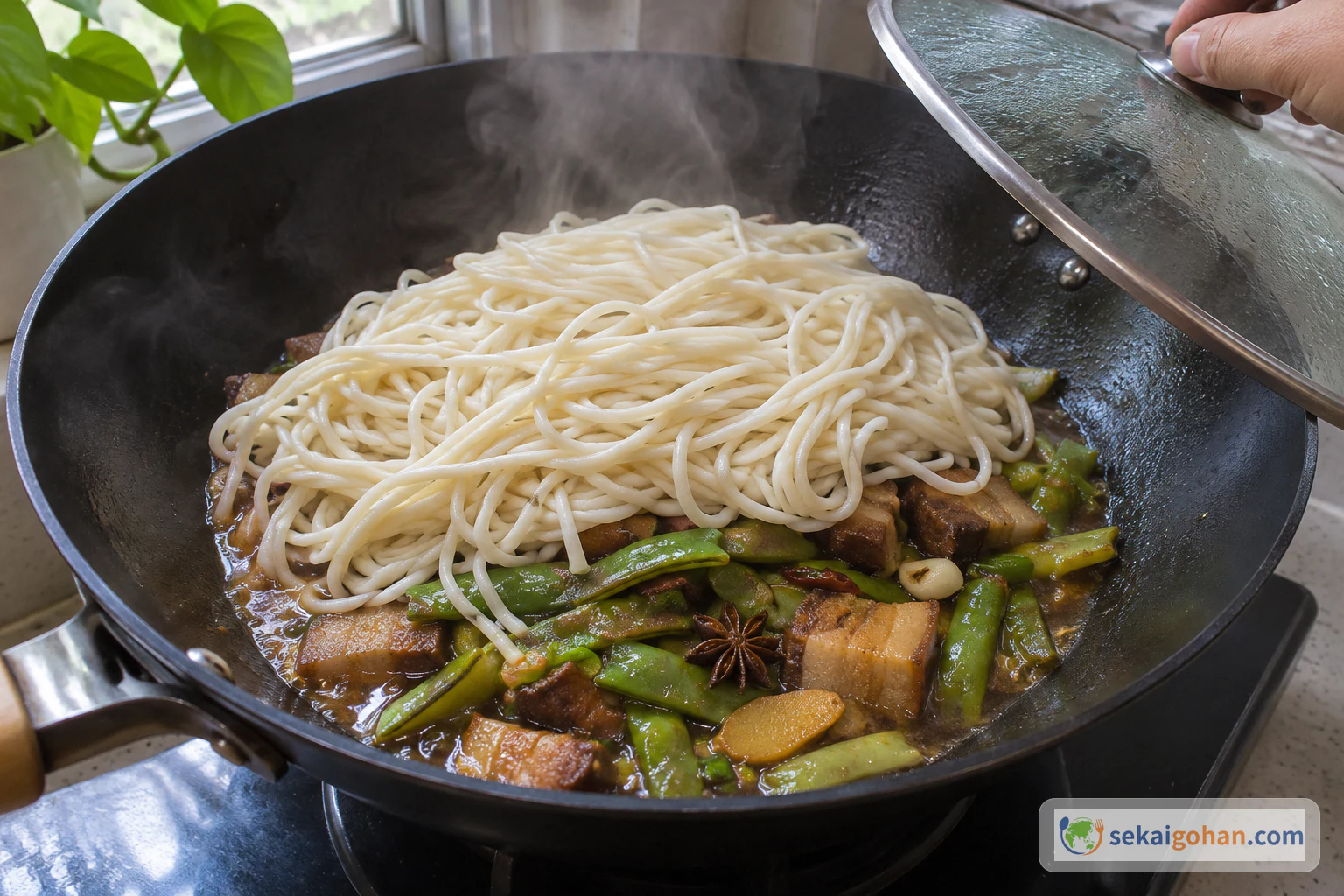
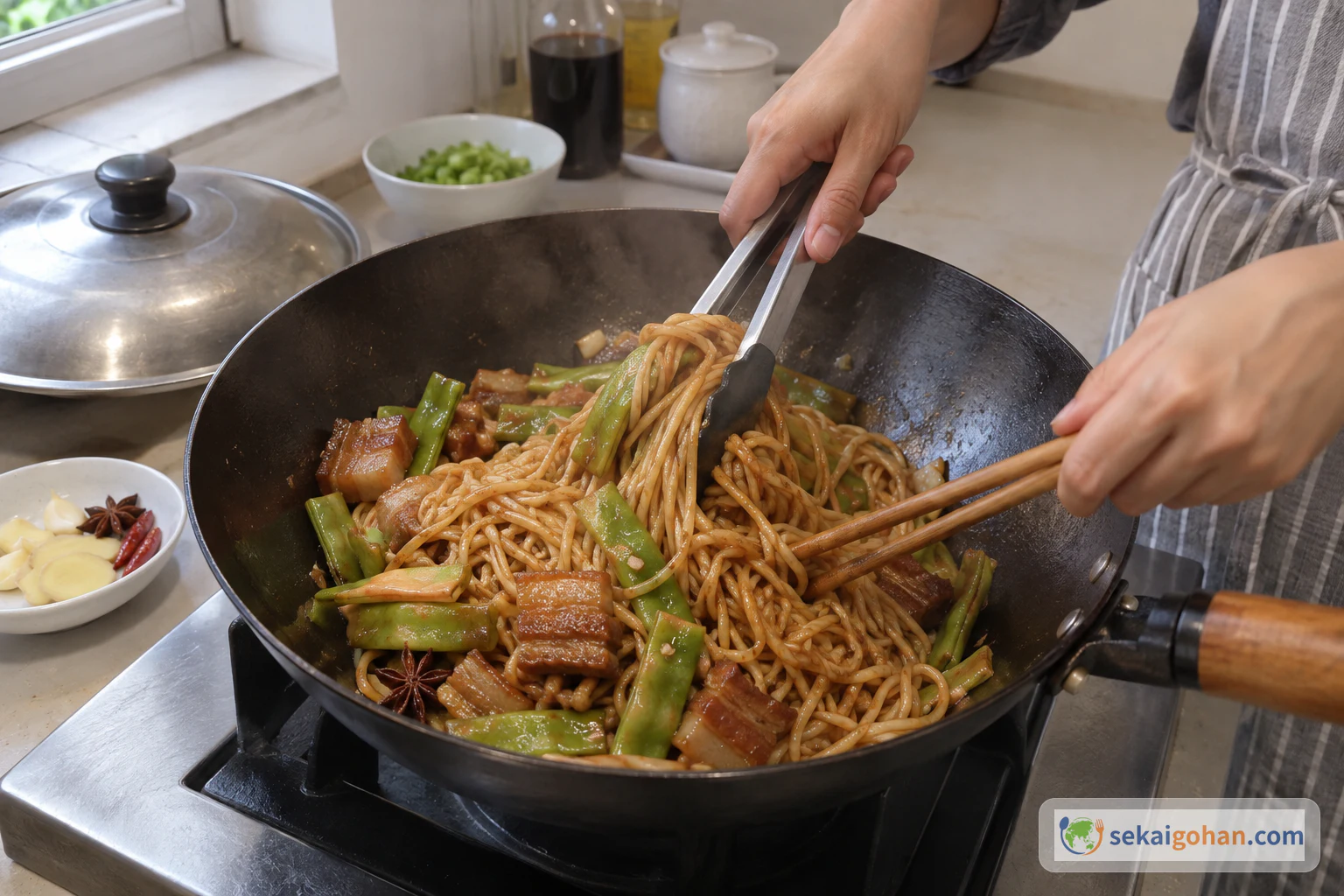
When you lift the lid off the wok, a cloud of steam carries out the smell of star anise and soy. The noodles you piled on top five minutes earlier have soaked up the dark liquid from below and turned a glossy golden brown. Underneath are slices of pork belly and green beans gone soft in the sauce. Turn the heat down, toss everything together and serve it while it is still steaming. This is menmian (焖面), a one-wok noodle dish from northern Chinese homes. It tastes of pork fat, soy and spice, carried by wheat noodles that have taken in all of it.
A Noodle Dish Cooked under the Lid
The name says how it is made. Mèn (焖) means to cook something covered so that it braises in its own steam, and miàn (面) is noodles. A loose translation is "beans and noodles braised in a covered pot". You cook the meat and vegetables first, then lay the noodles on top and let the steam and the sauce finish them. Menmian is a typical northern way of cooking noodles and is popular in many northern provinces. In some regions the same dish is called zhengmian (蒸面), "steamed noodles".
The version here is bian dou men mian (扁豆焖面), made with flat beans. In Beijing it is home cooking, the kind of meal an ayi, the household helper, puts on the family table. You will rarely find it in restaurants. The flat beans braise with the pork and give the noodles their savoury taste. Other households make it with dou jiao (豆角, long green beans) and call it dou jiao men mian. Some cooks boil the beans first and then braise the raw noodles right in the pan. All of these keep the same idea: the noodles go in last, on top, and the lid stays on.
Henan, in central China, has its own zhengmian, Henan twice-steamed noodles. Those noodles are steamed twice, which makes it a separate dish. How it is related to the northern menmian is unclear.
Menmian belongs with the wheat-noodle cooking of northern and central China, where noodles, dumplings, steamed buns and flatbreads are everyday staples. Compared with Sichuan dan dan noodles, which are tossed with a spicy, numbing sauce, menmian is milder and soy-led. Shaanxi's wide, hand-pulled biangbiang noodles are dressed with sizzling oil. Menmian is cooked in the pan with its sauce. For more dishes from across the country, see Chinese cooking.
Ingredients (serves 6)
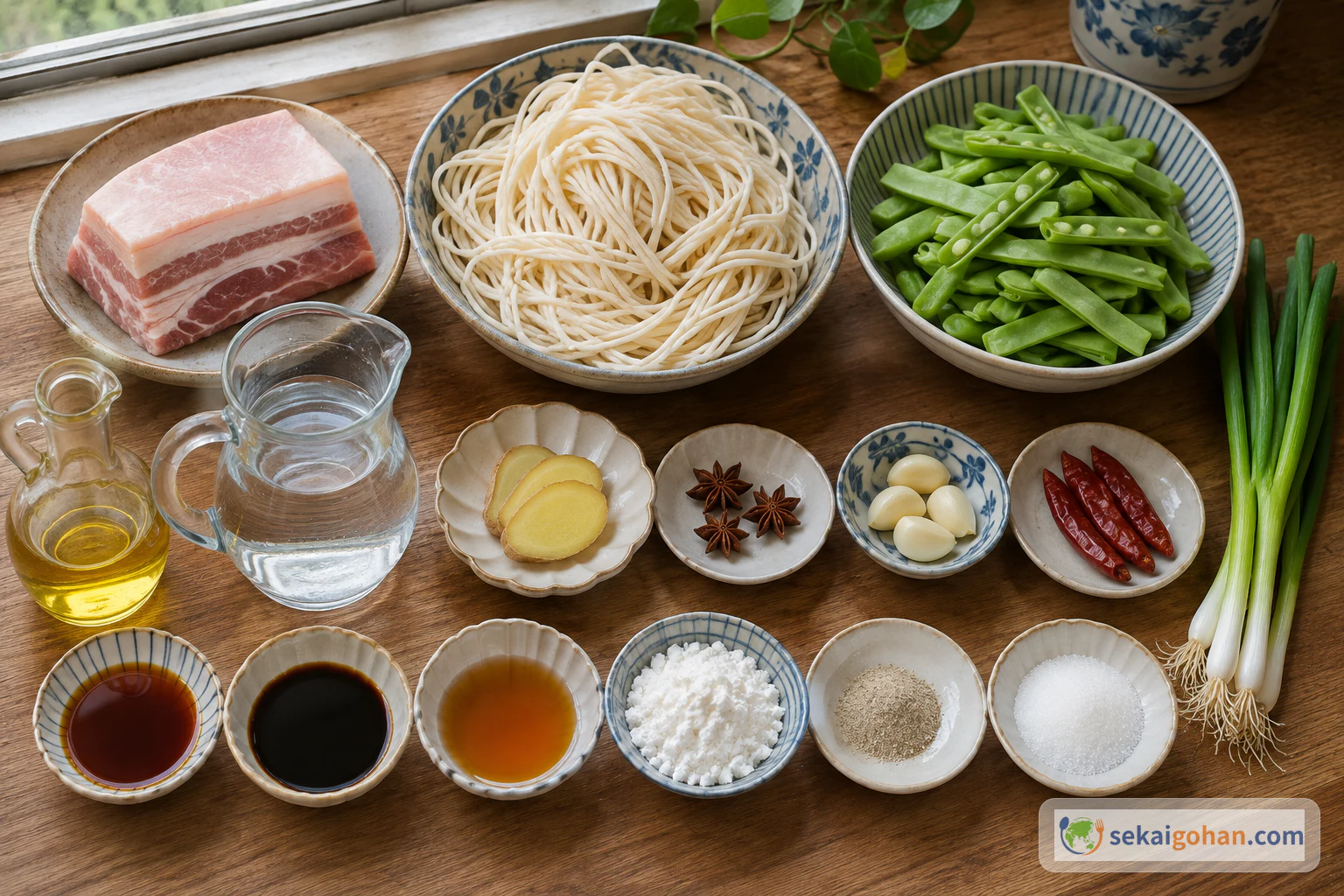
This dish contains wheat (noodles) and soy (light and dark soy sauce), as well as pork. Check the labels on the noodles, soy sauces and Shaoxing wine for other allergens.
Equipment
- Wok or deep skillet with a lid
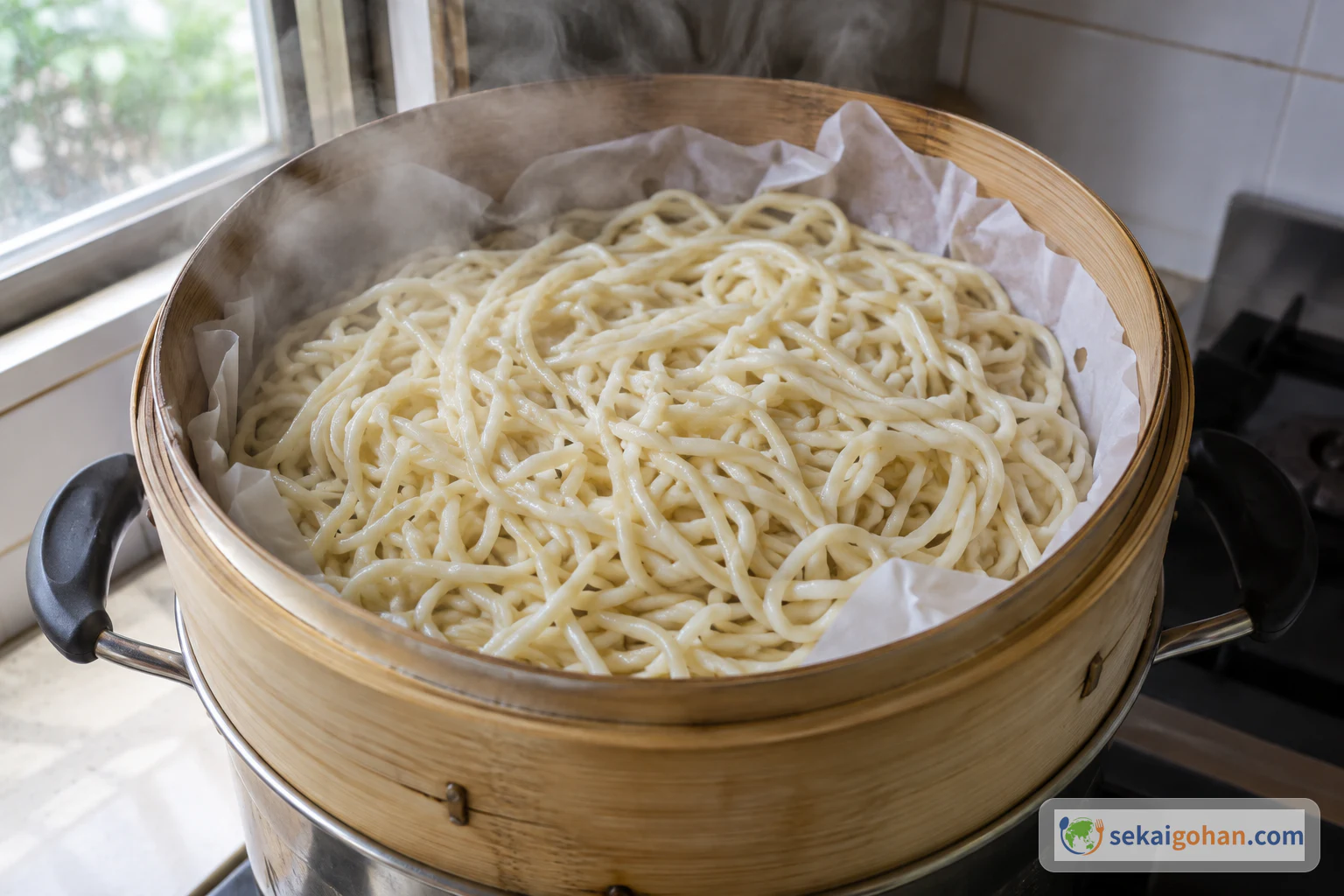
- Steamer, with a rack that sits high enough that the water does not touch the noodles
- Large sheet of parchment paper for the steamer rack
- Mixing bowl for the pork
- Spatula, plus tongs or chopsticks for tossing
Choosing and Substituting
The noodles decide the dish. Use fresh white wheat noodles, the plain kind sold in the refrigerated section of Chinese and Asian grocers. Yellow alkaline noodles, the springy kind used for ramen, are a different noodle and make a different dish. Dried wheat noodles also work if you steam them first, as explained in the questions below.
Keep the two soy sauces apart. Light soy sauce brings the salt and dark soy sauce brings the colour, so using one for both throws off the balance. Shaoxing wine, dark soy sauce, star anise and ground white pepper each shape how the dish smells and looks.
The dish takes its name from flat beans. Ordinary green beans are the closest substitute. They differ in thickness, so they cook at their own pace, which is why the steps go by tenderness and not by the clock. If you do not want pork belly, use boneless pork shoulder for a leaner result or boneless chicken thigh for a lighter one. Both have less fat to coat the noodles than belly does.
Method
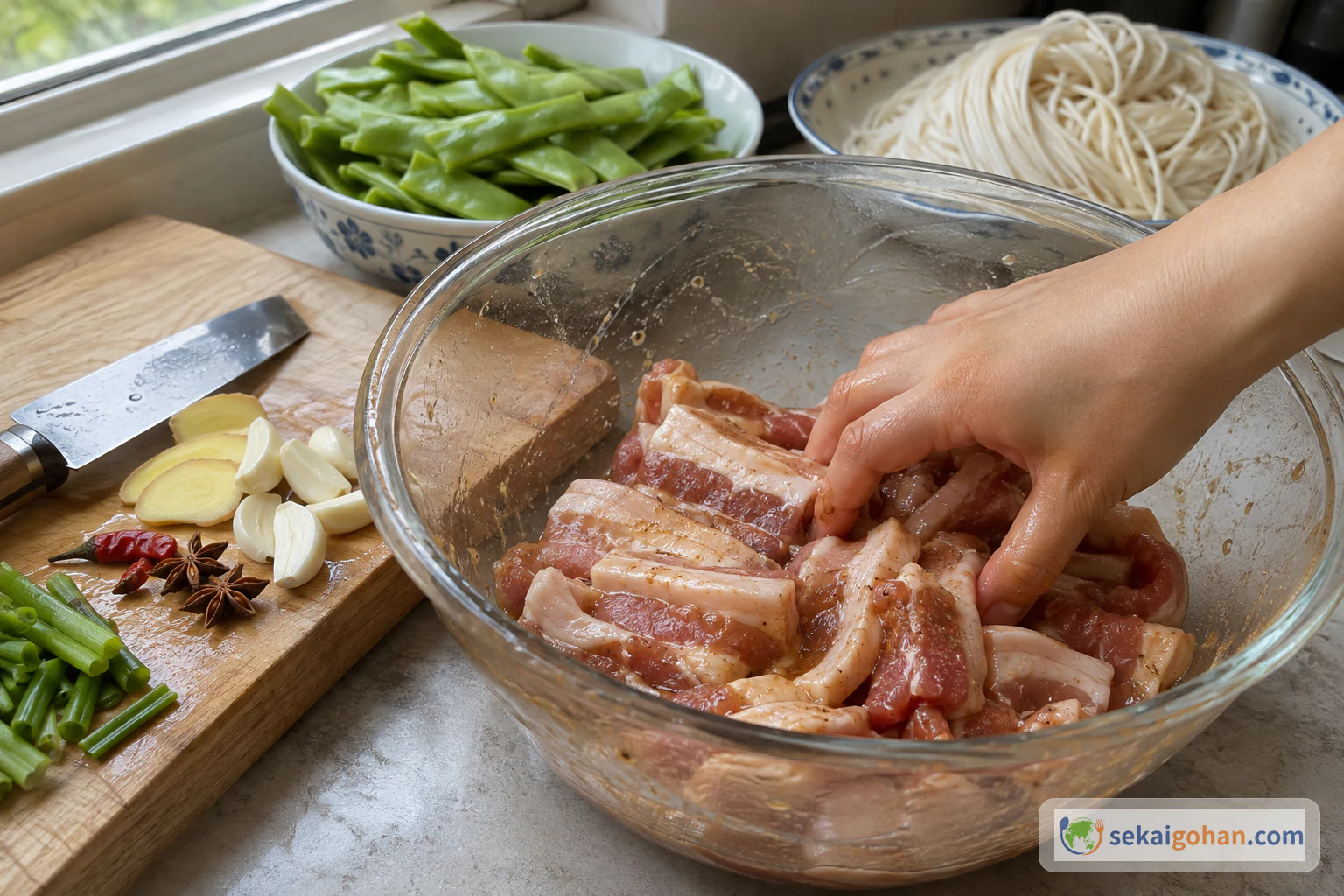
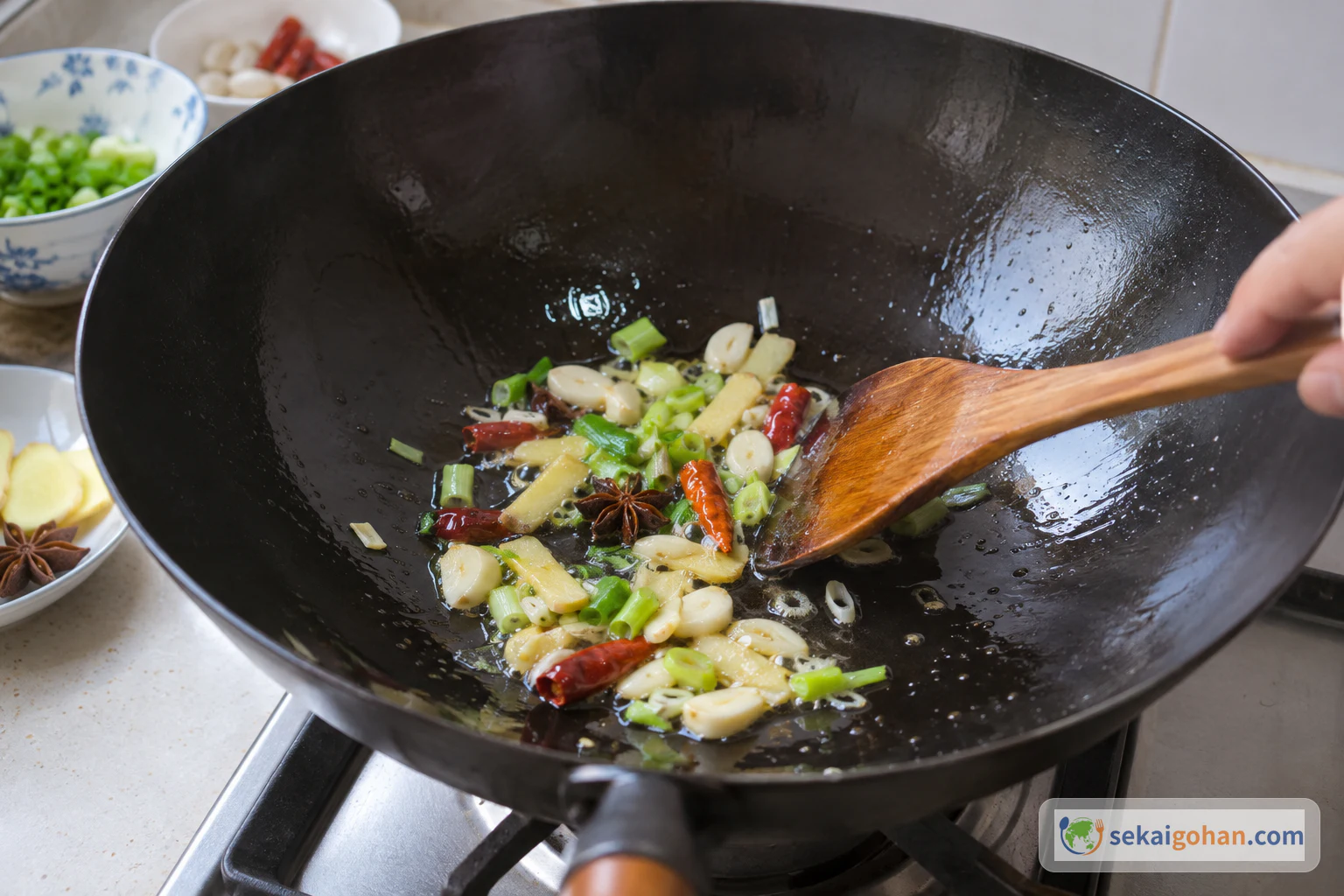
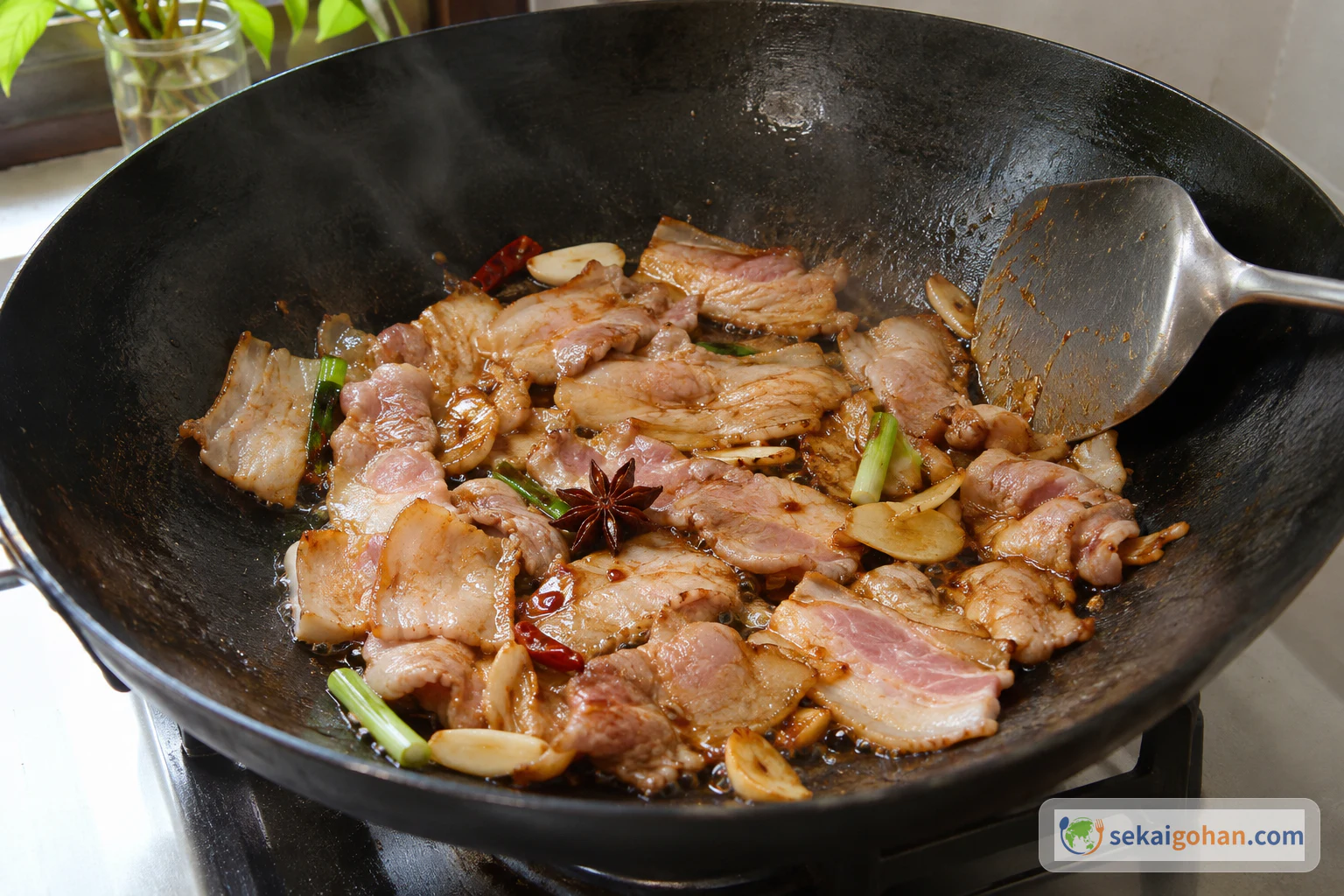
Start the pork marinating first. Its 20 minutes is your time to slice the aromatics, trim the beans and steam the noodles. After that the wok work goes quickly, from aromatics to pork to beans. The beans then braise under the lid with no stirring, the noodles go on top, and the dish is ready shortly after the lid comes off.
When It Goes Wrong
| What you see | Why | What to do |
|---|---|---|
| The steamed noodles are stuck in a clump | They were packed tightly or not oiled | Pile them loosely and toss them with the oil before steaming. Loosen a clump with chopsticks before it goes on the beans |
| The beans still crunch at step 6 | They have not braised long enough | Keep them covered on low heat and check again. They must be soft through before the noodles go on |
| The wok runs dry before the beans are tender | Too much liquid steamed off | Add a little water, scrape the bottom gently and keep braising covered |
| The noodles are soft and broken | They were stirred into the liquid before the lid went on | Next time, lay them on top and leave them for the full 5 minutes |
| Some noodles are pale and bland | The sauce from the bottom has not reached them | Toss longer over low heat, lifting from the bottom of the wok |
Serving and Variations
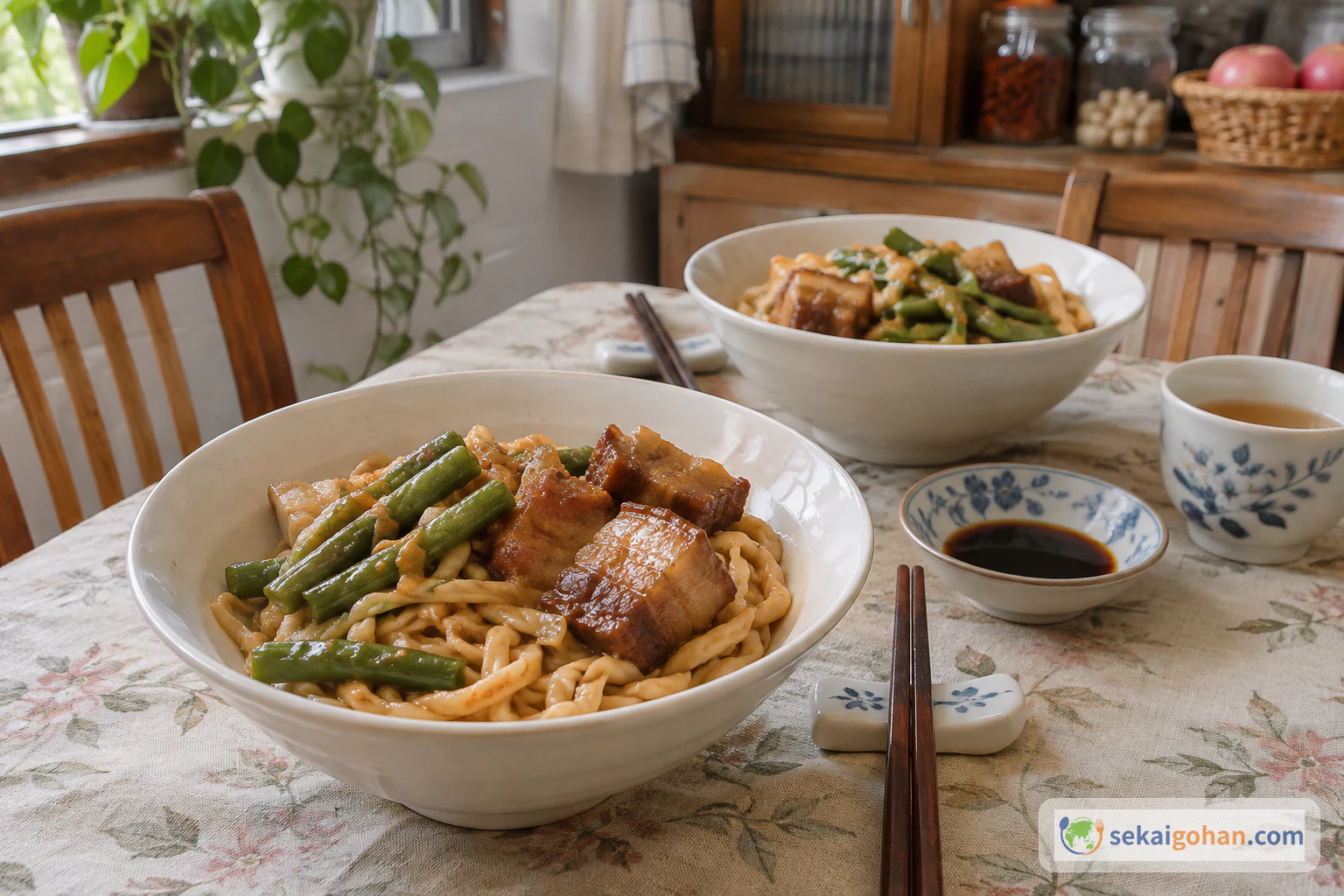
Menmian is a full meal in one wok, with noodles, meat and vegetables together, so it goes to the table as it is, in bowls, with chopsticks and tea. A small dish of black vinegar or vinegar with crushed garlic can sit on the table for anyone who wants it sharper. Serve it straight from the wok. It is at its best in the first minutes, while the noodles are still glossy.
Variations
- Mushrooms, scallions or bean sprouts. Add them with the beans or use them in place of some of the beans. Mushrooms bring an earthy depth, and sprouts add crunch and lighten the dish.
- Vegetarian. Replace the pork with seared firm tofu. You lose the pork fat, so the noodles come out less rich and the soy and star anise take the lead.
- Pork shoulder or chicken thigh. Both cook the same way as the belly. The noodles come out leaner and less glossy.
- Heat. The dried chilies are optional. Leave them out for a mild, savoury pan, or add more for a dish with a clear chili edge.
Frequently Asked Questions
Can I use dried noodles?
Yes. Steam dried wheat noodles for 5–10 minutes, until they are half-cooked and pliable, then use them as you would the steamed fresh noodles in step 7. Give them the full time under the lid so they finish cooking in the sauce.
Is menmian the same as lo mein?
No. Lo mein belongs to Chinese-American cooking, where boiled noodles are tossed with sauce. Menmian comes from northern Chinese homes. Its noodles are steamed, then finished under the lid on top of the beans and pork, so they take in the braising liquid as they cook.
Will star anise make it taste like licorice?
Three pieces fried briefly in oil give a warm, sweet note that you notice most when the lid comes off. Once soy sauce is added, the anise blends into it. Fish the pods out before serving so nobody bites into one.
What else goes well with menmian?
Because menmian is mild, it pairs well with a bold side. A small dish of something like mapo tofu brings heat and a soft texture alongside the noodles. Keep the menmian itself simple so its soy and anise still come through.