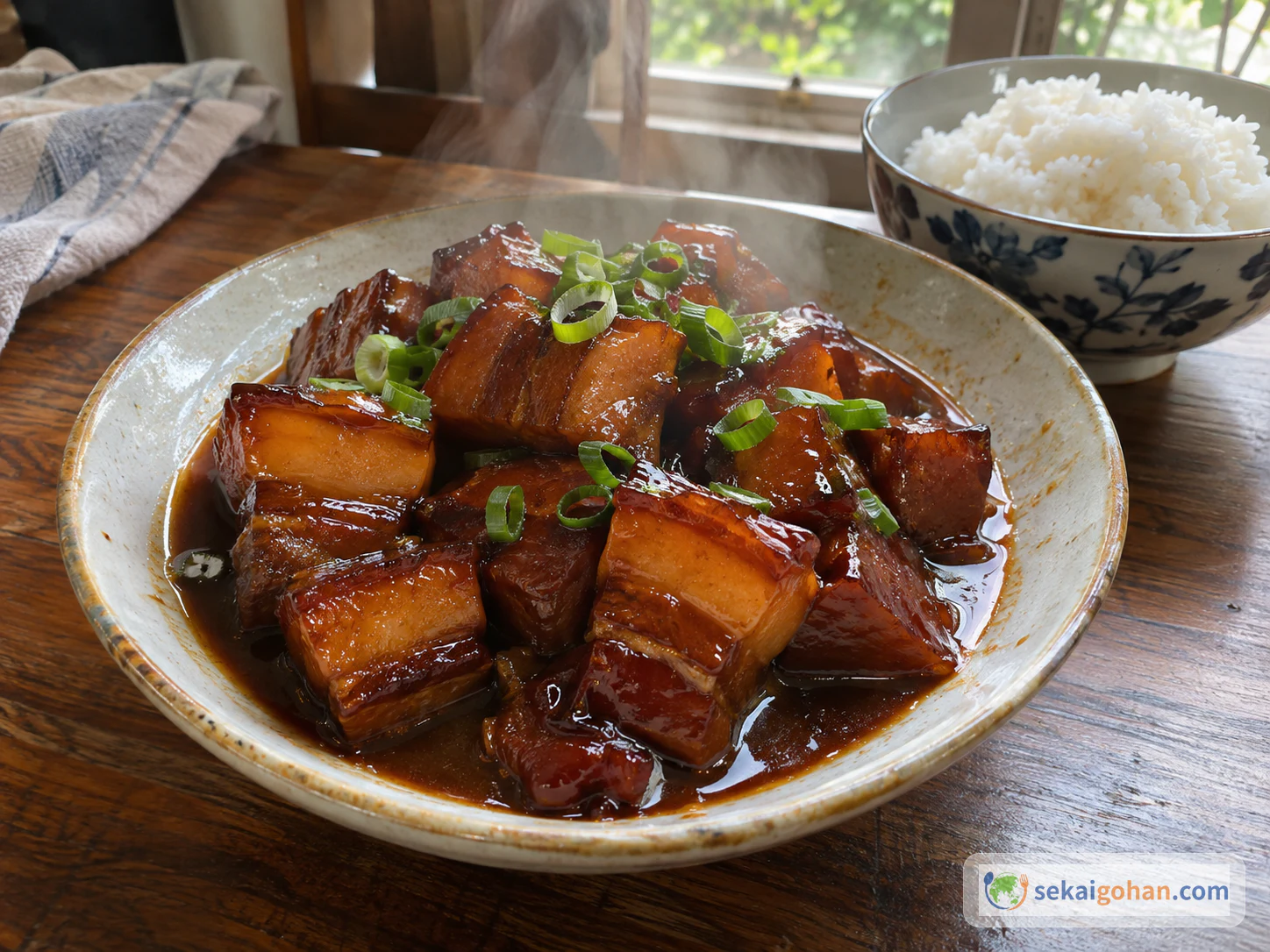
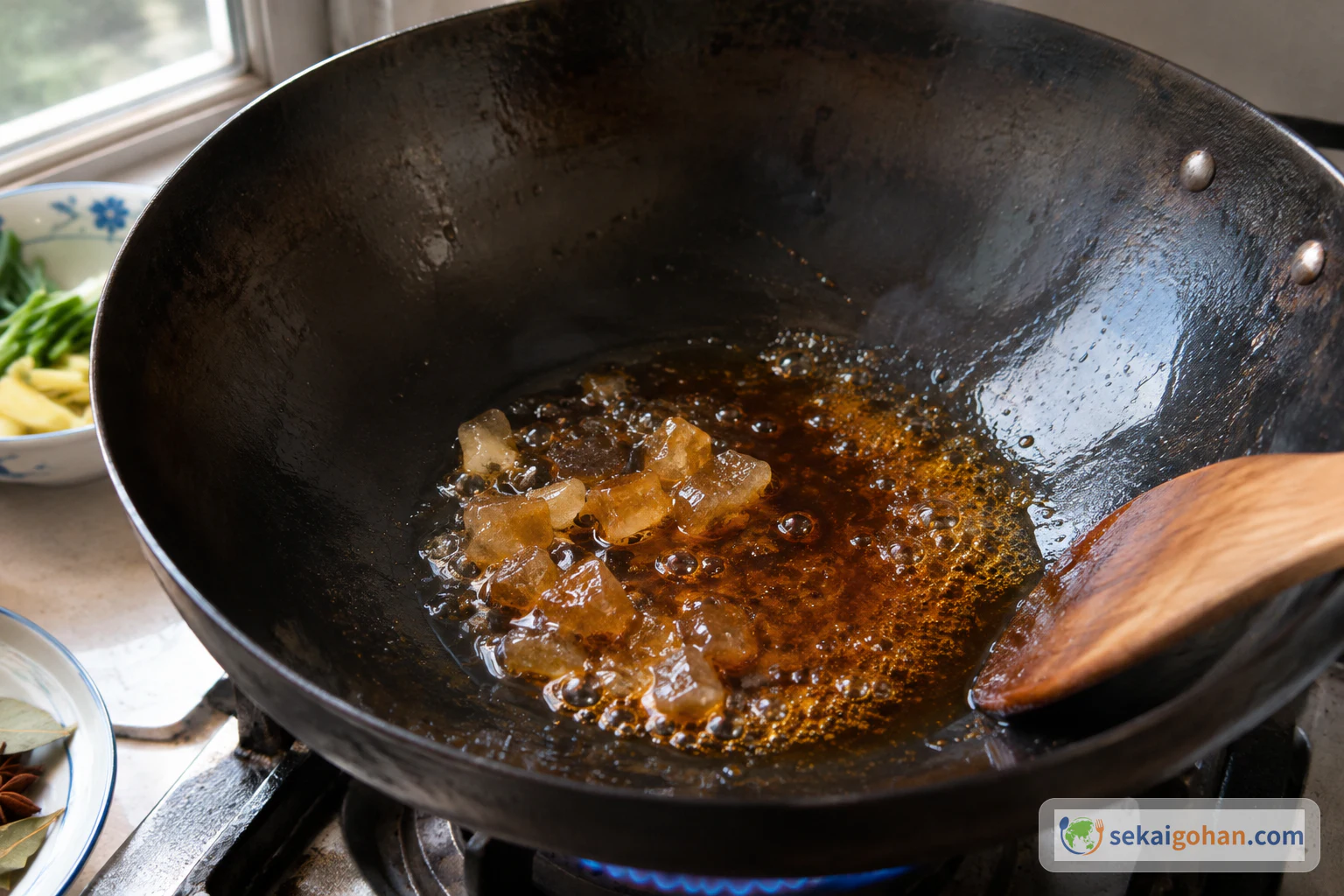
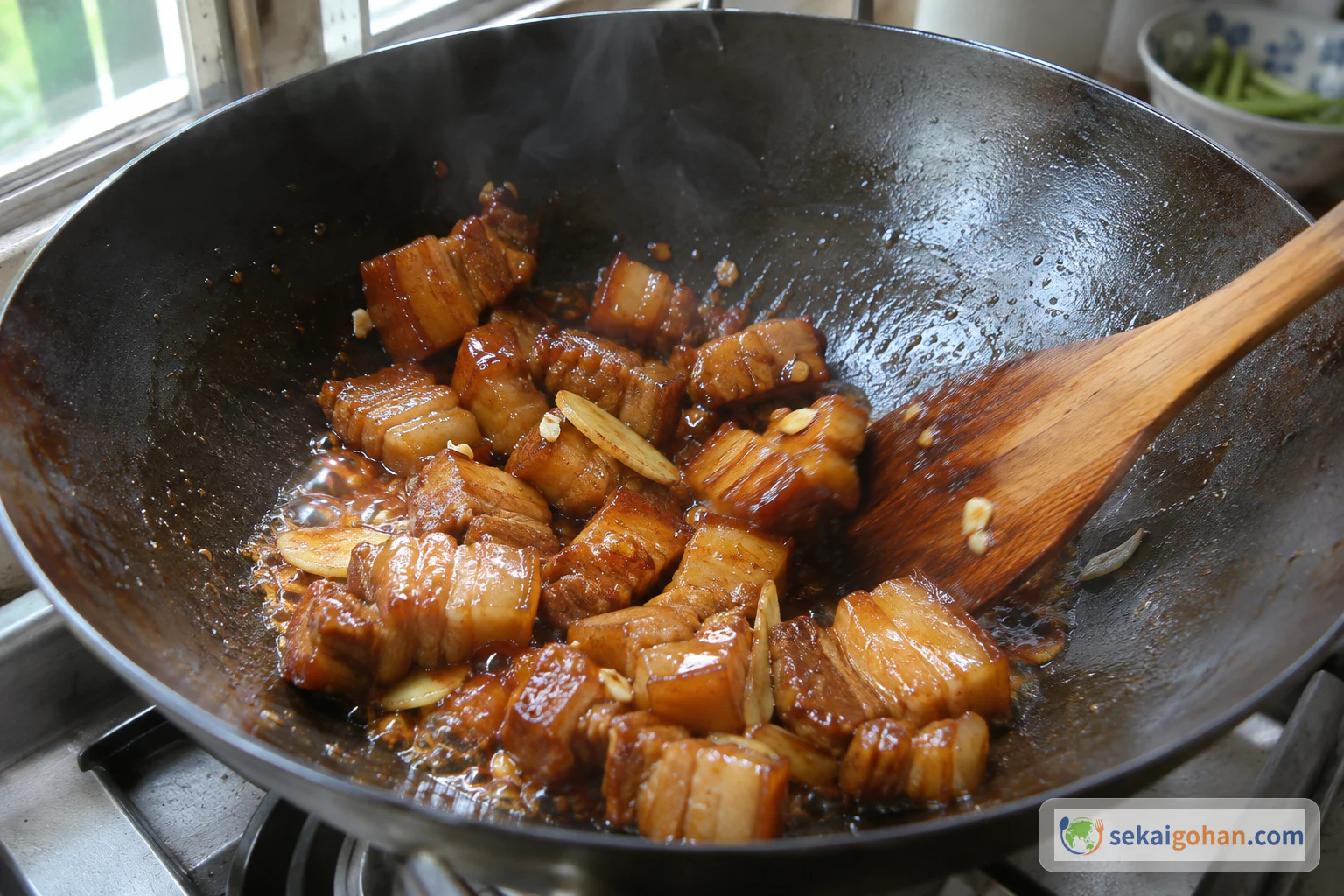
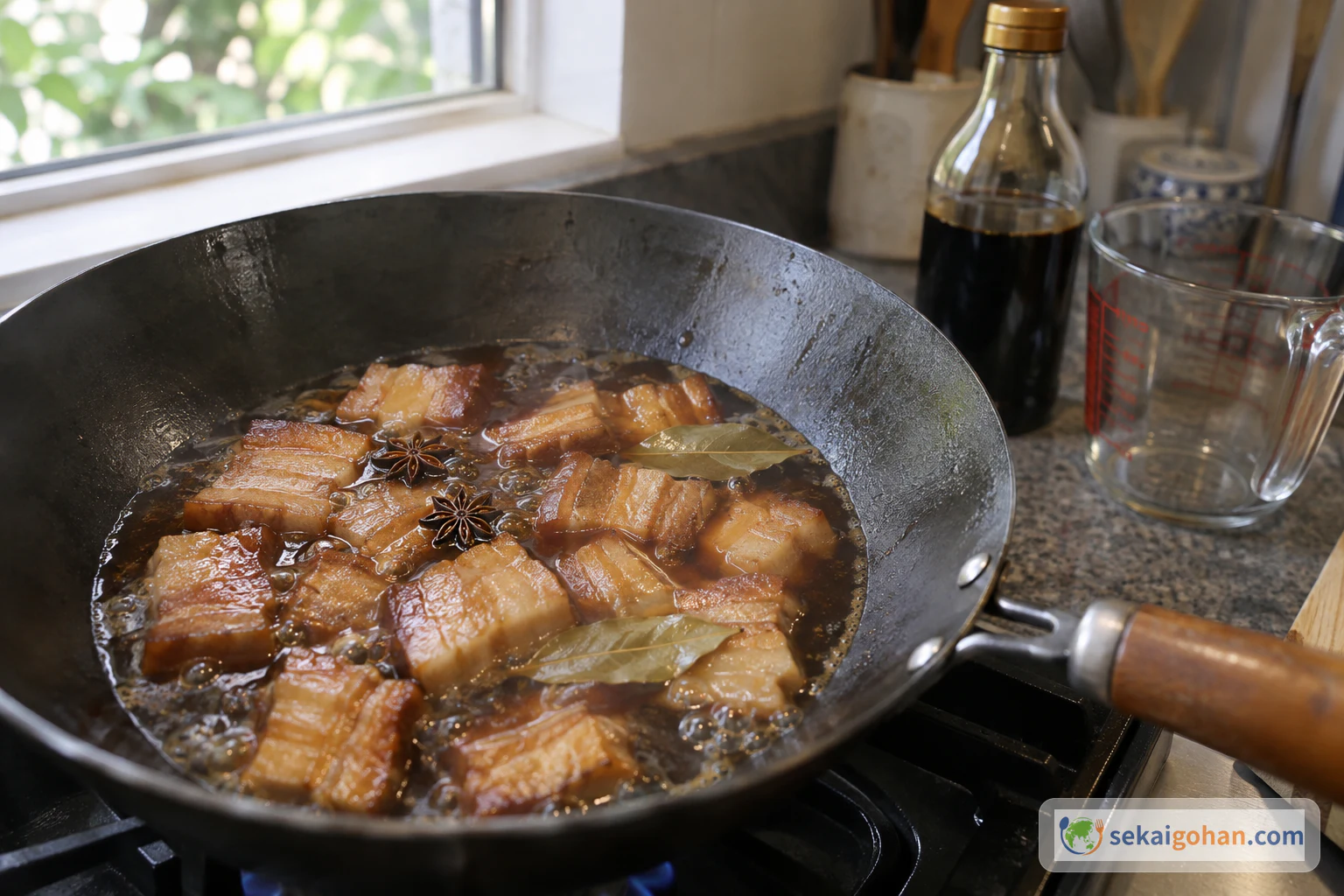
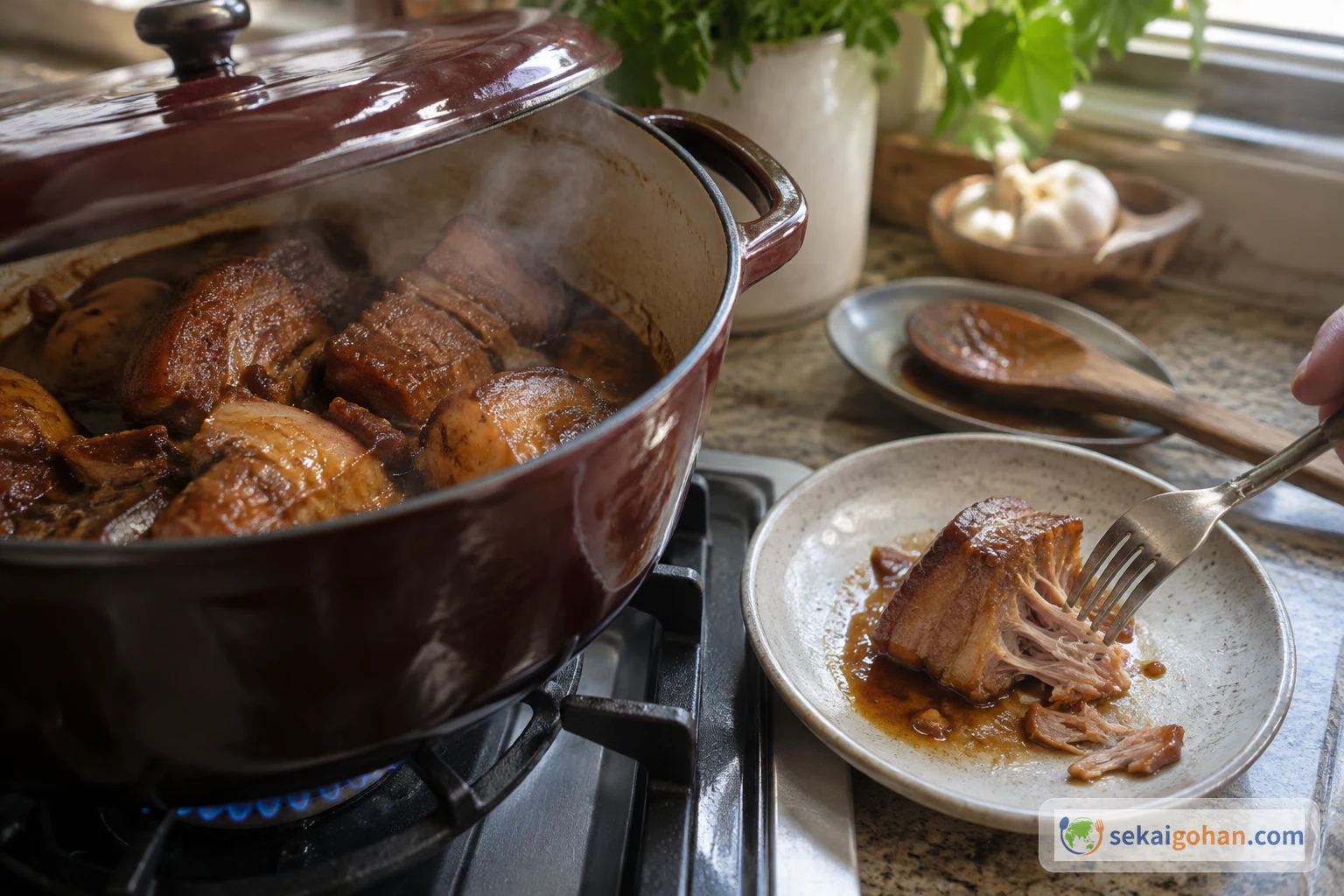
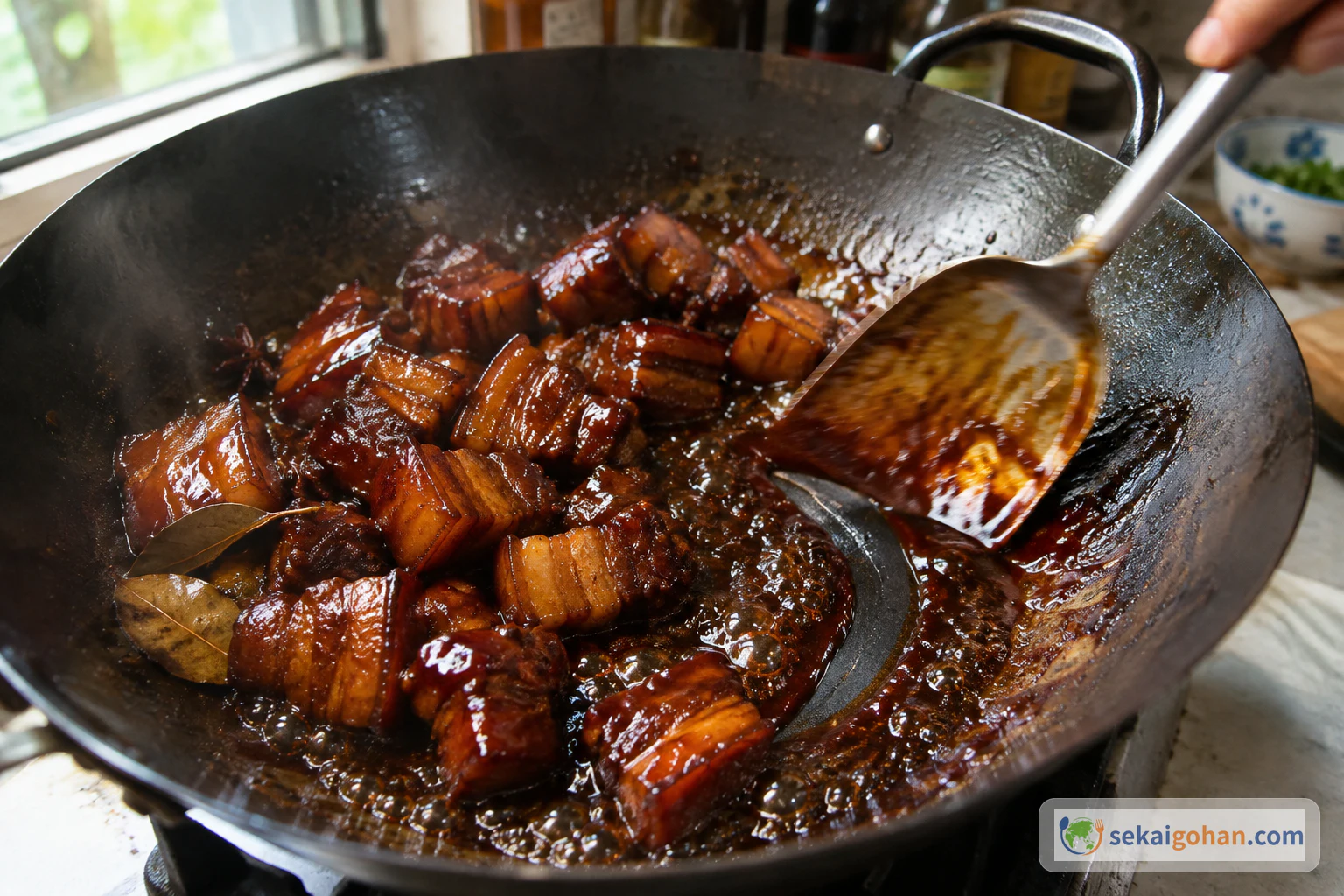
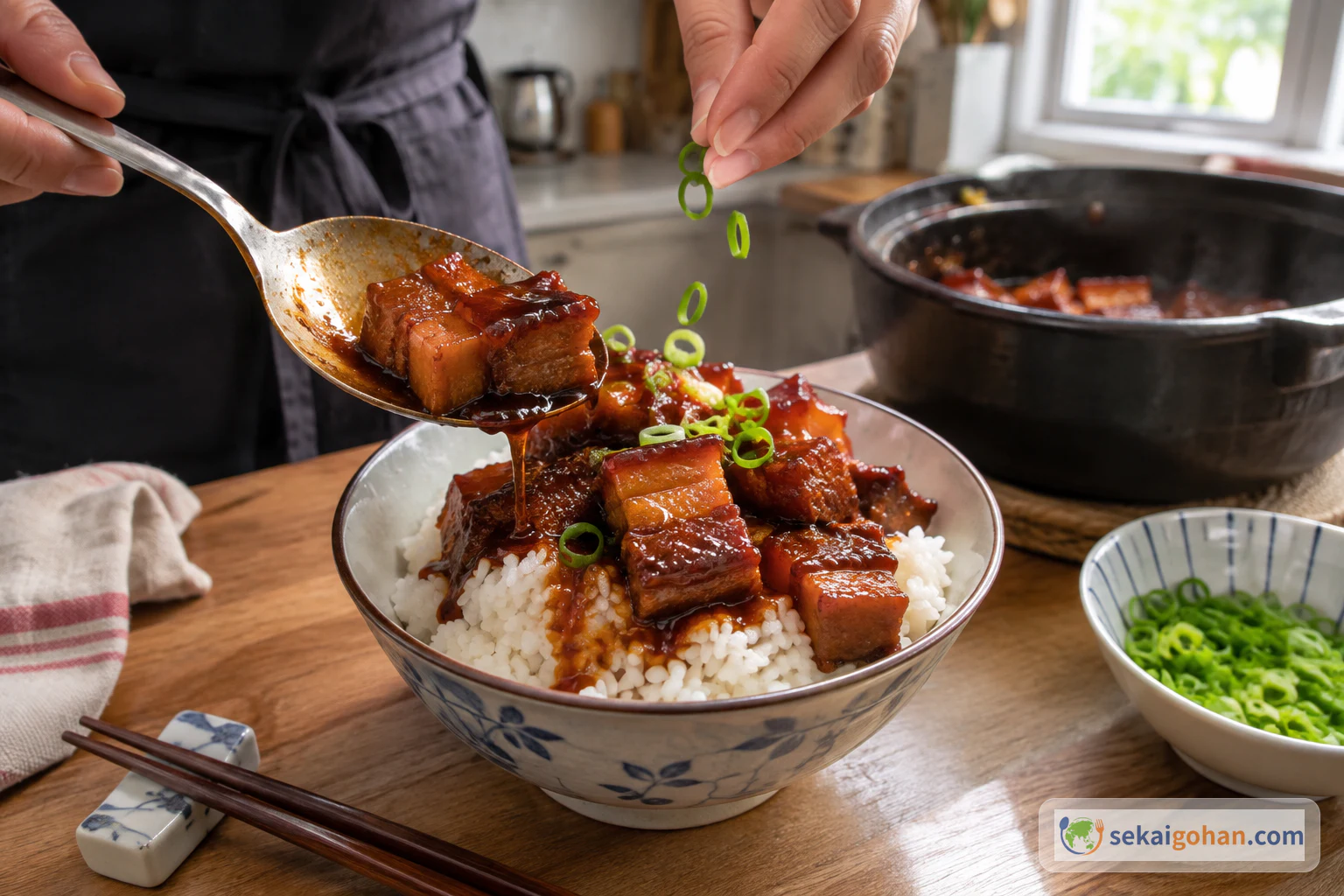
The rock sugar sits in a film of oil over low heat, and for a while nothing happens. Then the lumps give way, the oil turns gold, then amber, and fine bubbles cover the bottom of the wok. That is when the pork goes in. The cubes hiss and pick up the caramel, and an hour later the same pan holds deep red-brown pork belly in a sauce thick enough to cling. Hong shao rou (红烧肉, hóngshāoròu) is the red-braised pork of Shanghai home cooking. It tastes sweet and savory at once, with soft fat, tender meat and a glaze that soaks into a bowl of white rice.
Red-Braised, Shanghai-Style
The name means "red-braised pork." The red comes from two things working together: caramelized rock sugar and dark soy sauce. In Shanghai it is a favorite on home tables, a sweet-and-savory classic, and Chinese families around the world cook it when they want the taste of home. It is home cooking, and a pot of it with rice and a plate of greens makes a full dinner.
Every region of China has its own version. Shanghai's local cooking, known as benbang, is described as "heavy oil, red sauce," and its hong shao rou leans sweet and dark. In Hunan, Mao-style red-braised pork also takes its color from rock sugar and lands on a sweet-salty balance of its own. Where the dish was first made is not settled. This recipe is the Shanghai-style home version: sugar first, then pork, soy and Shaoxing wine, then a long covered simmer and a fast reduction at the end.
Several neighbors are easy to confuse with it. Dongpo pork and Mao-style pork are separate dishes with their own methods. Taiwan's lu rou fan braises pork too, but serves it over rice as a dish of its own. Philippine humba is another braised pork from another tradition. In China, hong shao rou shares the pork-belly shelf with hui guo rou and roasted char siu, and you can find more dishes from the same kitchen on our China page.
Su Shi's words are often quoted alongside the dish: "慢著火,少著水,火候足時他自美." That means: slow fire, little water, and when the heat has had its full time, it turns beautiful on its own. The method below follows the same idea of low heat, just enough liquid, and patience.
Ingredients (serves 4)
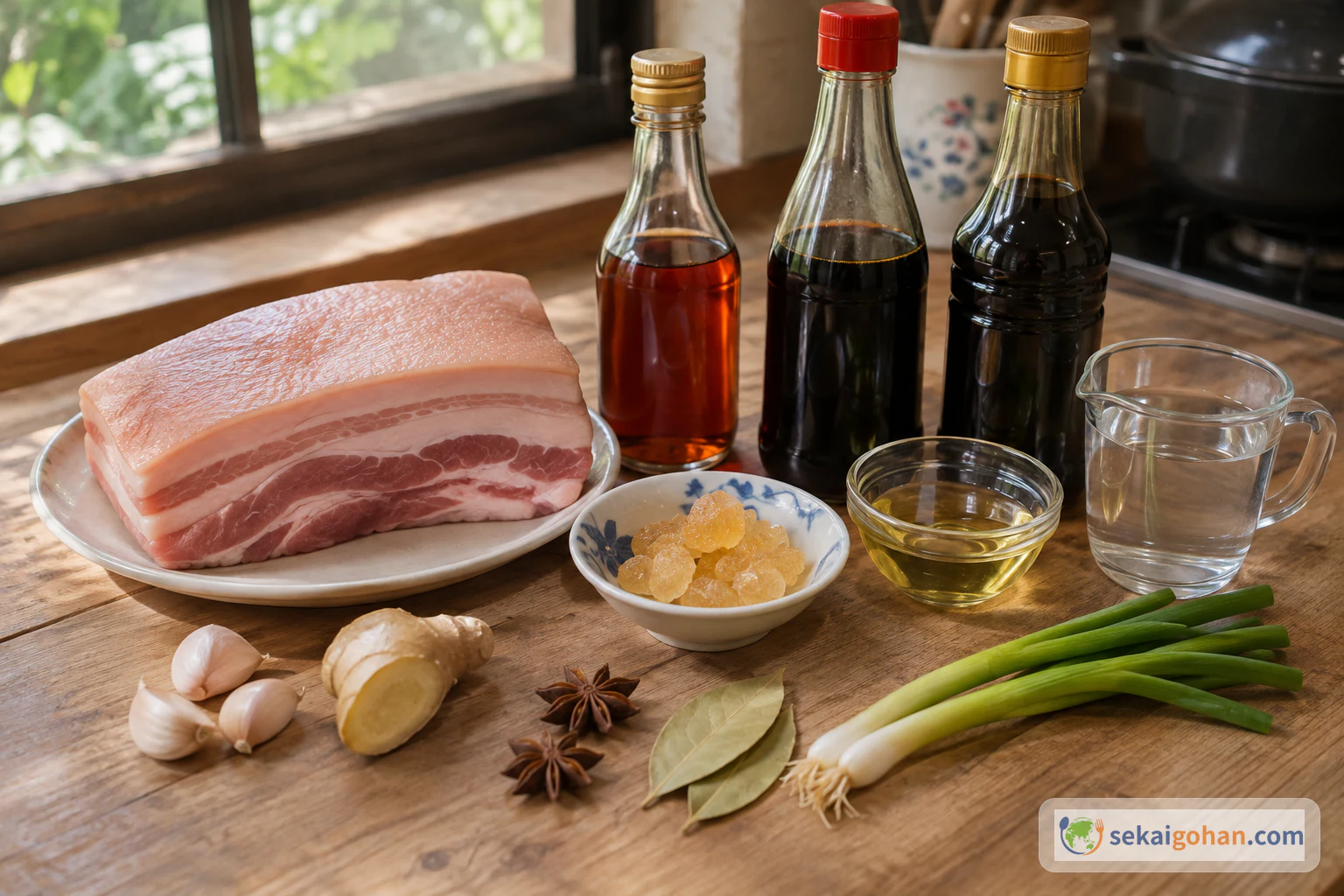
This dish contains pork. Soy sauce and dark soy sauce contain wheat and soy. For a gluten-free pot, use tamari labeled gluten-free in place of both soy sauces, and check the label.
Look for skin-on belly with plenty of meat between the fat layers. A slab that is mostly fat braises into a heavy, greasy pot. Even layers of skin, fat and meat give you cubes that hold their shape and still melt when you bite them.
Equipment
- A pot for blanching
- A colander
- A wok or a heavy pot with a lid
- A wooden spatula
- A fork for testing tenderness
Choosing and Substituting
Three ingredients give the dish its local taste, and they are worth buying at an Asian grocery or online: rock sugar, Shaoxing wine and dark soy sauce. Everything else is at any supermarket.
| Ingredient | What to buy | If you swap it |
|---|---|---|
| Rock sugar | Yellow rock sugar gives a stronger caramel note than white | Granulated sugar works. The difference is small, and the gloss and color still come through |
| Shaoxing wine | A bottle of Shaoxing wine from an Asian grocery | Shaoxing wine supplies the aroma of this dish, so look for a bottle sold as Shaoxing wine |
| Light soy sauce | Chinese light soy sauce, or a regular soy sauce | Brands differ in saltiness, so taste the sauce during the reduction before adding anything |
| Dark soy sauce | Chinese dark soy sauce, labeled "dark" | Regular soy sauce does not color the same way. The pork comes out paler and brown instead of red, and using more of it only makes the dish saltier |
| Pork belly | Skin-on belly with a good share of lean meat | Pork shoulder or spare ribs make a lighter, less fatty pot |
Star anise and bay leaves are optional. Without them the pot tastes more simply of caramel, soy and wine, and it is still hong shao rou.
Method: From Caramel to Glaze
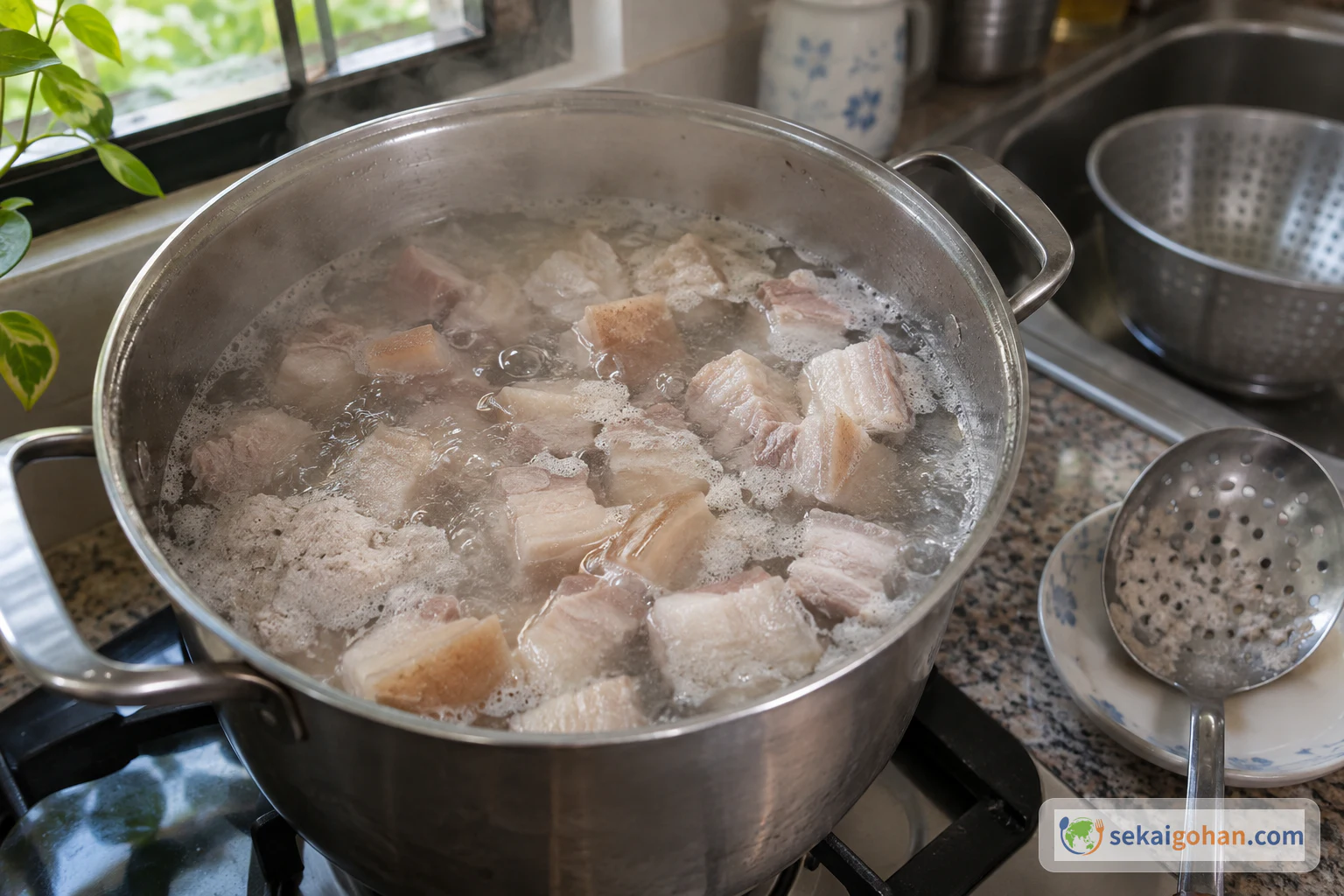
The work up front is quick. You blanch the pork, make the caramel, sear and add the liquids, and that all happens within the first stretch at the stove. Next comes an hour to an hour and a half of covered simmering, and your only job is a stir every 15 minutes. Have every ingredient measured and next to the stove before the sugar goes in, because the caramel moves fast once it colors.
The sugar decides the color and taste of the whole pot. Low heat and a quick hand give a clean amber caramel. Pushing the heat to speed it up burns the sugar, and burnt sugar makes the dish bitter in a way no amount of braising will fix.
Melted sugar and hot oil cause serious burns and stick to skin. When the wet pork hits the caramel in step 3, it spits. Add it at arm's length, keep your face back, and keep children away from the stove while the caramel is on the heat.
The braise makes the pork tender, and the final reduction makes the dish. Pull the lid off and let the sauce reduce until it is truly glossy and clinging. A thin sauce leaves the pork brown but flat instead of glazed red.
When It Goes Wrong
| What you see | Why | What to do |
|---|---|---|
| The dish tastes bitter | The sugar went past amber and burned | Next time keep the heat low and add the pork the moment the caramel turns amber |
| The sauce is thin and watery at the end | Not enough reduction | Keep the lid off and boil it on medium-high until it coats the pork |
| The sauce is sticky, too thick or too salty | It reduced too far | Stir in about 2 tbsp water and bring it back to a bubble |
| The bottom is catching or scorching | The pot went too long without stirring, or the water ran low | Stir every 15 minutes during the braise and top up with water when the level drops |
| The meat is still tough | It needs more time | Keep braising until a fork slides in easily. Topping up with hot water instead of cold keeps the meat from tightening |
| The pot is too fatty | The slab was mostly fat | Choose belly with more lean meat, or use pork shoulder or spare ribs |
Serving, Variations and Storage
At the table
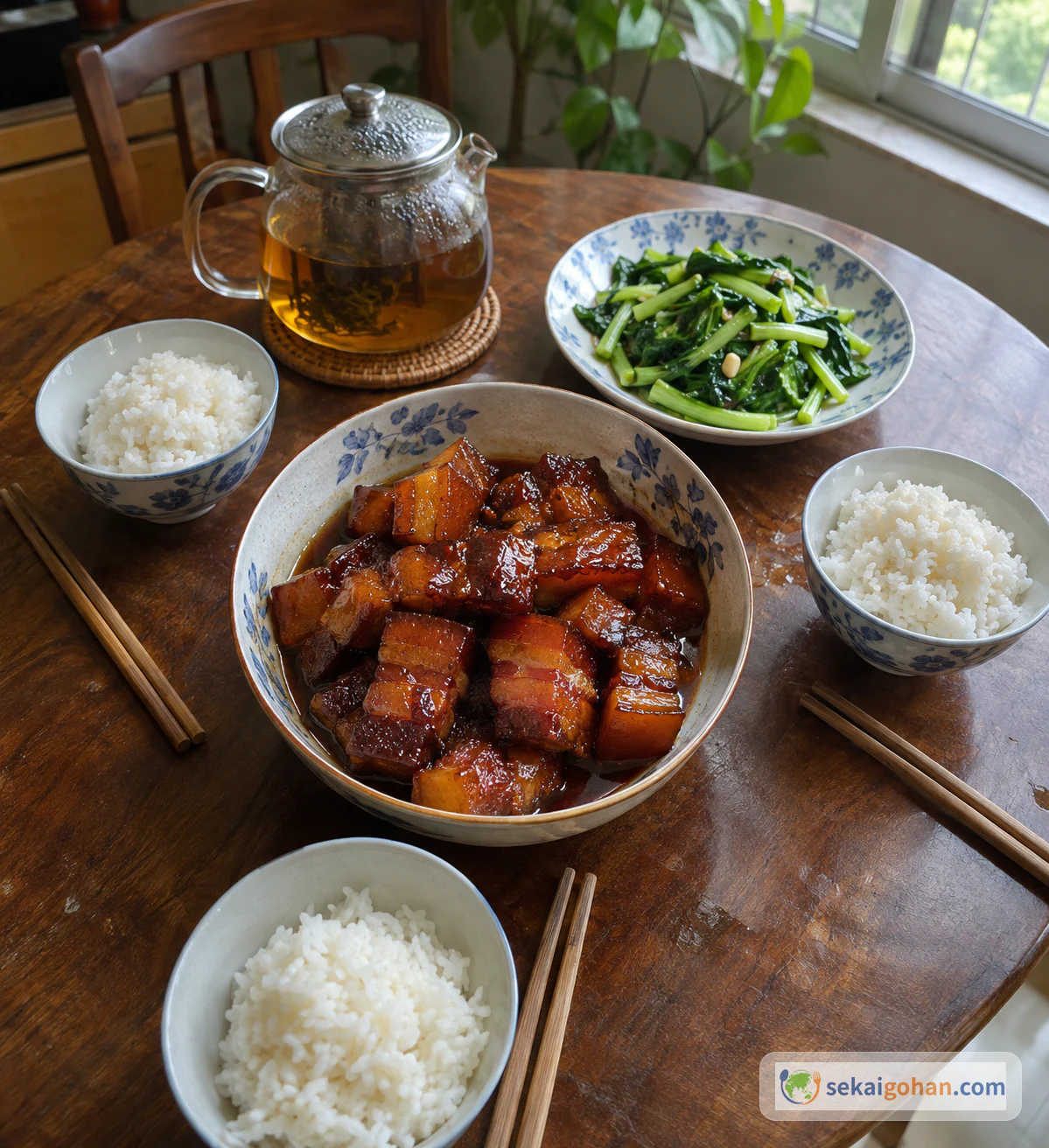
Set hong shao rou in the middle of the table as the shared main dish, with a bowl of white rice for each person and a plate of simply stir-fried greens. The rice takes the sauce, and the greens give a clean, fresh contrast to the rich pork. People reach for a cube or two at a time and spoon the glaze straight onto their rice.
Variations
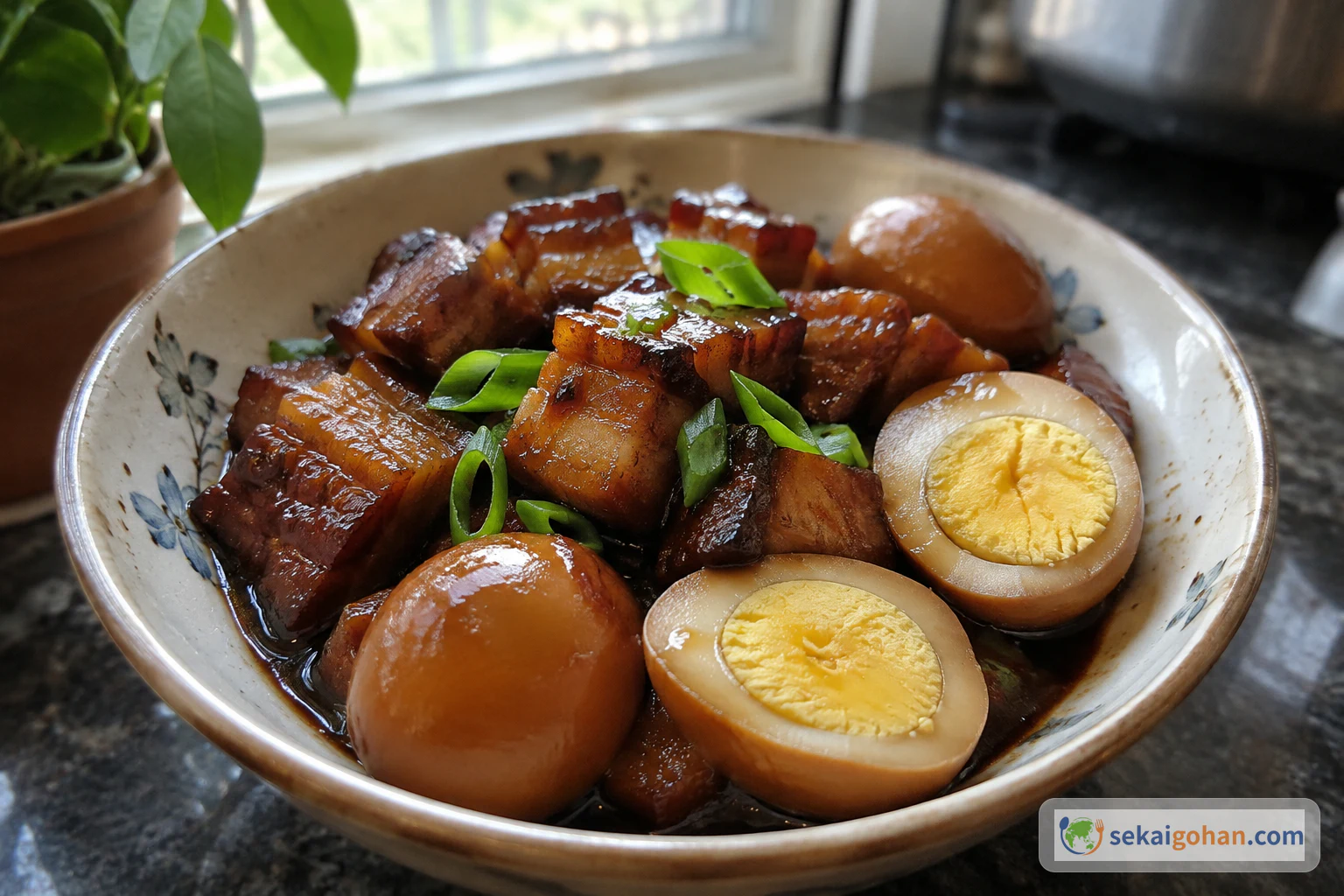
- Braised eggs. Add peeled hard-boiled eggs for the last 20 minutes of the braise. The whites soak up the sauce and turn brown, and every egg becomes a second treat in the pot.
- Citrus peel. A piece of dried tangerine peel (chenpi) or other citrus peel in the braise adds a light, bright aroma that cuts the richness.
- Lighter cuts. Pork shoulder or spare ribs in place of belly give a leaner pot with less fat in the sauce.
- More spice. Dried chili, Sichuan pepper or cinnamon in with the star anise push the dish warmer and more aromatic, away from the pure sweet-savory Shanghai balance.
Storing leftovers
Let leftovers cool, then store them in an airtight container in the refrigerator for up to 3 days, or freeze them for up to 3 months. Thaw frozen pork in the refrigerator, and reheat it until it is hot all the way through before serving.
Frequently asked questions
Why is restaurant hong shao rou sometimes so bright red?
Some restaurants add food coloring to get a vivid red. At home the color comes from two things, the caramelized rock sugar and the dark soy sauce. If you keep both, you get a deep, natural red-brown.
What about stray hairs on the pork skin?
Skin-on belly sometimes has a few bristles left on it. Before cutting, lightly sear the skin side over a flame or in a hot dry pan, then scrape the hairs off. After that, the skin braises clean and soft.
Do I need the star anise and bay leaves?
No, both are optional. Star anise adds a warm, sweet spice note and bay leaves add a herbal edge. Without them, the dish tastes more directly of caramel, soy and Shaoxing wine.