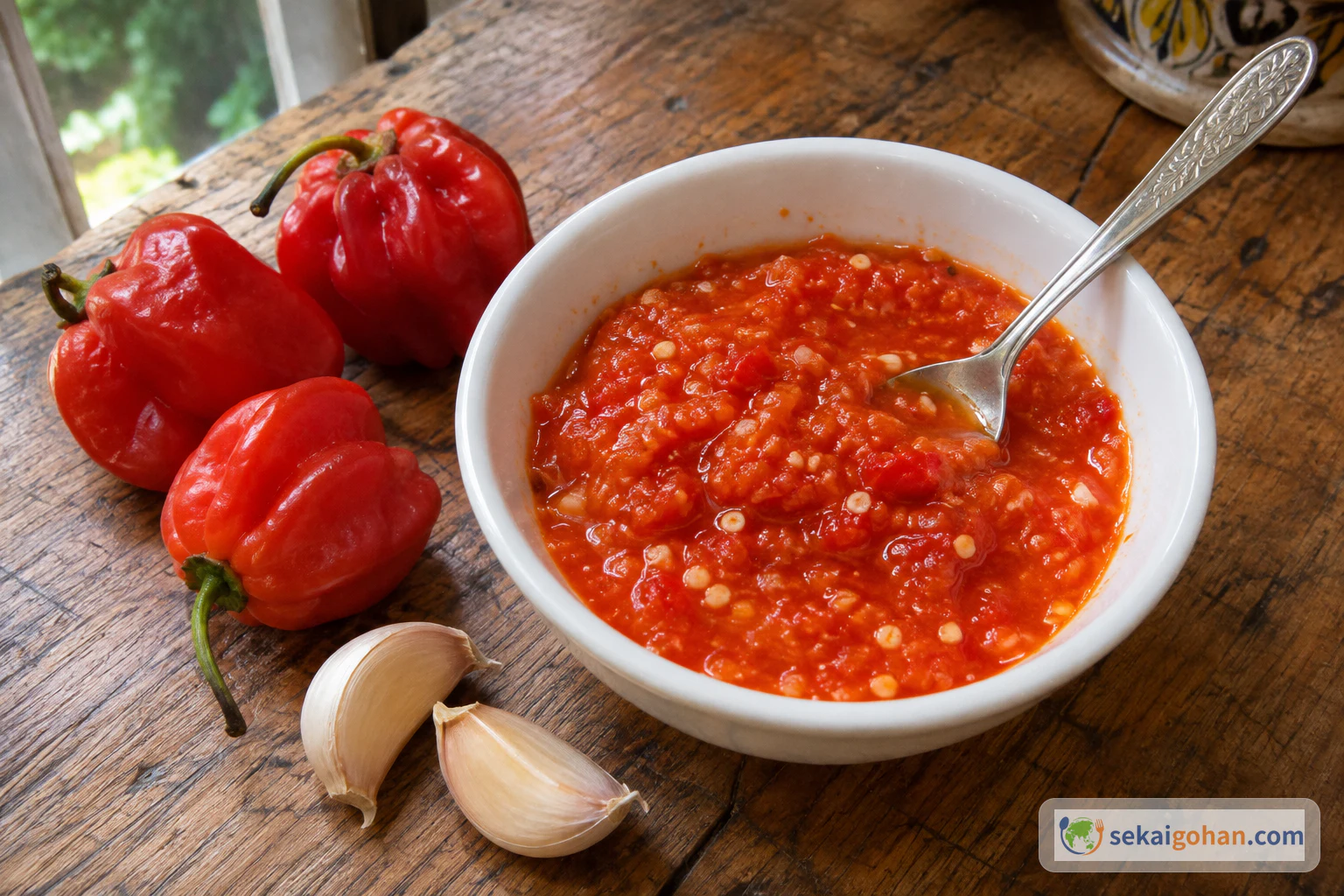
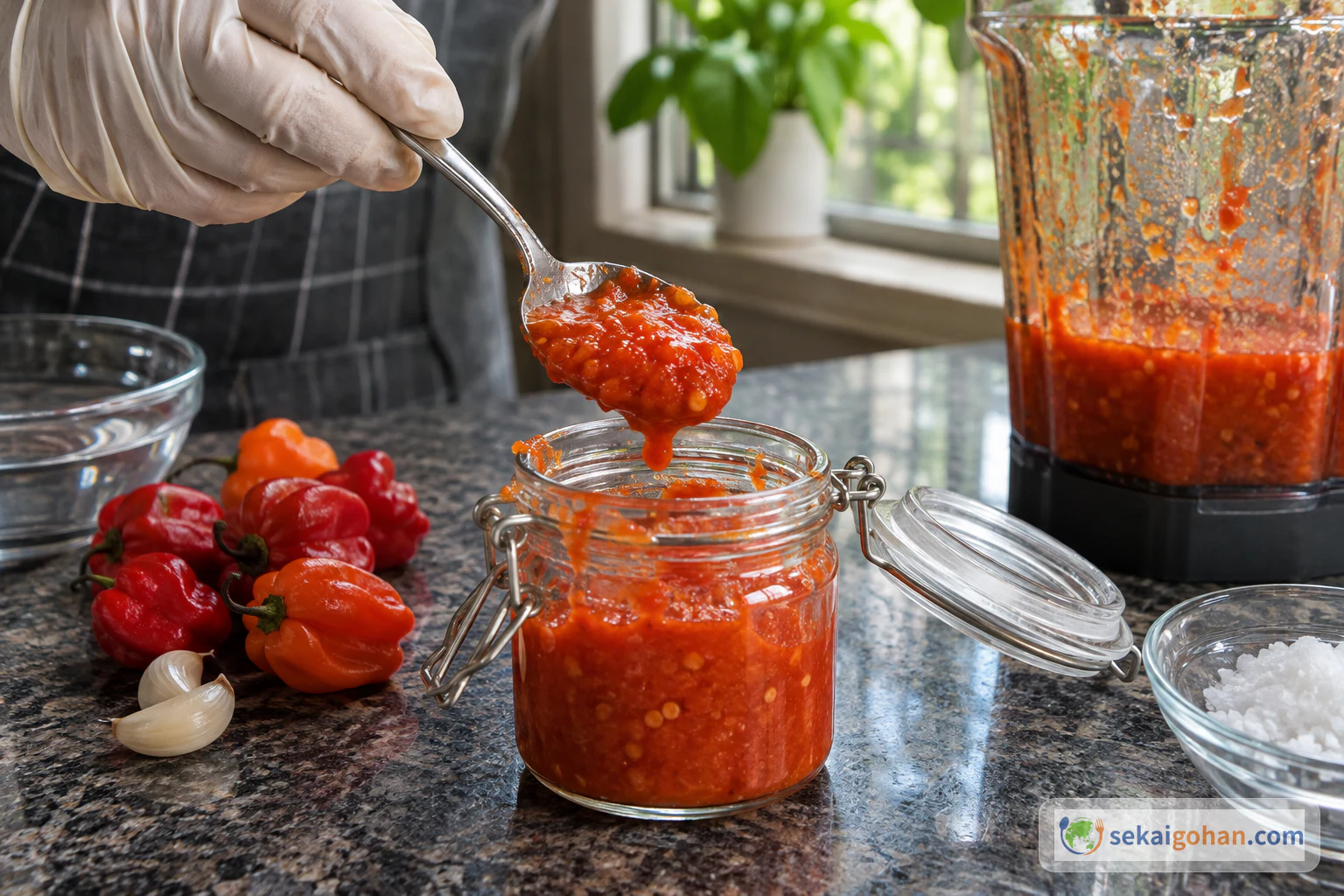
When you lift the blender lid, a sharp breath of pepper rises out of the jar before you see the sauce, and it catches in your nose and throat. Under it sits a bright red-orange purée, almost smooth but still flecked with small bits of pepper. That is pili pili, the raw chili sauce that families from the Democratic Republic of the Congo keep in a jar on the table and spoon, a little at a time, beside a pot of tomato stew. It takes four ingredients: red scotch bonnet peppers, garlic, water and salt. No heat goes into it, and the whole job takes about five minutes. The taste is fierce heat first, then the fruity aroma of the peppers and a raw garlic bite underneath.
A Name That Sounds Like Its Heat
The name says what the sauce does. Pili pili comes from Swahili and Lingala and means roughly "hot hot" or "pepper pepper", a doubled word for a doubled sting. Its French name, sauce piquante africaine, means simply "spicy African sauce". French speakers use that name for many sauces, so it does not point to one recipe. The version here is the Congolese home one: raw red peppers blended coarse.
In homes from the Democratic Republic of the Congo, the recipe passes down through families. One version comes from a grandmother from the country, back when it was called Zaire. It is the plain blend of red peppers, garlic, water and salt that you will make below. Another comes from a family with roots in the Kasai region and has been made for four generations. That one adds onion and vinegar and comes out golden orange, with a heat that builds slowly rather than hitting all at once.
Where it sits on the table
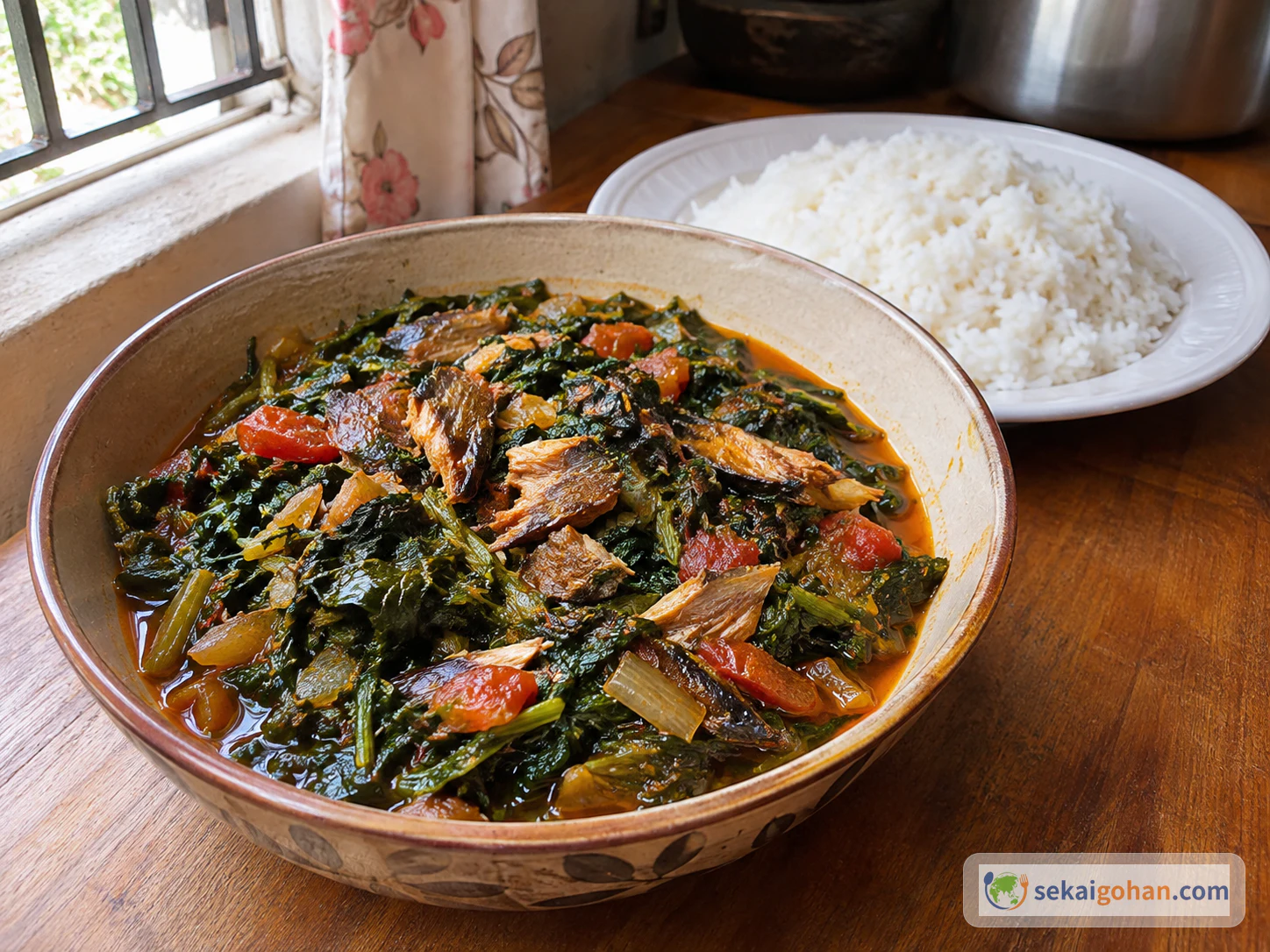
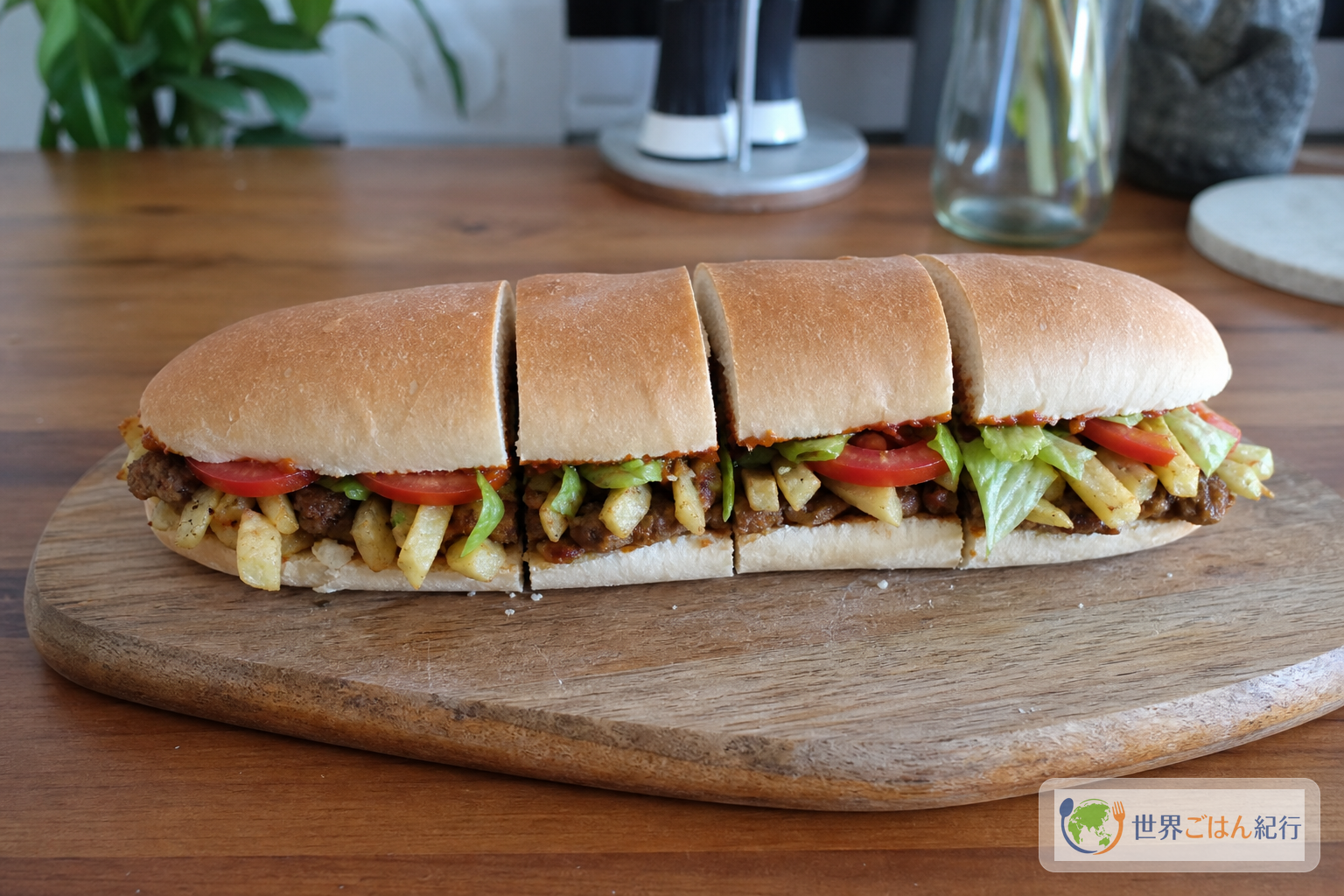
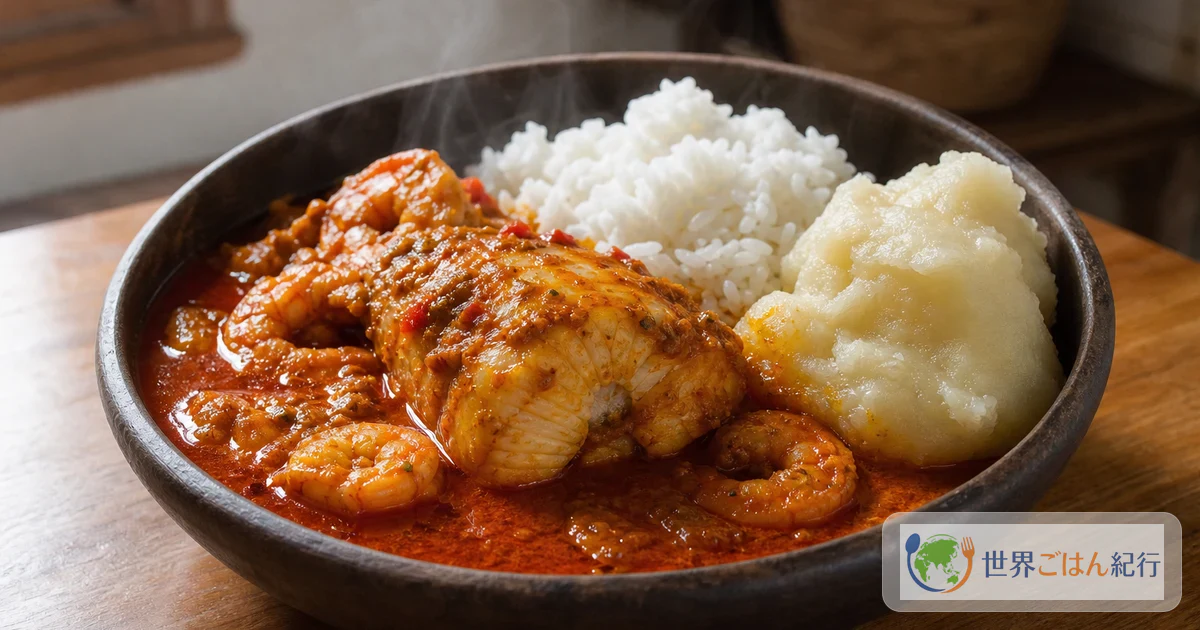
Pili pili goes with tomato-based Congolese stews of fish, chicken, pork, goat or beef. The stew is cooked to be eaten by everyone, and the jar lets each person set their own heat. Some families leave the jar out on the table at every meal. Others brush the sauce on meat before it goes on the grill, or eat it with chicken, rice, fish and cooking bananas. It also works away from the stew pot. A dab on fried eggs, a sandwich or a burger is a good way to get to know it.
The plain blend of peppers, garlic, water and salt tastes bright, raw and fruity. The onion-and-vinegar style from Kasai families is golden orange, and its heat comes on more slowly. Both go by pili pili at the table.
Ingredients
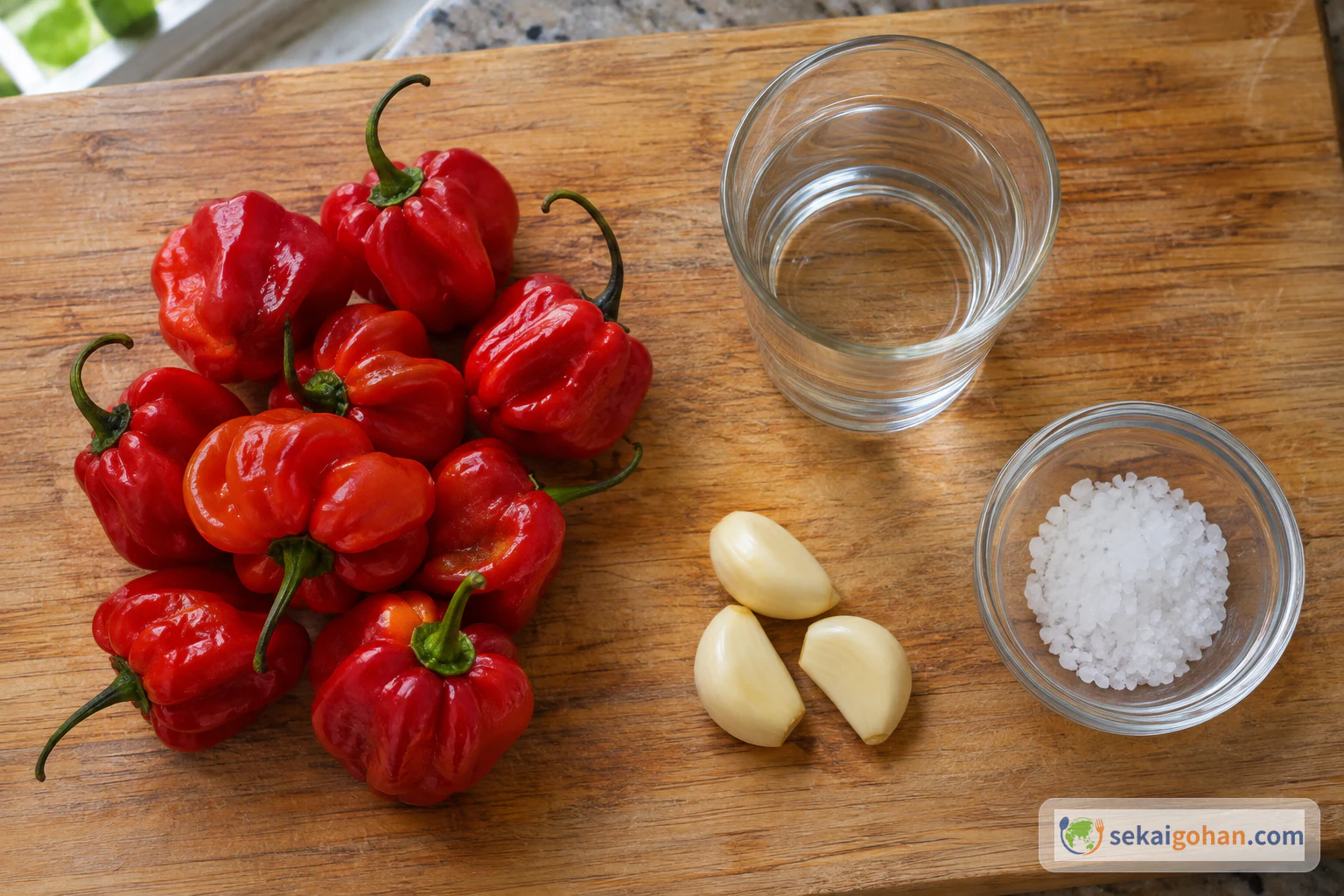
Everything in the table goes into the blender. Nothing is held back.
The sauce contains only chili peppers, garlic, water and salt. Garlic and chili are both strong irritants for some people. Scotch bonnets are very hot. Serve children and anyone who does not eat much heat only a tiny amount, or leave the sauce off their plate.
Equipment
- Blender or mini food processor (a small jar suits this batch size)
- Thin disposable gloves, nitrile if you have them
- Small glass jar with an airtight lid
- Small freezer-safe containers
- Spoon or small spatula
Choosing the Peppers and Swapping Them
The pepper decides everything. Red, ripe scotch bonnets give the bright color and the tropical-fruit smell that sits behind the burn. Look for them at Caribbean, African or Latin grocers, or buy them frozen online. Pick firm, glossy peppers with no soft spots, since they go in raw.
The closest swap is red habanero. It belongs to the same species, Capsicum chinense, so the heat and fruity aroma stay close. Use it in the same amount. Green or unripe peppers change the color and give a grassier taste. Small dried red chilies are a poor swap. They taste and smell different, and they hold far less water, so the same amounts with the same water give a dry, dusty paste in place of a loose, fresh sauce.
Any ordinary table salt can stand in for sea salt. The grain size differs, so a spoonful of fine salt weighs a little more than a spoonful of coarse. Add a touch less and taste the sauce once it is cold.
The taste you want depends on ripe red peppers that never see heat. Keep both of those and the sauce tastes right. Change either one and you get a different sauce.
Method
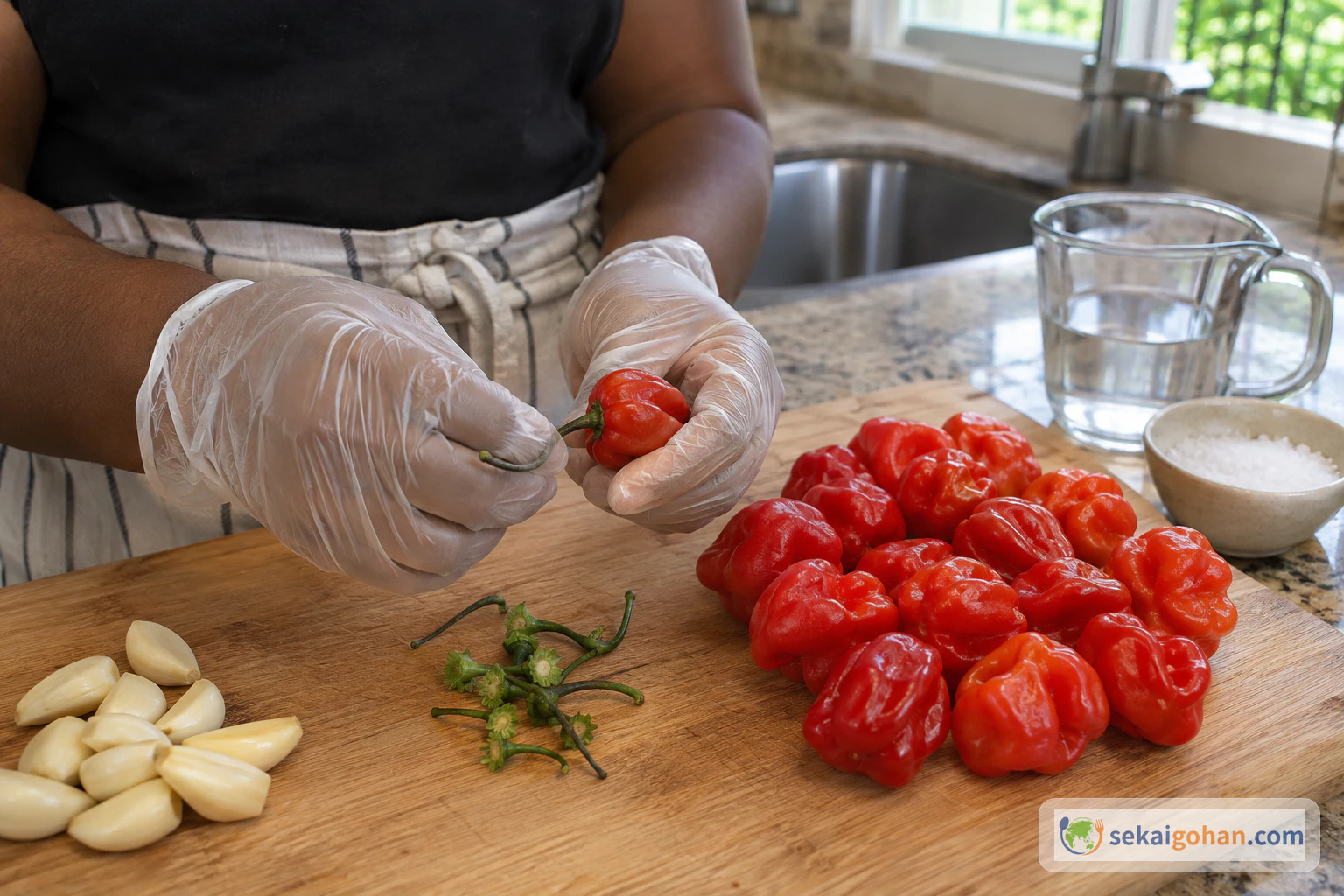
The work is short, but get ready before you start. Put your gloves on before you touch a single pepper, peel the garlic, and have a clean jar open beside the blender. There is no cooking and no waiting. The only careful moments are pulling the stems and opening the lid.
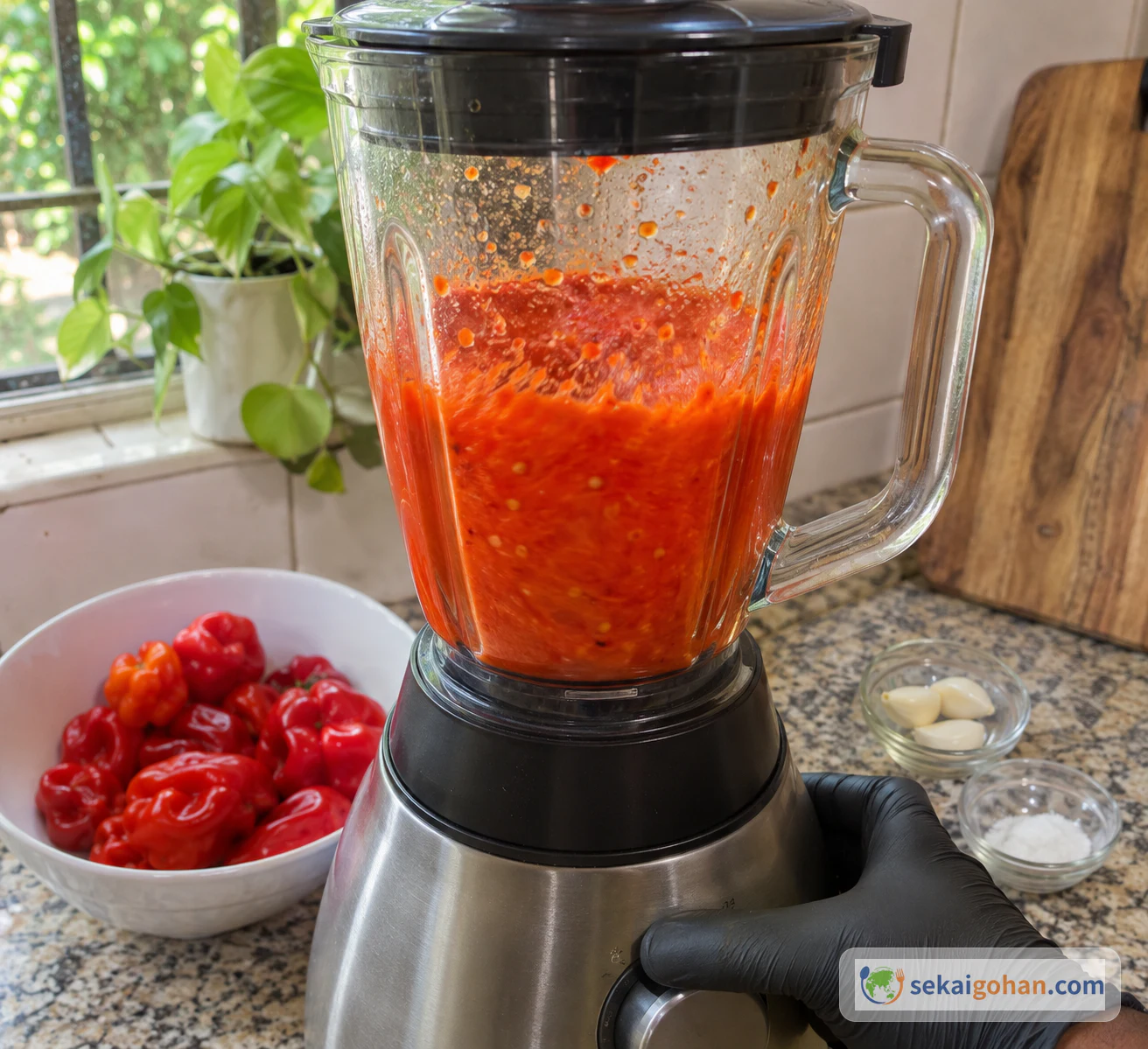
Wear gloves the whole time and keep your hands away from your eyes, nose and mouth until the gloves are off and your hands are washed. The blended sauce gives off a stinging vapor. Open the blender lid slowly and keep your face back.
When It Goes Wrong
| What you see | Why | What to do |
|---|---|---|
| Your eyes water and you cough when you open the blender | Pepper vapor rises from the freshly blended sauce | Step back, let the jar settle, air out the kitchen and lift the lid slowly with your face turned away |
| Your fingers burn hours later | The peppers were handled without gloves, or the gloves tore | Wash your hands well and keep them away from your face. Wear fresh gloves the next time |
| The sauce is completely smooth, like baby food | It was blended too long | It is still good to eat. Next time, blend in short bursts and stop while flecks are still visible |
| Whole chunks of pepper remain | It was not blended long enough, or the blades did not catch | Close the lid and blend in one or two more short bursts |
| The sauce is thick, dry and tastes dusty | Dried chilies were used in place of fresh ones | Make the sauce with fresh red scotch bonnets or red habaneros |
| One spoonful takes over the whole plate | Too much went on at once | Start with less than a teaspoon and stir it into the stew instead of eating it straight |
Serving, Storage and Other Styles
At the table
Set the jar or a tiny dish next to the stew and let people help themselves. Start with less than a teaspoon, since one teaspoon goes a long way with scotch bonnets. With a tomato stew of chicken, fish, goat, pork or beef over rice, take a little sauce with each bite, or stir it into your own bowl.
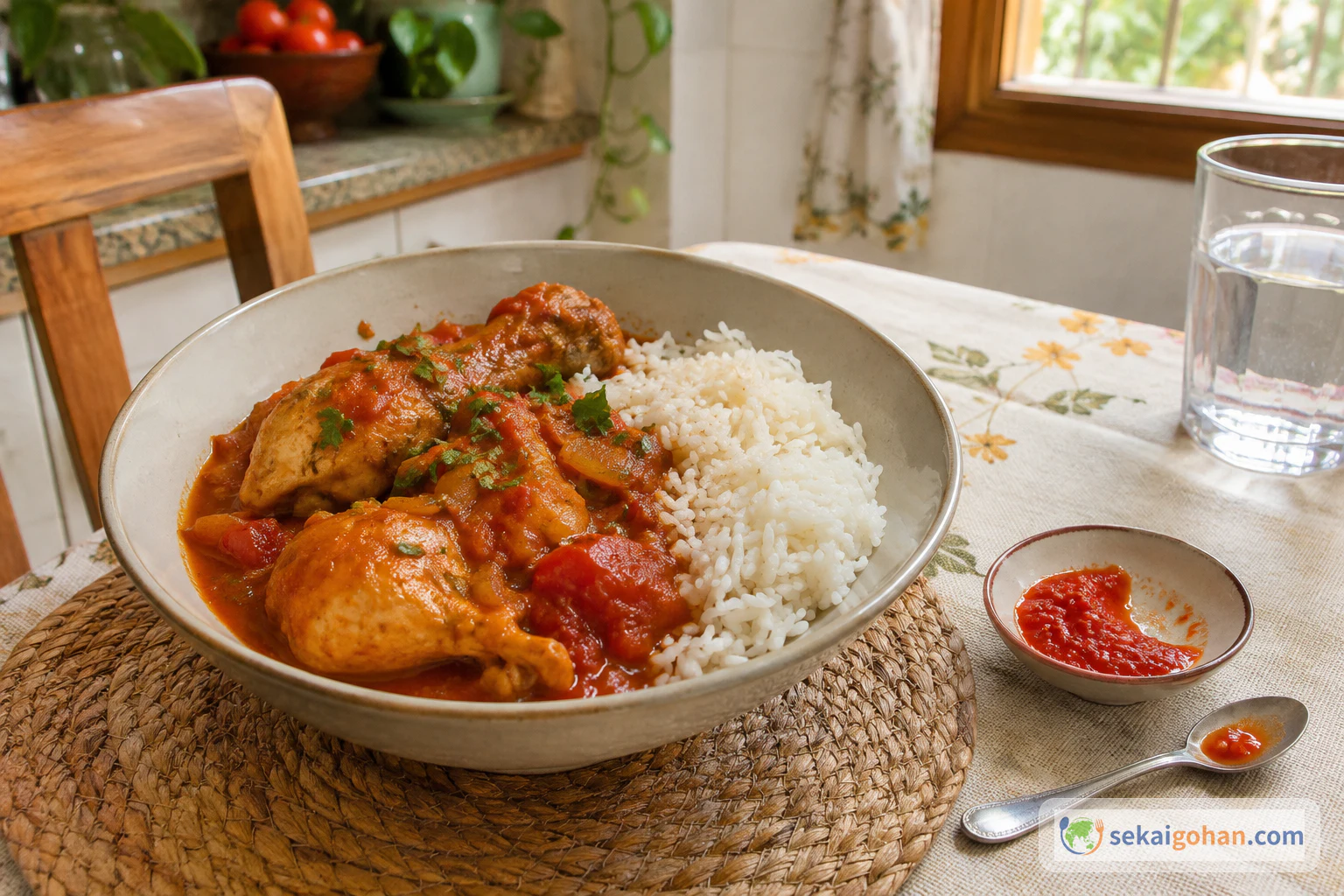
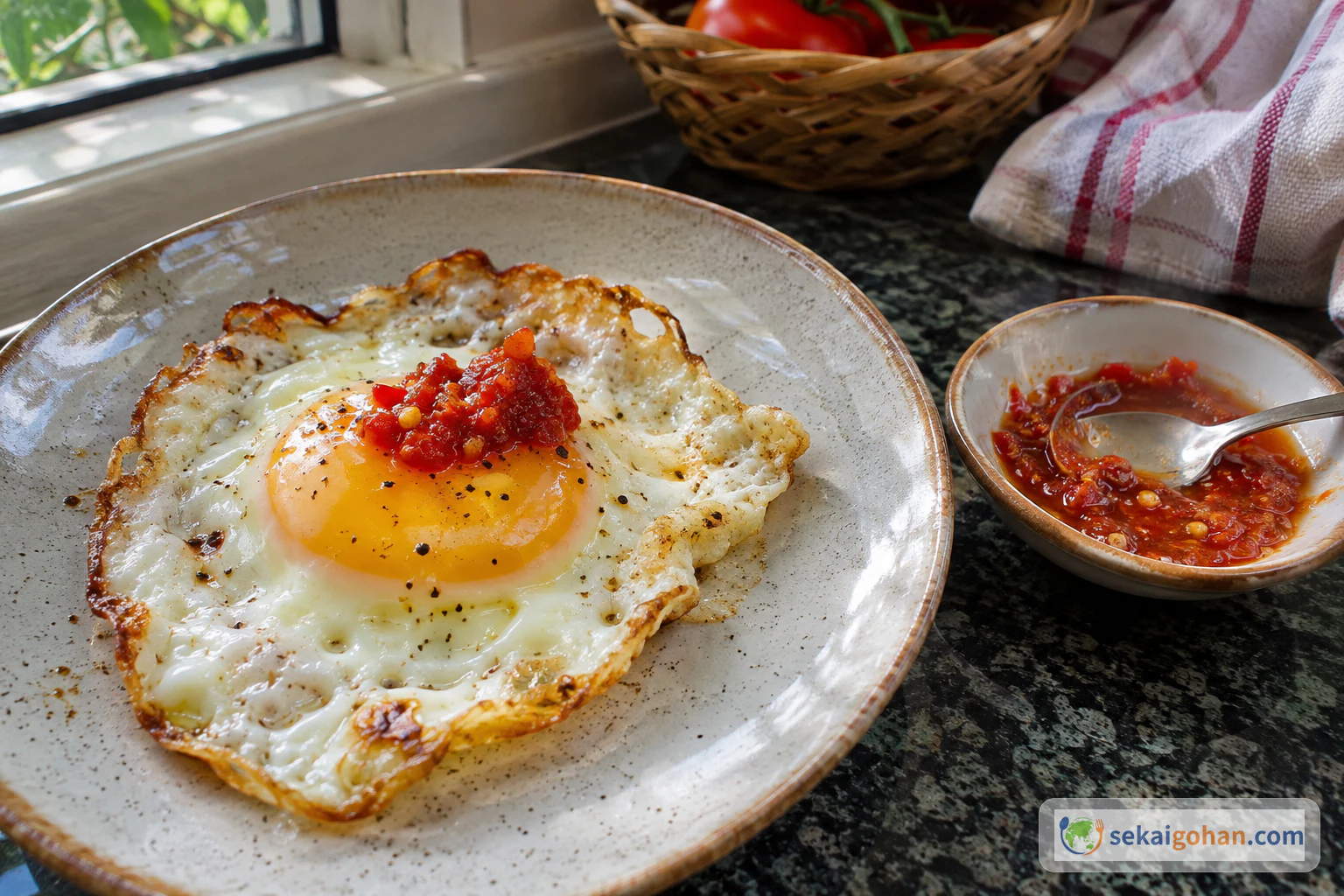
You can also brush it on meat before grilling, or set it beside chicken, fish or cooking bananas. For breakfast, put a small dab on a fried egg. The runny yolk softens the burn.
Storage
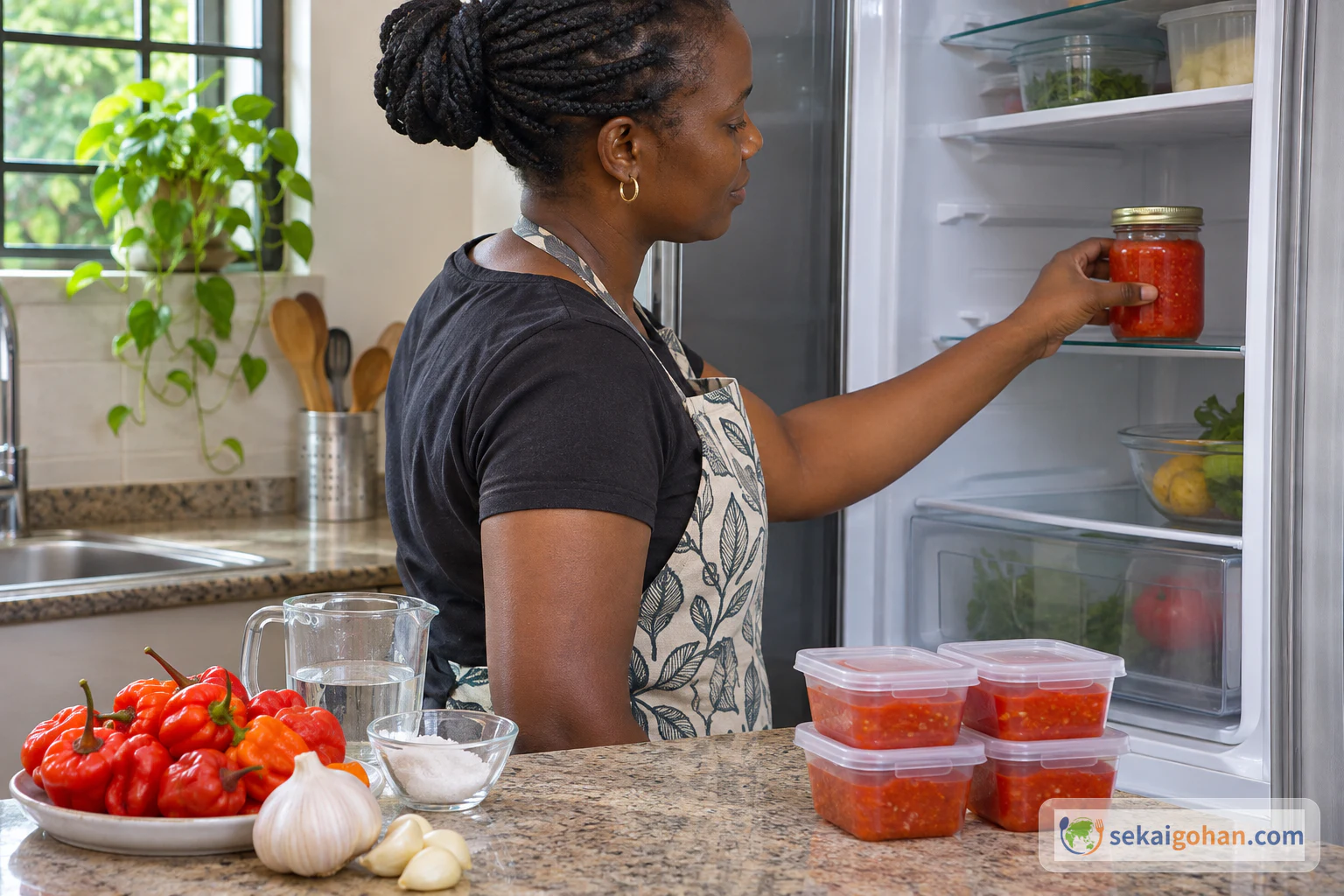
The sauce is raw, contains garlic and has no acid. Store it with that in mind. Make small batches. Keep the airtight jar in the refrigerator and use it up over a short time. Freeze the rest in small portions and take out one at a time. Use a clean spoon every time you dip into the jar.
Other styles
The golden-orange style from Kasai families blends onion and vinegar in with the peppers and garlic. That gives a softer color and a heat that builds more slowly. Each household makes it its own way, with no set amounts. Treat it as a separate sauce rather than an add-on to the recipe above.
In French-speaking kitchens, pili-pili can also mean a chili oil. Do not turn this sauce into an oil.
Garlic and chili kept under oil can grow botulism toxin, and the danger cannot be seen or smelled. Home-made versions are where most of the risk lies. If you ever make a chili-garlic oil, freeze it, which is the safest choice, or refrigerate it and finish it within 4 days.
Frequently asked questions
Is pili pili the same as piri piri?
The two names sound almost the same and both belong to hot chili, but how they are related is not settled. The sauce here is the Congolese home blend of raw red peppers, garlic, water and salt. Make it from this list and you get the Congolese taste.
How hot is it?
Very hot. Scotch bonnets are among the hottest peppers sold in ordinary shops, and here they are raw and barely diluted. Treat it as a few drops on the side of the plate, not a dip.
Can I take out the seeds to make it milder?
The seeds and the flecks of pepper are part of the coarse texture, so the sauce goes in whole. If you want less heat, use less sauce. Stirring it into the stew also spreads the burn through the bowl.
My blender is large and the batch is small. What can I do?
Use a mini food processor or the small jar of your blender, so the blades sit in the mixture. In a big jar the peppers get thrown up the sides and miss the blades. If that happens, stop, scrape the pieces down with a spatula and blend again in short bursts.